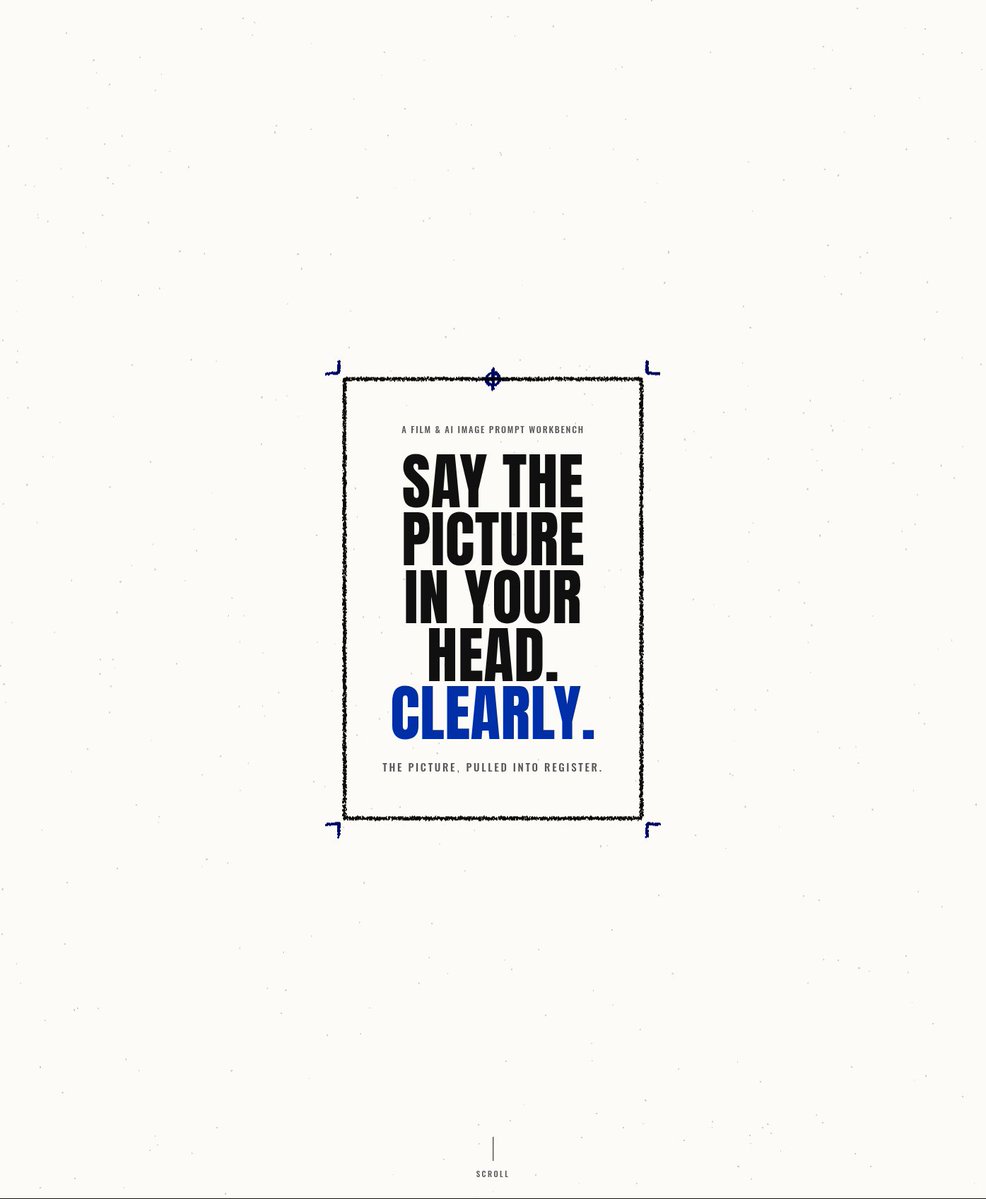
Minimalist Klein Blue Typography Poster
Generates a sparse editorial hero poster with bold condensed typography, production crop marks, and a black-and-Klein-blue print-system aesthetic.
This is a GPT Image 2 prompt case for Graphic & Poster. Use the copy-ready prompt below to generate similar visuals, and review Awesome GPT Image 2 Prompts attribution plus commercial-use rights before reuse.
Free 1K preview
Generate one preview image instantly, no sign-up required.
Prompt
Copy-ready prompt
Create a minimalist editorial landing-page hero poster on an off-white coated-paper background with subtle dust speckles and scanned paper grain. Center a single vertical rectangular print sheet slightly above the middle of a wide landscape canvas, leaving large empty margins. The sheet has a thin imperfect black ink border with a slightly rough printed texture, plus four small Klein-blue crop/corner registration marks just outside the rectangle, and one small blue circular registration target centered on the top border. Inside the sheet, use stark condensed bold uppercase typography like a printed production document: a tiny tracking-spaced eyebrow at the top reading {argument name="eyebrow text" default="A FILM & AI IMAGE PROMPT WORKBENCH"}, then a large stacked headline in black reading {argument name="main headline" default="SAY THE PICTURE IN YOUR HEAD."} across five tight lines, followed by the final word in vivid Klein blue reading {argument name="accent word" default="CLEARLY."}. Add a tiny tracking-spaced caption beneath the headline reading {argument name="caption text" default="THE PICTURE, PULLED INTO REGISTER."}. At the very bottom center of the canvas, far below the poster, add a thin vertical black line and tiny uppercase text reading {argument name="bottom label" default="SCROLL"}. Use only three colors: warm paper white, black ink, and intense Klein blue. Keep all corners square, no rounded UI elements, no shadows, no gradients, no illustrations, no photos, no extra text.Prompt variables
Editable argument placeholders found in the prompt, with their default values.
Best for
- - Graphic & Poster visual exploration
- - Image generation and reference-image edits
- - Reusable briefs that keep source attribution visible
Change these parts
- - Subject, product, character, or scene
- - Aspect ratio, camera, lighting, and background
- - Brand, text, color, and output constraints
Recommended model and settings
- - Model: gpt-image-2
- - Input mode: Text to Image
- - Aspect ratio: source
- - Commercial status: review original source
How to use this prompt
- 1. Copy the prompt and preserve its structure for the first test.
- 2. Replace the subject, context, and publishing channel.
- 3. Change one camera, lighting, or style variable per iteration.
- 4. Inspect the output, source, text, and rights before reuse.
Limitations, source, and reuse cautions
- - Generated output is an editable draft, not factual, legal, or rights evidence.
- - Review the linked source, people, brands, logos, text, and third-party media before commercial use.
More cases in this category
Prioritized by category, input mode compatibility, quality, and lower risk.


Reuse and source notes
Use this prompt safely after previewing the case.
- 1.Copy the prompt or open it directly in Dovoo with the generation button.
- 2.Adjust variables, aspect ratio, and reference images for your own use case.
- 3.Before publishing or paid usage, verify source rights, attribution requirements, and brand or likeness risks.
Can I use this prompt commercially?
Commercial-use status is allowed. Review the original source, license, brand constraints, and legal requirements before paid usage.
Where does this case come from?
This case is imported from Awesome GPT Image 2 Prompts; keep attribution visible and check the source URL before reuse.