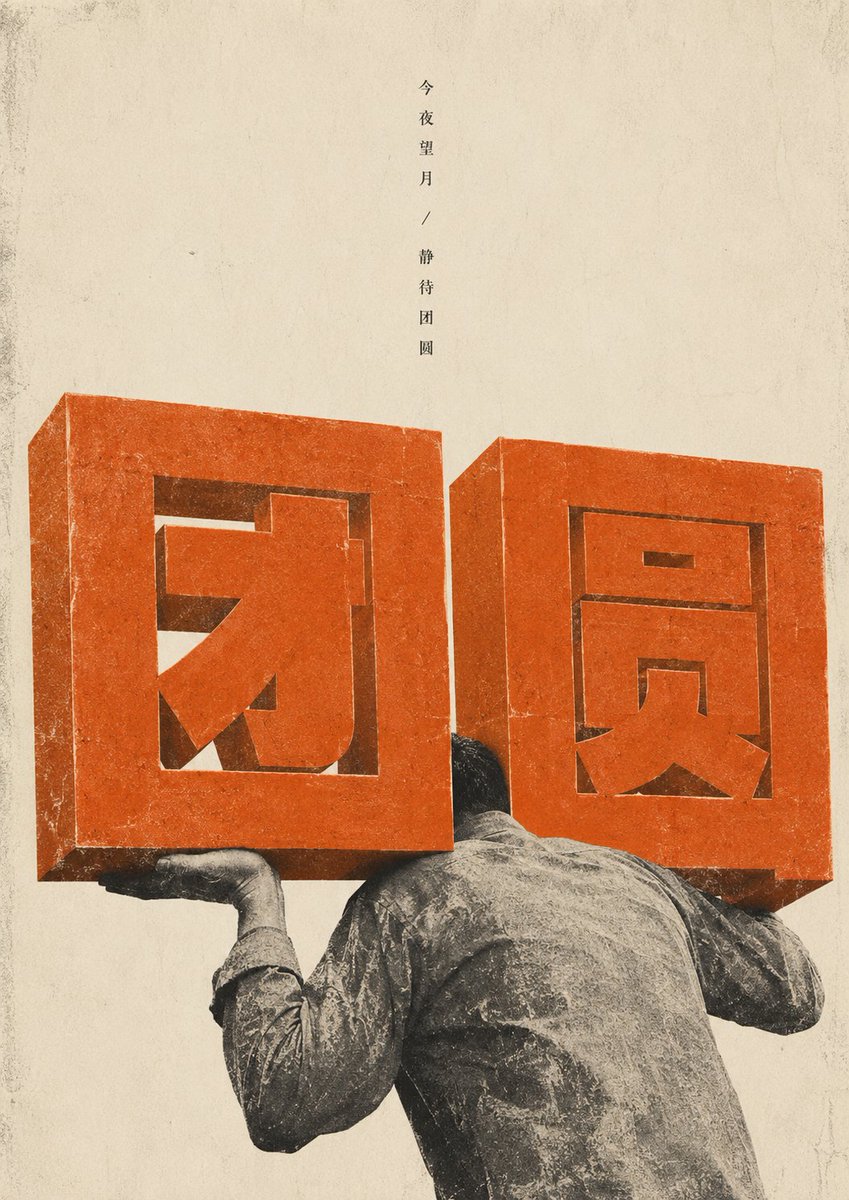
Melancholy Mid-Autumn Burden Poster
A vintage Chinese editorial poster showing a lone figure carrying two massive typographic cubes symbolizing reunion and restrained Mid-Autumn melancholy.
This is a GPT Image 2 prompt case for Graphic & Poster. Use the copy-ready prompt below to generate similar visuals, and review Awesome GPT Image 2 Prompts attribution plus commercial-use rights before reuse.
Free 1K preview
Generate one preview image instantly, no sign-up required.
Prompt
Copy-ready prompt
Goal: Create a minimalist Chinese Mid-Autumn themed poster with restrained anxiety and late-autumn melancholy, combining vintage printmaking, surreal burden imagery, and bold typography.

Canvas: Vertical portrait poster, 3:4 ratio, aged warm ivory paper background with visible grain, scratches, faded stains, and slightly darkened worn edges.

Layout: A grayscale adult male figure is seen from behind in the lower half of the poster, bent forward under weight, head mostly hidden between two oversized orange-red cubic blocks resting on his shoulders and hands. The composition is centered but slightly bottom-heavy, with large empty negative space above. At the top center, place one narrow vertical column of small black Chinese text.

Subject details: The man wears a worn, dusty long-sleeved jacket rendered in gritty black-and-white photographic halftone texture. His left hand supports the bottom of the left block, and his right arm supports the right block. His posture should feel strained, quiet, and resigned rather than dramatic.

Counted visible elements: exactly 2 large orange-red cubes; exactly 2 large carved Chinese characters, one on each cube; exactly 1 human figure; exactly 1 vertical text column at the top. The left cube contains the character “团” in a thick geometric cutout style, and the right cube contains the character “圆” in the same cutout style. The top vertical text reads {argument name="top vertical text" default="Tonight we gaze at the moon / quietly awaiting reunion"}.

Visual style: 1960s–1980s Chinese propaganda-poster influence mixed with modern surreal editorial design, risograph and silkscreen texture, muted burnt orange blocks, charcoal grayscale figure, rough ink edges, distressed paper, subtle misregistration, flat graphic shadows, quiet poetic mood.

Text and typography: Use tall, delicate, vertically arranged Chinese characters for the small top text; use massive blocky, architectural Chinese characters carved into the cubes for {argument name="left cube character" default="Reunion"} and {argument name="right cube character" default="Circle"}. Keep the typography legible and central to the symbolism.

Constraints: No moon illustration, no lanterns, no extra people, no modern city background, no decorative border, no watermark. Keep the image sparse, solemn, and symbolic.
Prompt variables
Editable argument placeholders found in the prompt, with their default values.
Best for
- - Graphic & Poster visual exploration
- - Image generation and reference-image edits
- - Reusable briefs that keep source attribution visible
Change these parts
- - Subject, product, character, or scene
- - Aspect ratio, camera, lighting, and background
- - Brand, text, color, and output constraints
Recommended model and settings
- - Model: gpt-image-2
- - Input mode: Text to Image
- - Aspect ratio: source
- - Commercial status: review original source
How to use this prompt
- 1. Copy the prompt and preserve its structure for the first test.
- 2. Replace the subject, context, and publishing channel.
- 3. Change one camera, lighting, or style variable per iteration.
- 4. Inspect the output, source, text, and rights before reuse.
Limitations, source, and reuse cautions
- - Generated output is an editable draft, not factual, legal, or rights evidence.
- - Review the linked source, people, brands, logos, text, and third-party media before commercial use.
More cases in this category
Prioritized by category, input mode compatibility, quality, and lower risk.



Reuse and source notes
Use this prompt safely after previewing the case.
- 1.Copy the prompt or open it directly in Dovoo with the generation button.
- 2.Adjust variables, aspect ratio, and reference images for your own use case.
- 3.Before publishing or paid usage, verify source rights, attribution requirements, and brand or likeness risks.
Can I use this prompt commercially?
Commercial-use status is allowed. Review the original source, license, brand constraints, and legal requirements before paid usage.
Where does this case come from?
This case is imported from Awesome GPT Image 2 Prompts; keep attribution visible and check the source URL before reuse.