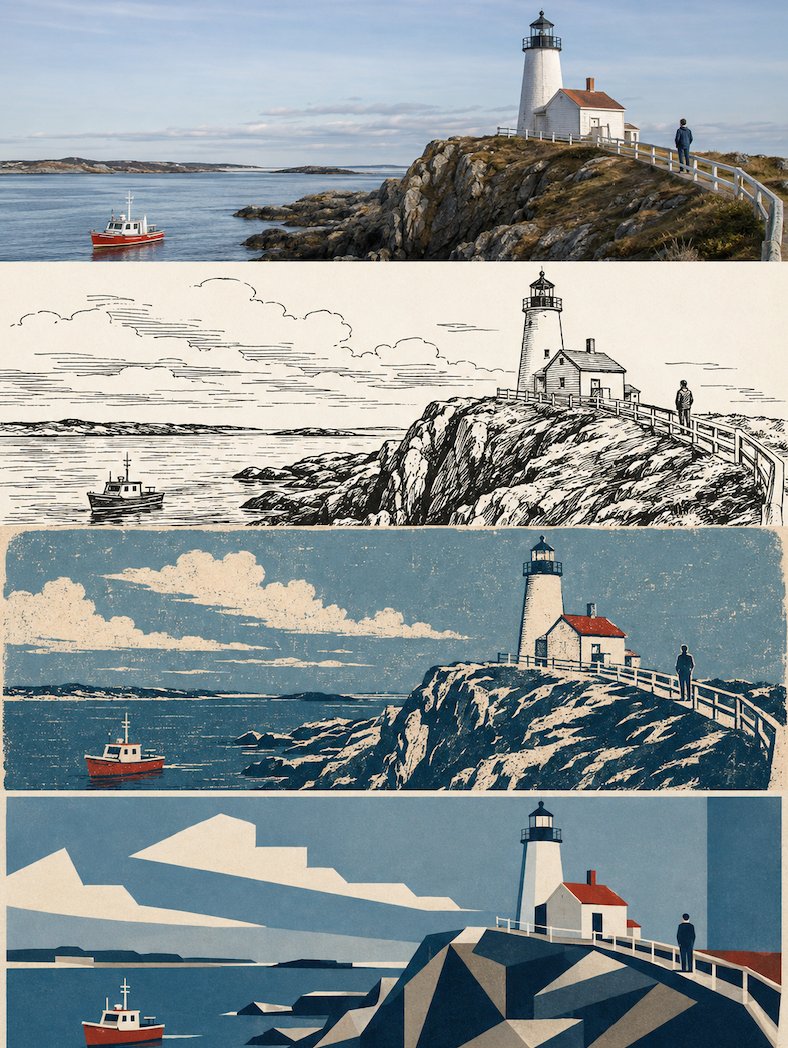
Multi-Layered Design Poster Transformation
A complex structural prompt that transforms an uploaded photo into a four-layered design poster with consistent subject across different styles.
This is a GPT Image 2 prompt case for Graphic & Poster. Use the copy-ready prompt below to generate similar visuals, and review Awesome GPT Image 2 Prompts attribution plus commercial-use rights before reuse.
Free 1K preview
Generate one preview image instantly, no sign-up required.
Free text preview doesn’t preserve reference-image consistency.
Prompt
Copy-ready prompt
Please transform the scene from the uploaded photo into a sophisticated design poster on the current layer, without multi-image splicing, outputting each photo individually. 'No multi-image splicing' means: do not mix different uploaded photos into the same finished product; each uploaded photo must independently generate a complete four-layer style poster.

[Overall Format and Four-Layer Structure]
Overall 3:4 vertical composition. The image is strictly divided from top to bottom into four equal horizontal areas, with each area's height exactly 25% of the total, maintaining a 1:1:1:1 ratio. The layers are seamless, with no dividing lines, white gaps, or borders.

Since each layer is approximately a 3:1 extremely flat banner, the subject must be adapted horizontally within each layer: maintain stable subject position and visual focus, expanding horizontally to avoid vertical stretching, crushing, or cropping key parts. Environments like sky, walls, or ground can be extended naturally, but no blurred duplication background filling.

[Consistency Across Four Layers]
All four layers must originate from the same uploaded photo and same moment. Maintain strict consistency in subject identity, count, facial features, pose, movement, gaze, clothing, architectural structure, and narrative relationships.

[Layer 1 | Original Photography]
Faithfully preserves the authentic photography texture of the uploaded photo. Keep original identity, composition, lighting, and atmosphere. Only restrained high-end photographic color grading and exposure adjustments are allowed.

[Layer 2 | 1970s Animation Style Black and White Ink Drawing]
This layer occupies 25% of the height. All style instructions are executed within this 3:1 flat area. Maintain core subject relationships while translating to a black and white ink aesthetic.

[Source Style Full Translation]
Create a black and white... of {argument name="subject" default="[subject]"}
Prompt variables
Editable argument placeholders found in the prompt, with their default values.
Best for
- - Graphic & Poster visual exploration
- - Image generation and reference-image edits
- - Reusable briefs that keep source attribution visible
Change these parts
- - Subject, product, character, or scene
- - Aspect ratio, camera, lighting, and background
- - Brand, text, color, and output constraints
Recommended model and settings
- - Model: gpt-image-2
- - Input mode: Image to Image
- - Aspect ratio: source
- - Commercial status: review original source
How to use this prompt
- 1. Copy the prompt and preserve its structure for the first test.
- 2. Replace the subject, context, and publishing channel.
- 3. Change one camera, lighting, or style variable per iteration.
- 4. Inspect the output, source, text, and rights before reuse.
Limitations, source, and reuse cautions
- - Generated output is an editable draft, not factual, legal, or rights evidence.
- - Review the linked source, people, brands, logos, text, and third-party media before commercial use.
More cases in this category
Prioritized by category, input mode compatibility, quality, and lower risk.
Reuse and source notes
Use this prompt safely after previewing the case.
- 1.Copy the prompt or open it directly in Dovoo with the generation button.
- 2.Adjust variables, aspect ratio, and reference images for your own use case.
- 3.Before publishing or paid usage, verify source rights, attribution requirements, and brand or likeness risks.
Can I use this prompt commercially?
Commercial-use status is allowed. Review the original source, license, brand constraints, and legal requirements before paid usage.
Where does this case come from?
This case is imported from Awesome GPT Image 2 Prompts; keep attribution visible and check the source URL before reuse.