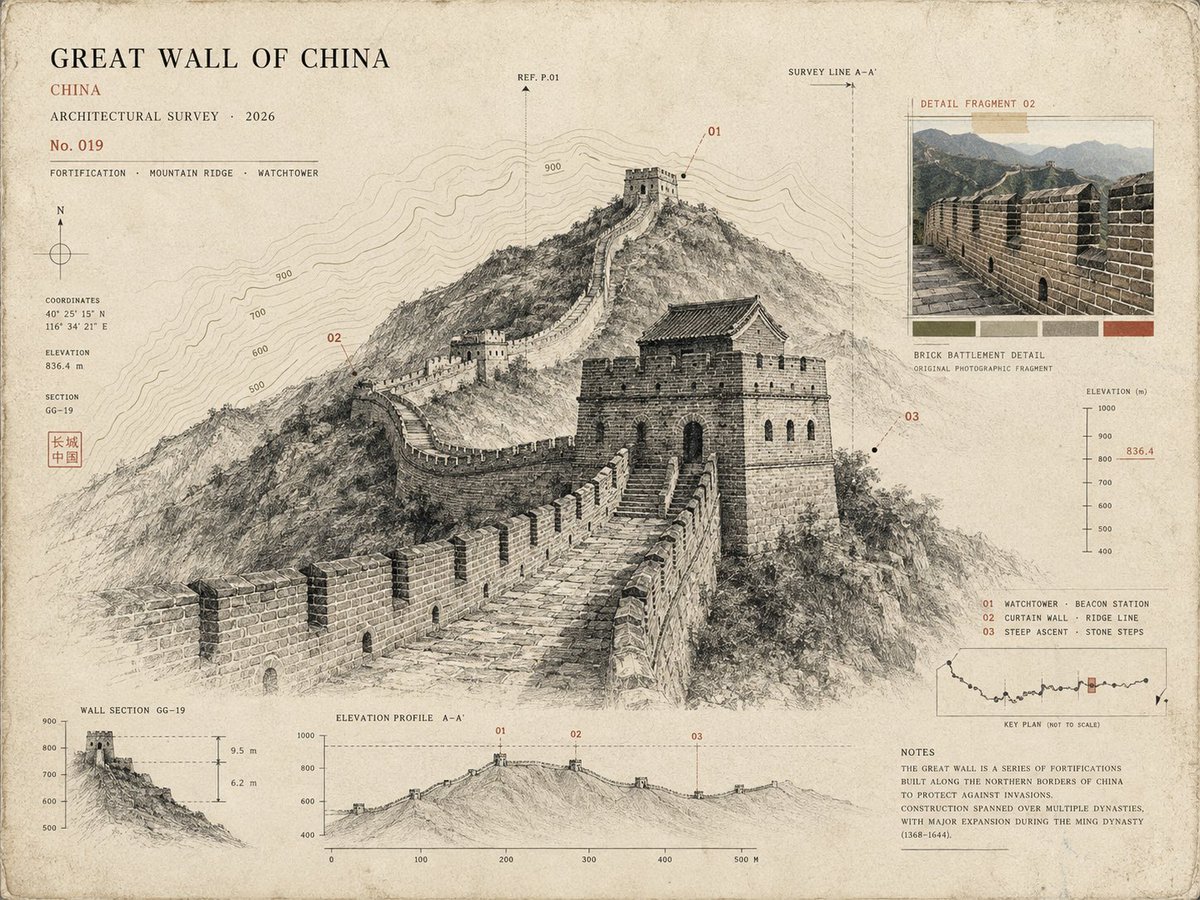
Architectural Museum Specimen Card
A sophisticated architectural study prompt that transforms a location photo into a curated museum specimen card with ink drawings and topographic maps.
This is a GPT Image 2 prompt case for Graphic & Poster. Use the copy-ready prompt below to generate similar visuals, and review Awesome GPT Image 2 Prompts attribution plus commercial-use rights before reuse.
Free 1K preview
Generate one preview image instantly, no sign-up required.
Free text preview doesn’t preserve reference-image consistency.
Prompt
Copy-ready prompt
Use the uploaded photo as the primary reference. Create a sophisticated 4:3 landscape {argument name="style" default="architectural specimen card inspired by museum archives, architectural surveys, and vintage scientific documentation"}. Keep the {argument name="location" default="original location"} recognizable, but transform the presentation into a curated architectural study rather than a normal travel poster. * Place the main landmark as a large monochrome architectural cutout or finely detailed ink drawing. * Add a smaller original-color photographic fragment showing one distinctive detail of the location. * Include a simplified topographic contour map behind the architecture. * Add tiny numbered reference points, measurement marks, arrows, elevation lines, and architectural annotation symbols. * Use an aged cream paper background with subtle grain and imperfections. * Palette: {argument name="palette" default="black, warm beige, muted olive, and one restrained accent color extracted from the landmark"}. * Typography should be small, elegant, and archival: location name, country, year, No. 019, and 3 descriptive keywords. * Create subtle imperfections resembling screen printing, drafting ink, pencil marks, and old paper. * Keep generous negative space and a sophisticated museum-catalog aesthetic. Important: Avoid postcard layouts, circular stamps, tourist graphics, excessive text, cartoon styling, glossy effects, 3D rendering, and overly detailed illustrations. Overall mood: architectural archive × museum specimen × old survey document × contemporary editorial design.Prompt variables
Editable argument placeholders found in the prompt, with their default values.
Best for
- - Graphic & Poster visual exploration
- - Image generation and reference-image edits
- - Reusable briefs that keep source attribution visible
Change these parts
- - Subject, product, character, or scene
- - Aspect ratio, camera, lighting, and background
- - Brand, text, color, and output constraints
Recommended model and settings
- - Model: gpt-image-2
- - Input mode: Image to Image
- - Aspect ratio: source
- - Commercial status: review original source
How to use this prompt
- 1. Copy the prompt and preserve its structure for the first test.
- 2. Replace the subject, context, and publishing channel.
- 3. Change one camera, lighting, or style variable per iteration.
- 4. Inspect the output, source, text, and rights before reuse.
Limitations, source, and reuse cautions
- - Generated output is an editable draft, not factual, legal, or rights evidence.
- - Review the linked source, people, brands, logos, text, and third-party media before commercial use.
More cases in this category
Prioritized by category, input mode compatibility, quality, and lower risk.
Reuse and source notes
Use this prompt safely after previewing the case.
- 1.Copy the prompt or open it directly in Dovoo with the generation button.
- 2.Adjust variables, aspect ratio, and reference images for your own use case.
- 3.Before publishing or paid usage, verify source rights, attribution requirements, and brand or likeness risks.
Can I use this prompt commercially?
Commercial-use status is allowed. Review the original source, license, brand constraints, and legal requirements before paid usage.
Where does this case come from?
This case is imported from Awesome GPT Image 2 Prompts; keep attribution visible and check the source URL before reuse.