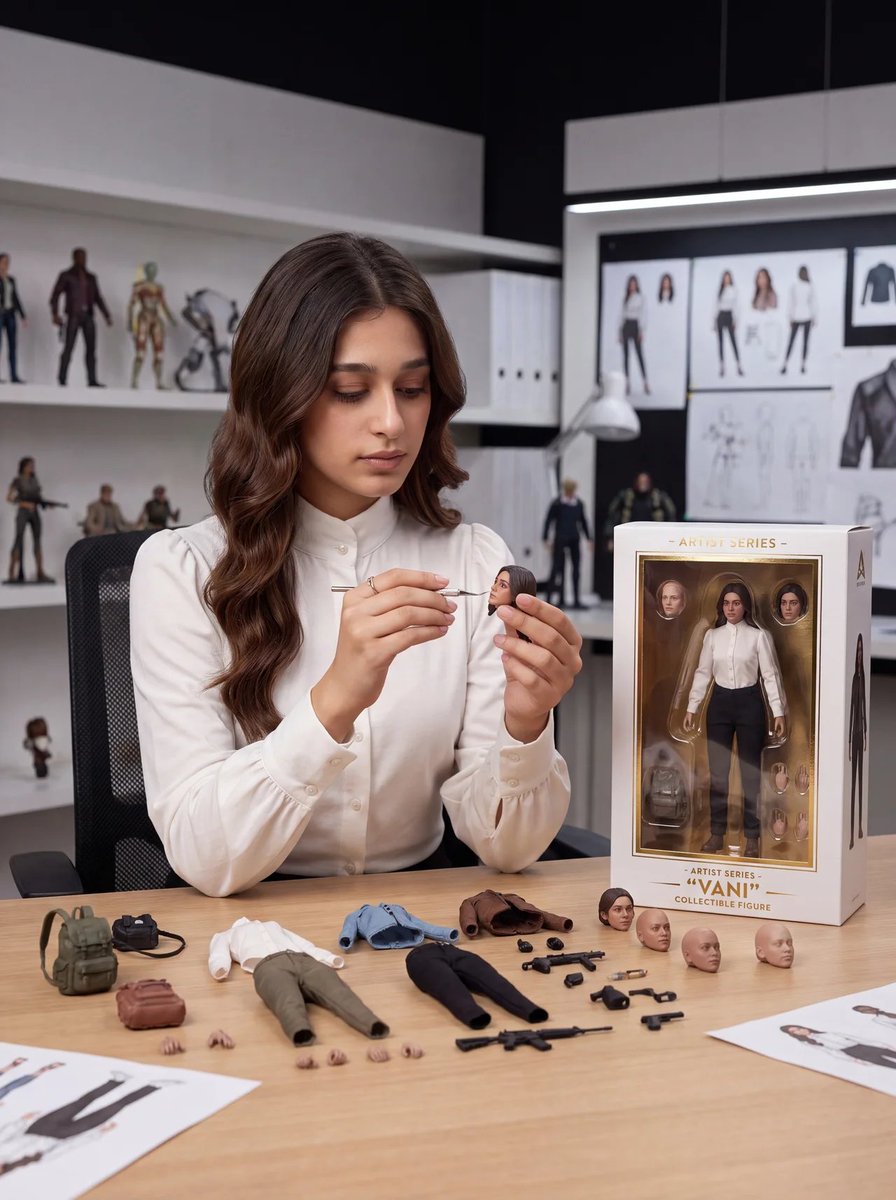
Toy Designer Collectible Figure Studio
A photorealistic studio scene of a toy designer painting a custom collectible action figure with boxed packaging and neatly arranged accessories.
This is a GPT Image 2 prompt case for Product & Commercial. Use the copy-ready prompt below to generate similar visuals, and review Awesome GPT Image 2 Prompts attribution plus commercial-use rights before reuse.
Free 1K preview
Generate one preview image instantly, no sign-up required.
Prompt
Copy-ready prompt
Goal: Create a realistic premium toy design studio scene where {argument name="character name" default="VANI"}, a young woman toy designer, is customizing a collectible action figure based on herself.

Canvas: Vertical 3:4 editorial product-photography composition, eye-level camera, shallow depth of field, crisp studio lighting, modern white-and-black designer workspace.

Main subject: A young woman with {argument name="hair color" default="long wavy dark brown hair"}, center-left at a wooden worktable, wearing a high-neck white blouse with buttoned cuffs. She sits in a black mesh office chair, looking down with calm concentration while holding a small action-figure head in one hand and painting it with a fine detail brush in the other. The miniature head should resemble her face and hairstyle.

Environment: Premium toy design studio with white shelving on the left and a large design board on the back wall. On the shelves, show exactly 8 background collectible figures: 5 standing figures on the upper shelf, 2 armed figures on the middle shelf, and 1 tiny chibi-style figure on the lower shelf. On the rear wall, include pinned character concept sheets showing front/back outfit views, head studies, pose sketches, and a jacket design. Add white binders, a desk lamp, and a few blurred prototype figures for depth.

Table layout and counted objects: Arrange exactly 32 visible loose toy-design components on the table: 1 green backpack, 1 small black bag, 1 brown pouch, 1 white shirt torso piece, 1 pair of olive pants with attached legs, 1 blue jacket, 1 brown jacket, 1 pair of black pants with attached legs, 3 separate painted human heads, 3 separate unpainted bald heads, 2 tiny loose hands near the pouch, 4 tiny loose hands in front of the pants, 1 long rifle, 1 compact rifle, 4 small pistols, and 6 small black accessory parts. Also include two printed character reference sheets partially visible at the bottom corners.

Packaging: On the right side of the table, place a premium boxed action figure with a clear display window and white packaging trimmed in gold. The box contains the full figure wearing a white blouse, black pants, and brown shoes, plus visible portrait/head accessories inside. Printed text on the box should read “ARTIST SERIES” at the top, “ARTIST SERIES” above the name, “{argument name="figure name" default="VANI"}” in large quotation marks, and “COLLECTIBLE FIGURE” below. Add a small minimalist triangular studio logo near the top-right of the box.

Visual style: Photorealistic, high-end collectible toy photography, realistic skin texture, soft shadows, accurate scale for 1/12 action-figure accessories, clean luxury product design aesthetic, neutral palette of whites, wood, black, olive green, brown, and muted blue.

Constraints: Keep all text legible, avoid extra logos or watermarks, do not add extra table accessories beyond the counted objects, keep the designer’s expression focused and serene, and make the boxed figure clearly match the designer.
Prompt variables
Editable argument placeholders found in the prompt, with their default values.
Best for
- - Product & Commercial visual exploration
- - Image generation and reference-image edits
- - Reusable briefs that keep source attribution visible
Change these parts
- - Subject, product, character, or scene
- - Aspect ratio, camera, lighting, and background
- - Brand, text, color, and output constraints
Recommended model and settings
- - Model: gpt-image-2
- - Input mode: Text to Image
- - Aspect ratio: source
- - Commercial status: review original source
How to use this prompt
- 1. Copy the prompt and preserve its structure for the first test.
- 2. Replace the subject, context, and publishing channel.
- 3. Change one camera, lighting, or style variable per iteration.
- 4. Inspect the output, source, text, and rights before reuse.
Limitations, source, and reuse cautions
- - Generated output is an editable draft, not factual, legal, or rights evidence.
- - Review the linked source, people, brands, logos, text, and third-party media before commercial use.
More cases in this category
Prioritized by category, input mode compatibility, quality, and lower risk.
Reuse and source notes
Use this prompt safely after previewing the case.
- 1.Copy the prompt or open it directly in Dovoo with the generation button.
- 2.Adjust variables, aspect ratio, and reference images for your own use case.
- 3.Before publishing or paid usage, verify source rights, attribution requirements, and brand or likeness risks.
Can I use this prompt commercially?
Commercial-use status is allowed. Review the original source, license, brand constraints, and legal requirements before paid usage.
Where does this case come from?
This case is imported from Awesome GPT Image 2 Prompts; keep attribution visible and check the source URL before reuse.