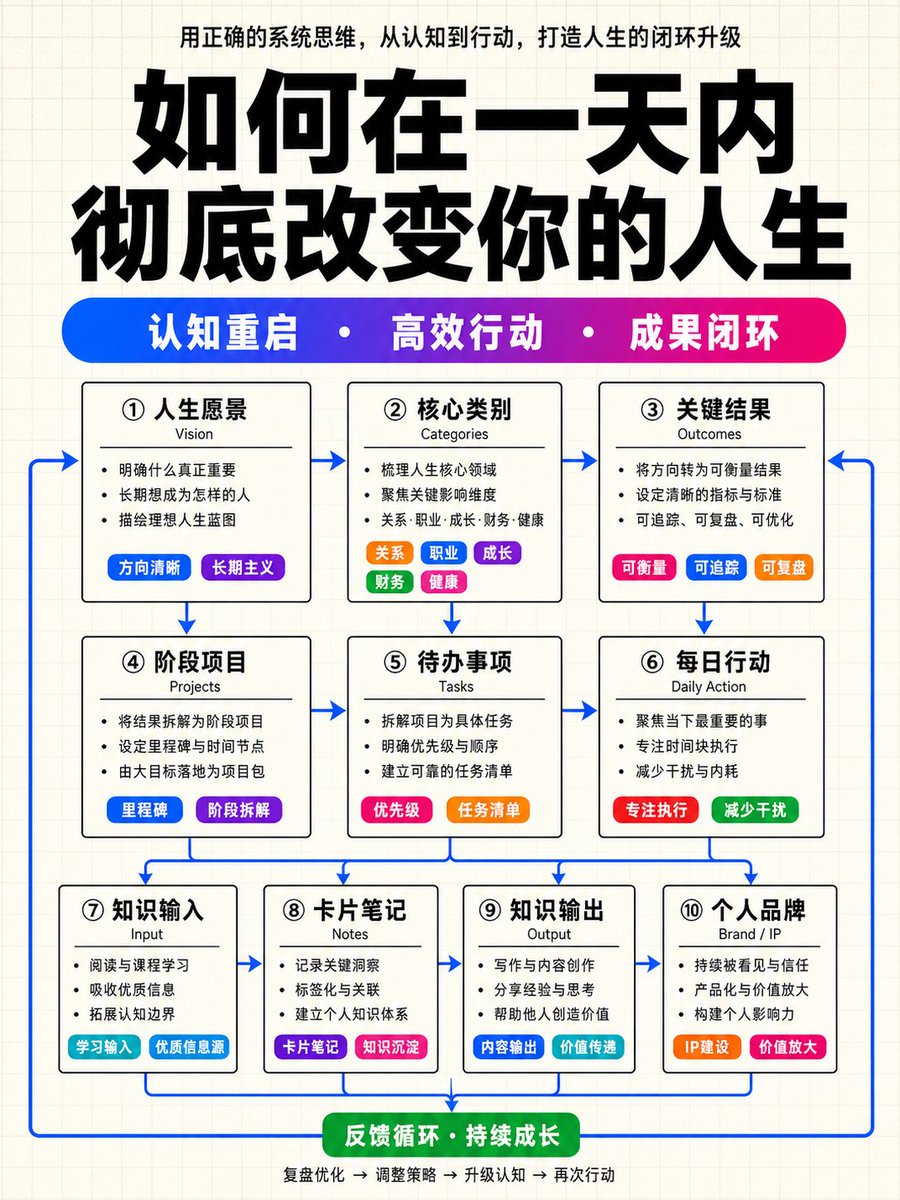
Structured Knowledge Architecture Infographic
A complex system prompt for generating professional, grid-based knowledge maps with high-saturation accent colors and clear hierarchy.
This is a GPT Image 2 prompt case for 平面海报. Use the copy-ready prompt below to generate similar visuals, and review Awesome GPT Image 2 Prompts attribution plus commercial-use rights before reuse.
Need the full prompt set? Use the 平面海报 topic hub for more related examples, or open the GPT Image 2 prompt library for the full example index, reusable structures, and source attribution.
Prompt
Copy-ready prompt
请生成一张高端的Chinese知识架构信息图,采用 9:16 的竖向构图。整体视觉语言固定为:浅奶油白网格纸背景 + 封面级超大加粗标题 + 高饱和度蓝-紫-洋红渐变关键词胶囊条 + 白色底黑色边框的结构模块 + 模块内彩色小胶囊标签 + 蓝色箭头闭环连接。这不是普通的流程图或科技 UI 面板。请生成一张类似于高质量知识博主课程封面、知识付费体系图或方法论架构海报的高端信息图。整体风格必须克制、简洁且高度有序,但局部的彩色标签必须足够醒目,使图像比普通的黑白架构图更丰富、更有层次感。1. 固定视觉风格:背景:使用带有极细浅灰色网格线的浅奶油白网格纸背景。禁止使用渐变、深色背景、重阴影、毛玻璃效果、拟物化、科技 HUD 或赛博 UI。整体氛围:极简、克制、理性且结构有序。黑白骨架,颜色仅用于关键词条、小标签、强调块和蓝色箭头。2. 顶部标题区域布局:顶部描述句(提取自内容的居中小字)、超大加粗Chinese主标题(视觉冲击力最强的元素),以及水平高饱和度渐变关键词胶囊条(蓝到紫到洋红的过渡,包含 3 个由白点分隔的核心关键词)。3. 主模块结构规则:3 层结构(3 + 3 + 4 模块)。总共 10 个白色底、黑色边框且带有小圆角的模块。每个模块包含Chinese标题、英文副标题、2-4 个短句以及彩色小胶囊标签。4. 内容自动编排规则:自动提取并整理内容为策略/认知(第 1 层)、行动/执行(第 2 层)以及输入/输出/品牌(第 3 层)。使用彩色标签标注类别、来源、方法、工具等。如果内容不足,请保持 3+3+4 的结构并进行合理的概括。5. 模块内部色彩强调:鲜艳的颜色必须来自标签,而非背景色。至少 5 个模块必须包含来自蓝、紫、洋红、橙、绿、青色系的饱和度较高的小胶囊标签。6. 蓝色箭头闭环规则:使用中高饱和度的蓝色箭头展示从上到下的流动,并返回形成闭环。7. 文字层级:从主标题(最粗/最大)到渐变条文字、模块标题,再到正文,层级清晰。8. 最终验收标准:确保网格背景、顶部描述、超大标题、渐变关键词条、3+3+4 模块结构、彩色标签以及蓝色闭环箭头全部呈现,并满足风格要求。9. 禁止事项:禁止使用渐变/深色背景、大面积色块、毛玻璃效果、复杂插画、PPT 或思维导图风格,以及灰色箭头。10. 用户变量:顶部标题(在此处填入主标题)和内容(在此处填入需要自动处理的自然语言内容)。
More cases in this category
Prioritized by category, input mode compatibility, quality, and lower risk.

Reuse and source notes
Use this prompt safely after previewing the case.
- 1.Copy the prompt or open it directly in Dovoo with the generation button.
- 2.Adjust variables, aspect ratio, and reference images for your own use case.
- 3.Before publishing or paid usage, verify source rights, attribution requirements, and brand or likeness risks.
Can I use this prompt commercially?
Commercial-use status is allowed. Review the original source, license, brand constraints, and legal requirements before paid usage.
Where does this case come from?
This case is imported from Awesome GPT Image 2 Prompts; keep attribution visible and check the source URL before reuse.