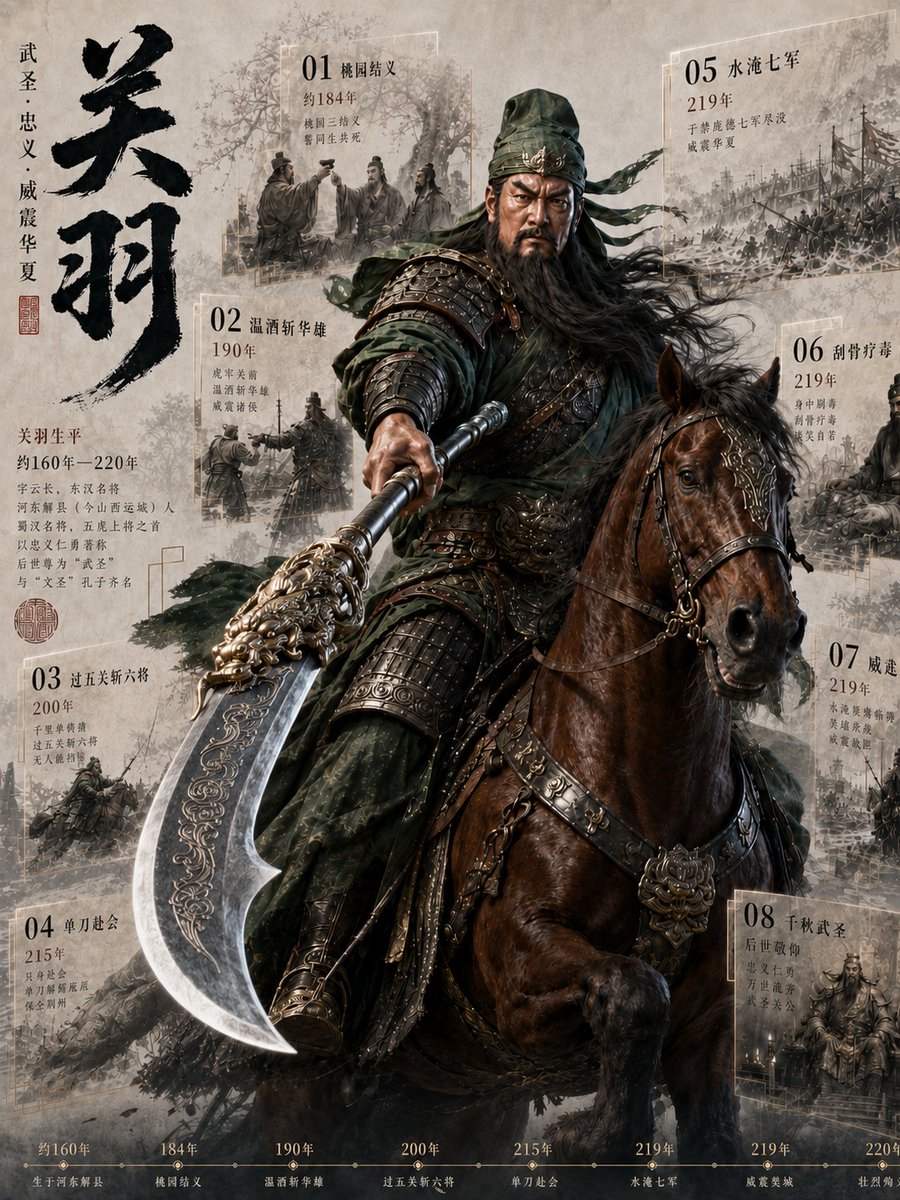
Guan Yu Historical Infographic Poster
A cinematic Three Kingdoms poster showing Guan Yu on horseback with eight illustrated chronology panels and a bottom timeline.
This is a GPT Image 2 prompt case for 平面海报. Use the copy-ready prompt below to generate similar visuals, and review Awesome GPT Image 2 Prompts attribution plus commercial-use rights before reuse.
Prompt
Copy-ready prompt
Goal: To create a picture about{argument name="character name" default="Guan Yu"} This vertical, epic Chinese infographic poster combines cinematic portraits of Three Kingdoms generals with parchment-style chronicle panels. Canvas: High vertical poster, 3:4 aspect ratio, background of aged beige Xuan paper with ink stains, indistinct mountains, smoke, battlefield silhouettes, and the texture of a museum scroll. Overall color scheme: dark brown, charcoal gray, dark olive green, bronze, and soft blood brown. Subject: An extremely detailed ancient Chinese general.{argument name="character name" default="Guan Yu"} Centered on the canvas is a powerful, dark brown warhorse. He wears a layered, deep green robe over a magnificent black bronze scale armor, complete with sculpted shoulder guards, leather belts, and metal studs. A green turban hangs from his head, its long ribbons flowing to the right. His long black hair and beard billow in the wind; his face is deliberately softened and blurred, like a smooth mask, while the armor and clothing retain sharp details. He wields a massive, ornate guan dao (a type of halberd), extending from the center to the lower left foreground; the blade is enormous, silver, engraved with gold patterns, and employs a strong perspective effect. The warhorse has flowing muscles, an alert expression, and is adorned with ornate reins, bronze plaques, and decorative leather. Its forelegs are raised, and its body is slightly turned to the right. Left-side title area: A large, vertically arranged black ink calligraphy title is placed in the upper left corner.{argument name="large calligraphy title" default="Guan Yu"} Next to it is a smaller vertical Chinese text reading "Martial Saint, Loyalty and Righteousness, Awe-inspiring Throughout China," with a small red seal below. Below the title is a brief biographical text: "Biography of Guan Yu / c. 160–220 / courtesy name Yunchang, original name Changsheng / from Jie County, Hedong (present-day Yuncheng, Shanxi) / a famous general of Shu Han, the head of the Five Tiger Generals / renowned for loyalty, righteousness, benevolence, and courage / later revered as the Martial Saint / on par with Confucius, the 'Sage of Literature'." Chronological panel: Eight semi-transparent rectangular parchment cards are arranged around the central equestrian figure. Each card contains a two-digit number, a prominent Chinese event title, the year, 2–4 lines of smaller Chinese annotations, and a faded monochrome battlefield illustration behind the text. The cards should be presented as layered cellophane frames with thin white borders and ink-wash war scenes. 1. Upper left card: "01 Oath of the Peach Garden," year "c. 184," showing the three sworn brothers under a tree. 2. Left center card: "02 Warm Wine Slaying Hua Xiong", year "190", showing a general and soldiers near the battlefield flags. 3. Left bottom card: "03 Passing Five Gates and Slaying Six Generals", year "200", showing a battle scene of cavalry passing through passes or fortresses. 4. Left bottom card: "04 Single-handedly Attending the Meeting", year "215", showing a dramatic scene of a riverside or military meeting. 5. Right top card: "05 Flooding the Seven Armies", year "219", showing an army, ships, and chaotic scene in a flood. 6. Right upper center card: "06 Scraping the Bone to Remove Poison", year "219", showing a medical scene and soldiers nearby. 7. Right lower center card: "07 Dominating China", year "219", showing a battlefield shrouded in smoke and a dense army. 8. Right bottom card: "08 Defeat at Maicheng", year "220", showing a seated general and the tragic atmosphere of the final battle. Bottom Timeline: Add a thin, horizontal timeline along the bottom edge, containing eight markers corresponding to events: "Born around 160 AD in Jie County, Hedong," "Oath of the Peach Garden in 184 AD," "Slaying Hua Xiong with Warm Wine in 190 AD," "Passing Five Gates and Slaying Six Generals in 200 AD," "Going to the Banquet Alone in 215 AD," "Flooding the Seven Armies in 219 AD," "Dominating China in 219 AD," and "Defeat at Maicheng in 220 AD." Use small gold dots connected by thin lines, accompanied by compact serif Chinese captions. Visual Style: Epic historical fantasy realism style, Chinese ink painting poster design, cinematic lighting, high-detail metal engraving, a smoky atmosphere, battlefield dust, layered parchment collages, and elegant typography. The central rider and warhorse are sharply contrasted and clearly defined; the background cards are slightly faded and reduced in saturation. Constraints: Maintain eight chronology cards and eight bottom timeline points. Do not add modern objects, logos, watermarks, or additional figures in the foreground. Retain the Chinese text content for poster layout, and keep all composition descriptions in English.Prompt variables
Editable argument placeholders found in the prompt, with their default values.
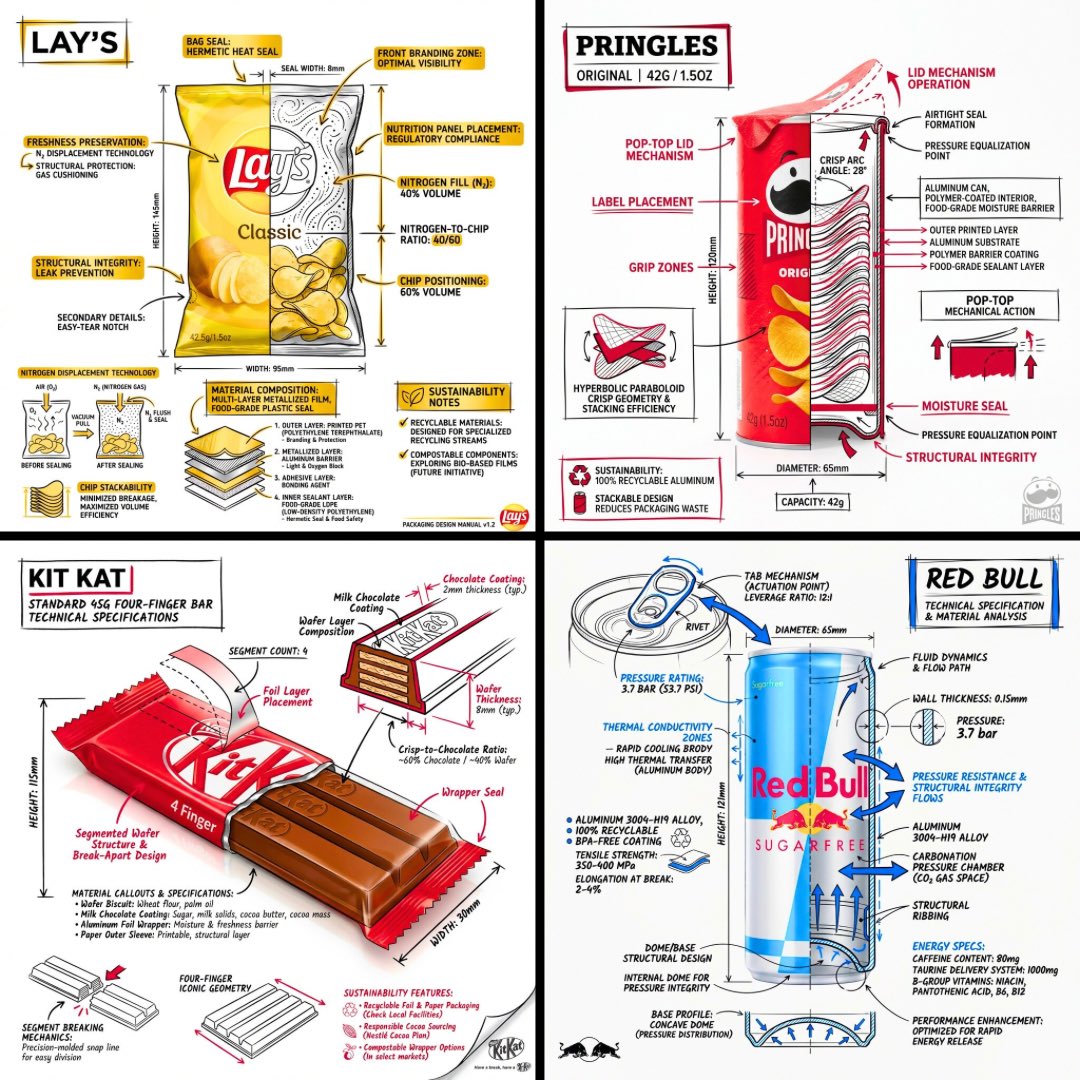
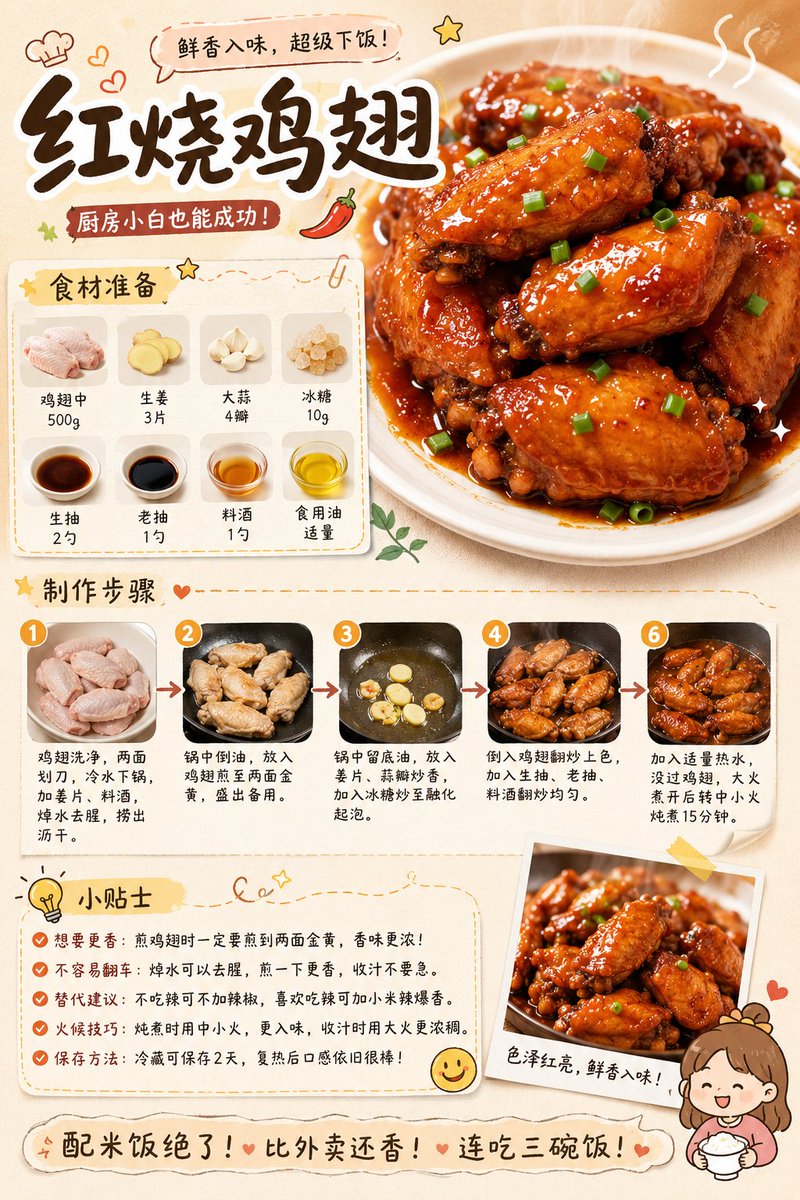
More cases in this category
Prioritized by category, input mode compatibility, quality, and lower risk.




Reuse and source notes
Use this prompt safely after previewing the case.
- 1.Copy the prompt or open it directly in Dovoo with the generation button.
- 2.Adjust variables, aspect ratio, and reference images for your own use case.
- 3.Before publishing or paid usage, verify source rights, attribution requirements, and brand or likeness risks.
Can I use this prompt commercially?
Commercial-use status is allowed. Review the original source, license, brand constraints, and legal requirements before paid usage.
Where does this case come from?
This case is imported from Awesome GPT Image 2 Prompts; keep attribution visible and check the source URL before reuse.