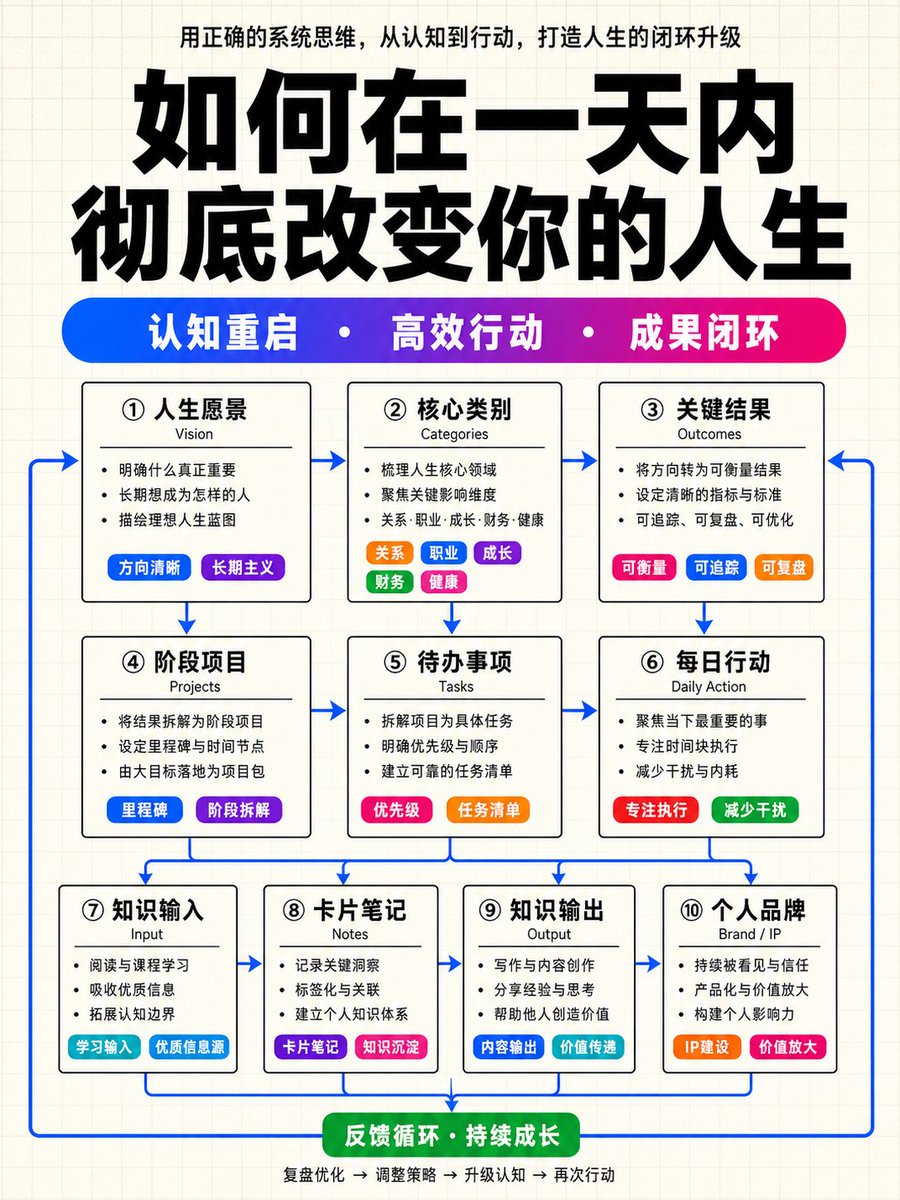
Structured Knowledge Architecture Infographic
A complex system prompt for generating professional, grid-based knowledge maps with high-saturation accent colors and clear hierarchy.
提示词
可复制提示词
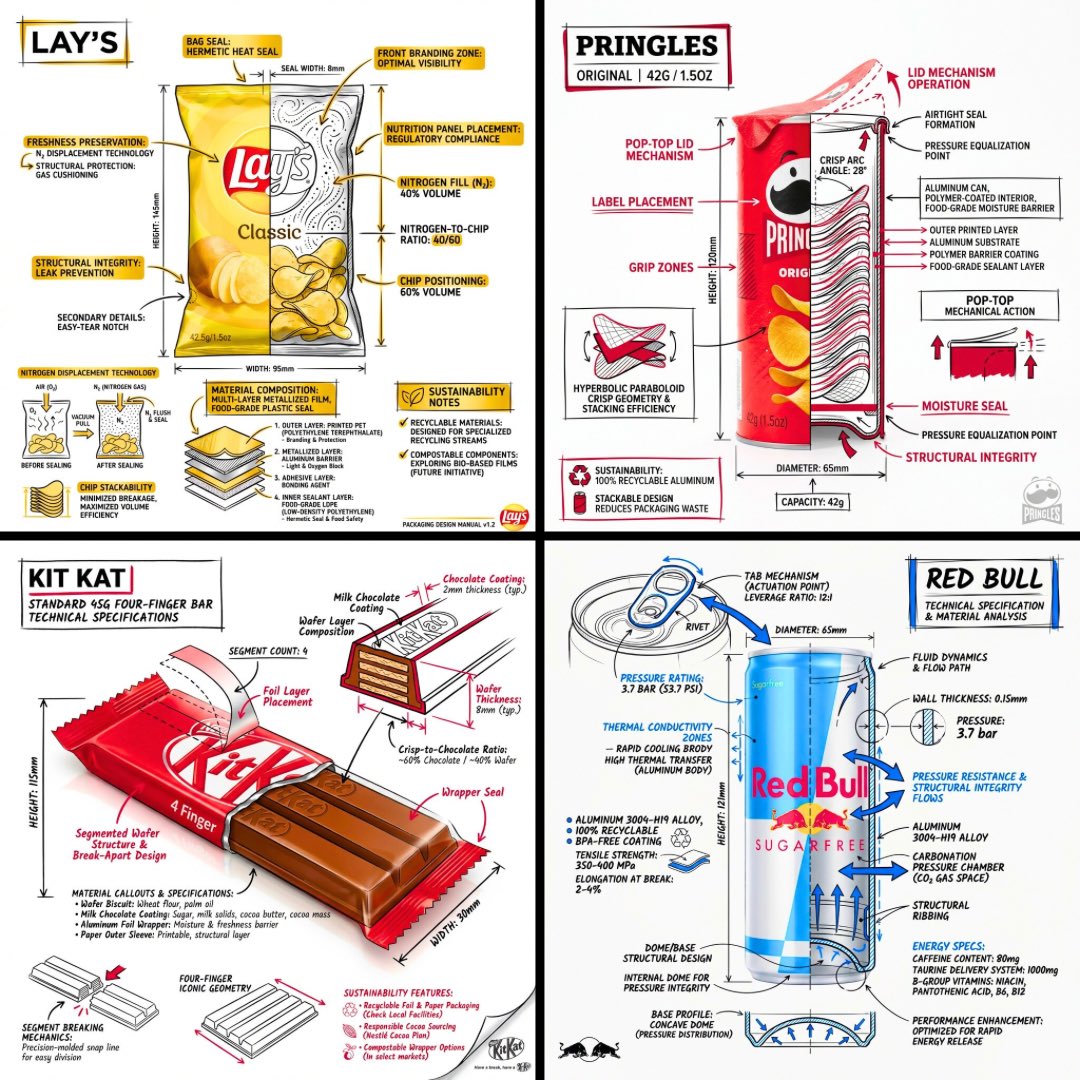
Please generate a high-end Chinese knowledge architecture infographic with a vertical 9:16 composition. The overall visual language is fixed as: light cream-white grid paper background + cover-level oversized bold title + high-saturation blue-purple-magenta gradient keyword capsule bar + white-base black-bordered structural modules + colorful small capsule labels inside modules + blue arrow closed-loop connections. This is not an ordinary flowchart or a tech UI panel. Please generate a high-end infographic similar to a high-quality knowledge blogger's course cover, knowledge payment system diagram, or methodology architecture poster. The overall style must be restrained, clean, and highly orderly, but local colorful labels must be striking enough to make the image richer and more layered than an ordinary black-and-white architecture diagram. 1. Fixed Visual Style: Background: Use a light cream-white grid paper background with very fine, light gray grid lines. No gradients, dark backgrounds, heavy shadows, glassmorphism, skeuomorphism, tech HUD, or cyber UI. General Vibe: Minimalist, restrained, rational, and orderly structure. Black and white skeleton with colors used only for keyword bars, small labels, emphasis blocks, and blue arrows. 2. Top Title Area Layout: Top description sentence (small centered text extracted from content), Oversized bold Chinese main title (the largest visual element with high visual impact), and a Horizontal high-saturation gradient keyword capsule bar (blue to purple to magenta transition with 3 core keywords separated by white dots). 3. Main Module Structure Rules: 3-layer structure (3 + 3 + 4 modules). Total of 10 white-base modules with black borders and small rounded corners. Each module contains a Chinese title, English sub-title, 2-4 short sentences, and colorful small capsule labels. 4. Content Automatic Arrangement Rules: Automatically extract and organize content into Strategy/Cognition (Layer 1), Action/Execution (Layer 2), and Input/Output/Brand (Layer 3). Use colorful labels for categories, sources, methods, tools, etc. If content is insufficient, maintain the 3+3+4 structure with reasonable generalizations. 5. Module Internal Color Accents: Vibrant colors must come from labels, not background colors. At least 5 modules must include high-saturation small capsule labels from the pool of blue, purple, magenta, orange, green, and cyan. 6. Blue Arrow Loop Rules: Use medium-high saturation blue arrows to show the flow from top to bottom and returning to create a closed loop. 7. Text Hierarchy: Clear weighting from the main title (thickest/largest) to the gradient bar text, module titles, and then body text. 8. Final Acceptance Criteria: Ensure grid background, top description, oversized title, gradient keyword bar, 3+3+4 module structure, colorful labels, and blue closed-loop arrows are all present and satisfy the style requirements. 9. Prohibitions: No gradient/dark backgrounds, no large color cards, no glassmorphism, no complex illustrations, no PPT or mind map styles, and no gray arrows. 10. User Variables: Top Title (Fill in main title here) and Content (Fill in natural language content here to be automatically processed).
同分类案例
优先推荐同分类、同输入模式且风险更低的案例。
复用与来源说明
看完案例后,再安全复用这个提示词。
- 1.复制 prompt,或点击生成入口在 Dovoo 中直接打开。
- 2.按你的用途调整变量、画面比例和参考图。
- 3.发布或商用前,复核来源权利、归因要求以及品牌、肖像或版权风险。
这个提示词可以商用吗?
当前商业使用状态为 allowed。付费或公开使用前,请复核原始来源、许可、品牌限制和法务要求。
这个案例来自哪里?
该案例导入自 GPT Image 2 prompt catalog;复用时请保留来源归因,并打开来源 URL 检查最新授权信息。