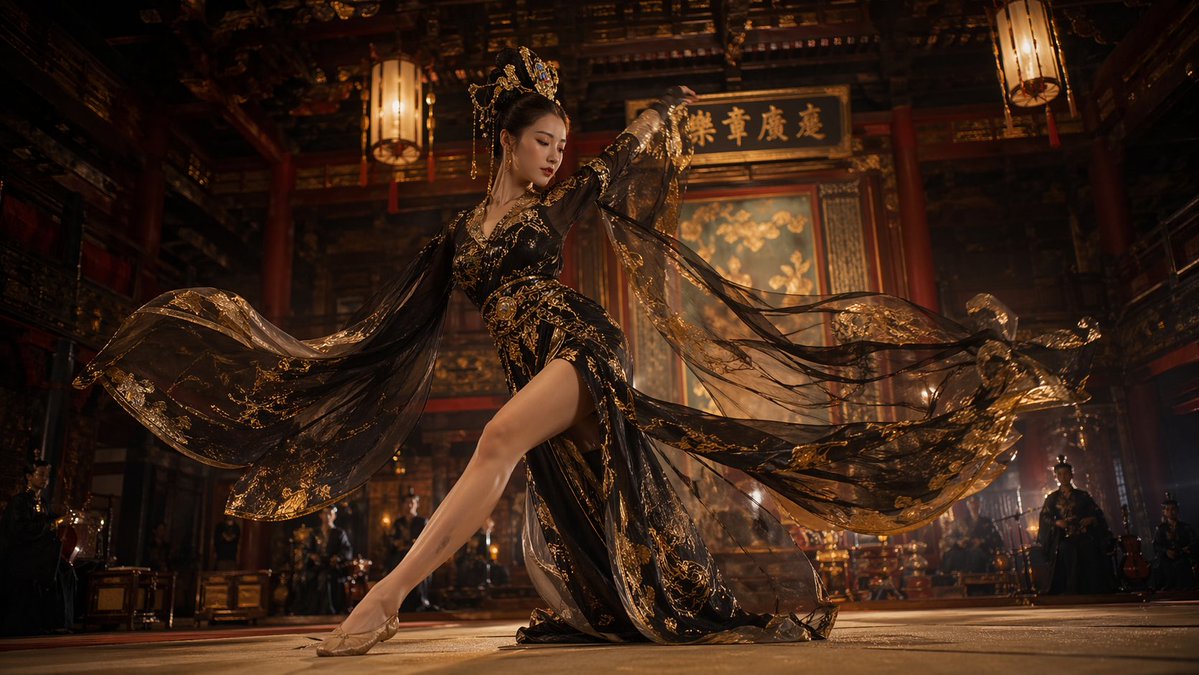
Tang Dynasty Palace Dancer
This prompt generates a cinematic ultra-realistic historical Chinese dance scene, ideal for dramatic film-style concept art or social media comparisons of image model realism.
This is a GPT Image 2 prompt case for 人像角色. Use the copy-ready prompt below to generate similar visuals, and review Awesome GPT Image 2 Prompts attribution plus commercial-use rights before reuse.
Free 1K preview
Generate one preview image instantly, no sign-up required.
Prompt
Copy-ready prompt
A cinematic, hyper-realistic scene depicts a Tang Dynasty court dancer performing in the grand hall of a magnificent ancient Chinese palace at night. A beautiful woman dressed in elegant {argument name="costume color" default="Black and gold color scheme"} A woman in a silk ballet dress stands in the center of the frame, striking a dramatic dance pose. Shot from an extremely low angle with a slightly wide-angle lens, the image creates an immersive and grand visual effect. Her costume is embroidered with dense, metallic gold patterns, layered with semi-transparent fabric, a high slit revealing an outstretched leg, long, sheer sleeves, and a wide, flowing silk veil sweeping outwards in two huge arcs, creating a strong sense of movement. She wears exquisite gold accessories, well-fitting gold ballet shoes, and her long black hair is styled in an updo adorned with dangling ornaments, topped with a magnificent gold headdress. Her makeup is refined and noble. The palace interior is spacious and luxurious, with tall red wooden pillars, dark carved beams, two large lanterns hanging overhead, a luminous ceremonial backdrop, and a huge calligraphic plaque hanging high behind her. In the softly blurred background, several attendants and musicians, including at least six visible figures, are arranged at the back and sides of the hall. The lighting is dramatic and cinematic, employing warm amber lantern light, golden highlights on clothing, soft shadow transitions, subtle mist, depth-of-field effects, and slight motion blur from rotating fabrics. Highly detailed textures, realistic skin rendering, rich contrast, a luxurious atmosphere, the grandeur of ancient Chinese palaces, and widescreen composition further enhance the experience.{argument name="aspect ratio" default="16:9"} .Prompt variables
Editable argument placeholders found in the prompt, with their default values.
Best for
- - 人像角色 visual exploration
- - Image generation and reference-image edits
- - Reusable briefs that keep source attribution visible
Change these parts
- - Subject, product, character, or scene
- - Aspect ratio, camera, lighting, and background
- - Brand, text, color, and output constraints
Recommended model and settings
- - Model: gpt-image-2
- - Input mode: Text to Image
- - Aspect ratio: source
- - Commercial status: review original source
How to use this prompt
- 1. Copy the prompt and preserve its structure for the first test.
- 2. Replace the subject, context, and publishing channel.
- 3. Change one camera, lighting, or style variable per iteration.
- 4. Inspect the output, source, text, and rights before reuse.
Limitations, source, and reuse cautions
- - Generated output is an editable draft, not factual, legal, or rights evidence.
- - Review the linked source, people, brands, logos, text, and third-party media before commercial use.
More cases in this category
Prioritized by category, input mode compatibility, quality, and lower risk.
Reuse and source notes
Use this prompt safely after previewing the case.
- 1.Copy the prompt or open it directly in Dovoo with the generation button.
- 2.Adjust variables, aspect ratio, and reference images for your own use case.
- 3.Before publishing or paid usage, verify source rights, attribution requirements, and brand or likeness risks.
Can I use this prompt commercially?
Commercial-use status is allowed. Review the original source, license, brand constraints, and legal requirements before paid usage.
Where does this case come from?
This case is imported from Awesome GPT Image 2 Prompts; keep attribution visible and check the source URL before reuse.