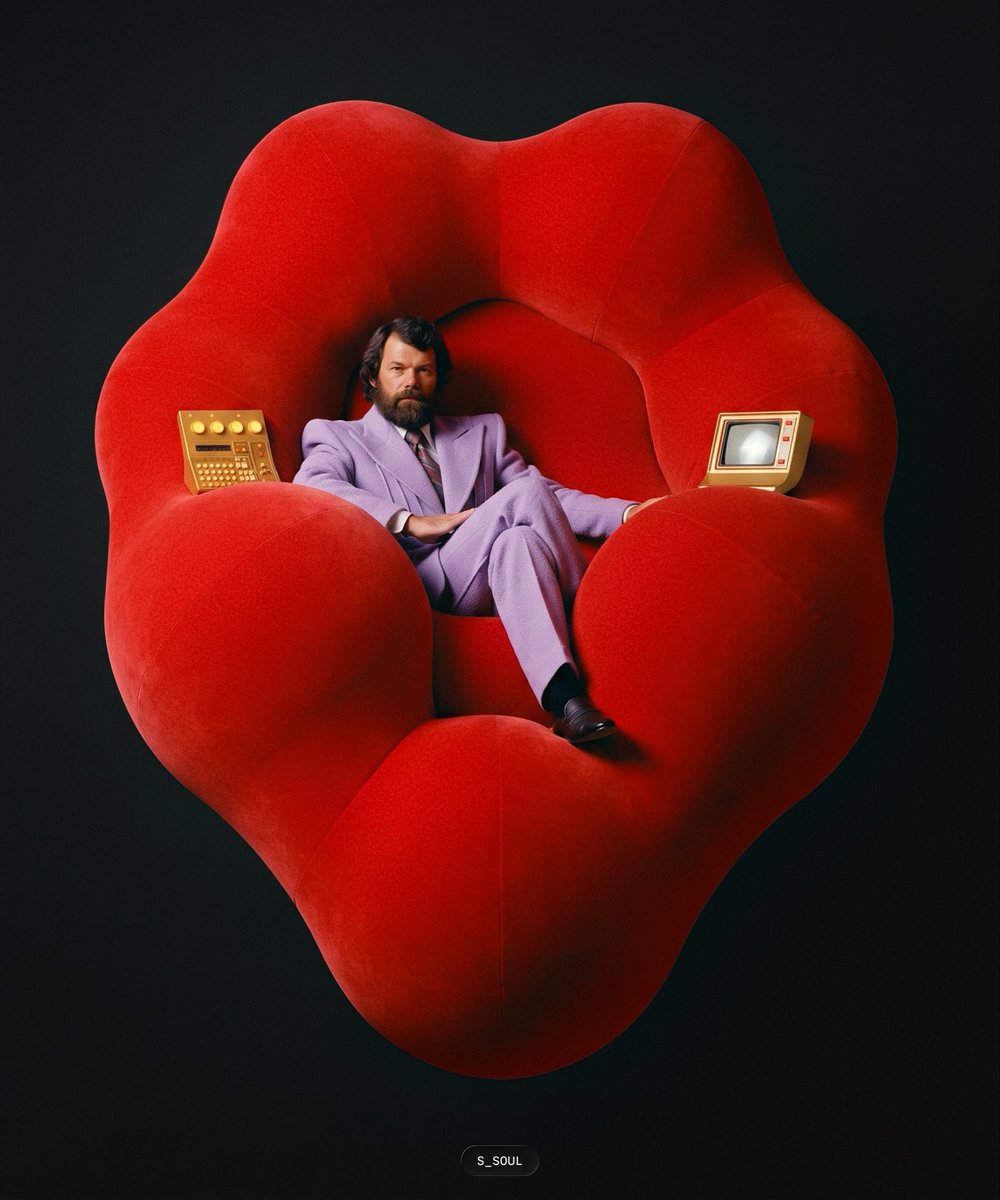
Retro Surreal Chair Portrait
Creates a polished surreal retro studio portrait from a rough composition sketch, useful for turning layout doodles into finished editorial imagery.
This is a GPT Image 2 prompt case for Portrait & Character. Use the copy-ready prompt below to generate similar visuals, and review Awesome GPT Image 2 Prompts attribution plus commercial-use rights before reuse.
Free 1K preview
Generate one preview image instantly, no sign-up required.
Free text preview doesn’t preserve reference-image consistency.
Prompt
Copy-ready prompt
Using REFERENCE_0 as a rough composition sketch, turn it into a polished surreal studio portrait. Keep the same overall layout: a large rounded organic chair shape filling the frame, a single seated figure reclining in the center, and one small device on each side where the sketch indicates objects. Render it as a high-end retro editorial photograph with dramatic soft lighting on a dark seamless background.

Subject and composition: Place exactly 1 seated person in the central hollow of the chair: {argument name="character description" default="a serious bearded middle-aged man in a lavender suit"}. Pose him relaxed and confident, legs crossed, leaning back into the chair.

Chair: Replace the sketched blob with {argument name="chair design" default="an oversized plush red sculptural chair shaped like lips or a heart, with rounded petal-like cushions"}. Make it velvety, soft, enormous, and centered, with visible cushion seams and deep shadows.

Added objects: Include exactly 2 retro electronic devices positioned according to the sketch: 1 gold control panel with buttons and dials on the left arm of the chair, and 1 beige small CRT monitor terminal on the right arm of the chair.

Style: {argument name="visual style" default="1980s surreal fashion editorial photography"}, realistic fabric texture, cinematic studio lighting, rich red color, dark black-green background, square-to-vertical portrait crop.

Text: Add only a tiny bottom-center signature label reading {argument name="signature text" default="S_SOUL"}. Avoid extra text, logos, or additional people.
Prompt variables
Editable argument placeholders found in the prompt, with their default values.
Best for
- - Portrait & Character visual exploration
- - Image generation and reference-image edits
- - Reusable briefs that keep source attribution visible
Change these parts
- - Subject, product, character, or scene
- - Aspect ratio, camera, lighting, and background
- - Brand, text, color, and output constraints
Recommended model and settings
- - Model: gpt-image-2
- - Input mode: Image to Image
- - Aspect ratio: source
- - Commercial status: review original source
How to use this prompt
- 1. Copy the prompt and preserve its structure for the first test.
- 2. Replace the subject, context, and publishing channel.
- 3. Change one camera, lighting, or style variable per iteration.
- 4. Inspect the output, source, text, and rights before reuse.
Limitations, source, and reuse cautions
- - Generated output is an editable draft, not factual, legal, or rights evidence.
- - Review the linked source, people, brands, logos, text, and third-party media before commercial use.
More cases in this category
Prioritized by category, input mode compatibility, quality, and lower risk.
Reuse and source notes
Use this prompt safely after previewing the case.
- 1.Copy the prompt or open it directly in Dovoo with the generation button.
- 2.Adjust variables, aspect ratio, and reference images for your own use case.
- 3.Before publishing or paid usage, verify source rights, attribution requirements, and brand or likeness risks.
Can I use this prompt commercially?
Commercial-use status is allowed. Review the original source, license, brand constraints, and legal requirements before paid usage.
Where does this case come from?
This case is imported from Awesome GPT Image 2 Prompts; keep attribution visible and check the source URL before reuse.