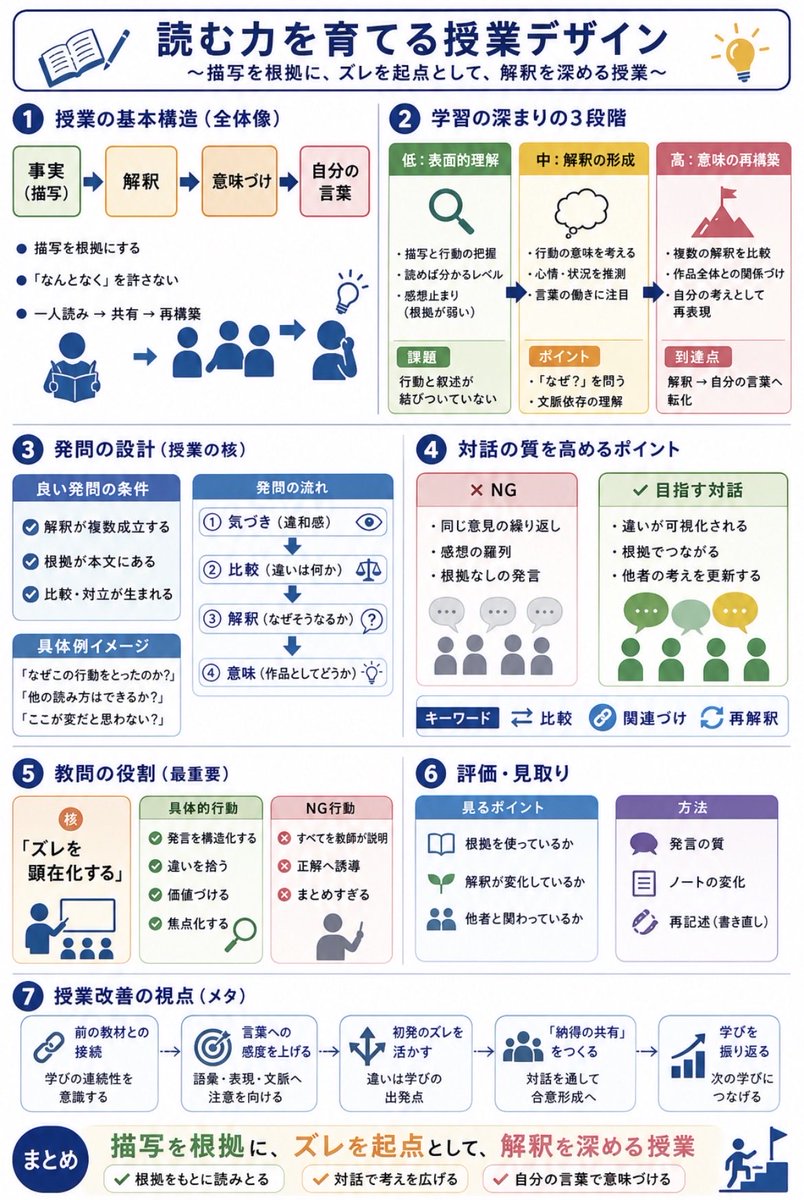
Japanese Reading Lesson Infographic
Transforms handwritten Japanese teaching notes into a structured infographic for sharing lesson-design concepts with educators.
This is a gpt-image-2 prompt case for 平面海报. Use the copy-ready prompt below to generate similar visuals, and review Awesome Seedance 2.0 Video Prompts attribution plus commercial-use rights before reuse.

Prompt
Copy-ready prompt
Using REFERENCE_0 and REFERENCE_1 as the source of messy handwritten study notes, their content was transformed into concise vertical Japanese teaching infographics for quick sharing with teachers. The core themes of narrative text reading curriculum design were retained, but the content was organized visually rather than simply copying the note pages. A sophisticated white background layout was created, featuring navy blue chapter titles, rounded cards, simple flat icons, arrows, checkmarks, and color-coded boxes. A main heading was added.{argument name="headline text" default="Designing lessons to foster reading skills"} and subtitle{argument name="subtitle text" default="~A class that deepens interpretation by using descriptions as a basis and starting from discrepancies~"} The infographic is divided into seven numbered sections and a final summary column: 1) Basic course structure, divided into four steps: facts (description) → explanation → meaning → personal expression; 2) Three stages of learning depth, labeled as: low: superficial understanding, medium: interpretation formation, high: meaning reconstruction; 3) Question design, including the conditions for good questions, question process, and specific example prompts; 4) Key points for improving dialogue quality, including two comparison cards: NG (inadequate) and target dialogue, and keyword tags: comparison, association, reinterpretation; 5) The most important role of the teacher, focusing on making "zre" (cognitive bias/difference) visible, including cards for specific actions and NG actions; 6) Assessment and observation, including two cards: observation points and methods; 7) The meta-perspective of curriculum improvement is presented as five interconnected cards: connection to the previous material, enhancing language sensitivity, utilizing the initial "zure," creating "shared consensus," and reviewing learning. This concludes with a striking summary statement.{argument name="summary statement" default="A lesson that deepens interpretation by using descriptions as a basis and starting from discrepancies."} This concludes with a three-point checklist: reading based on evidence, expanding thinking through dialogue, and giving meaning in your own words. The goal is to make the final result resemble professionally designed Japanese teaching materials, rather than just a photograph of notes.Prompt variables
Editable argument placeholders found in the prompt, with their default values.
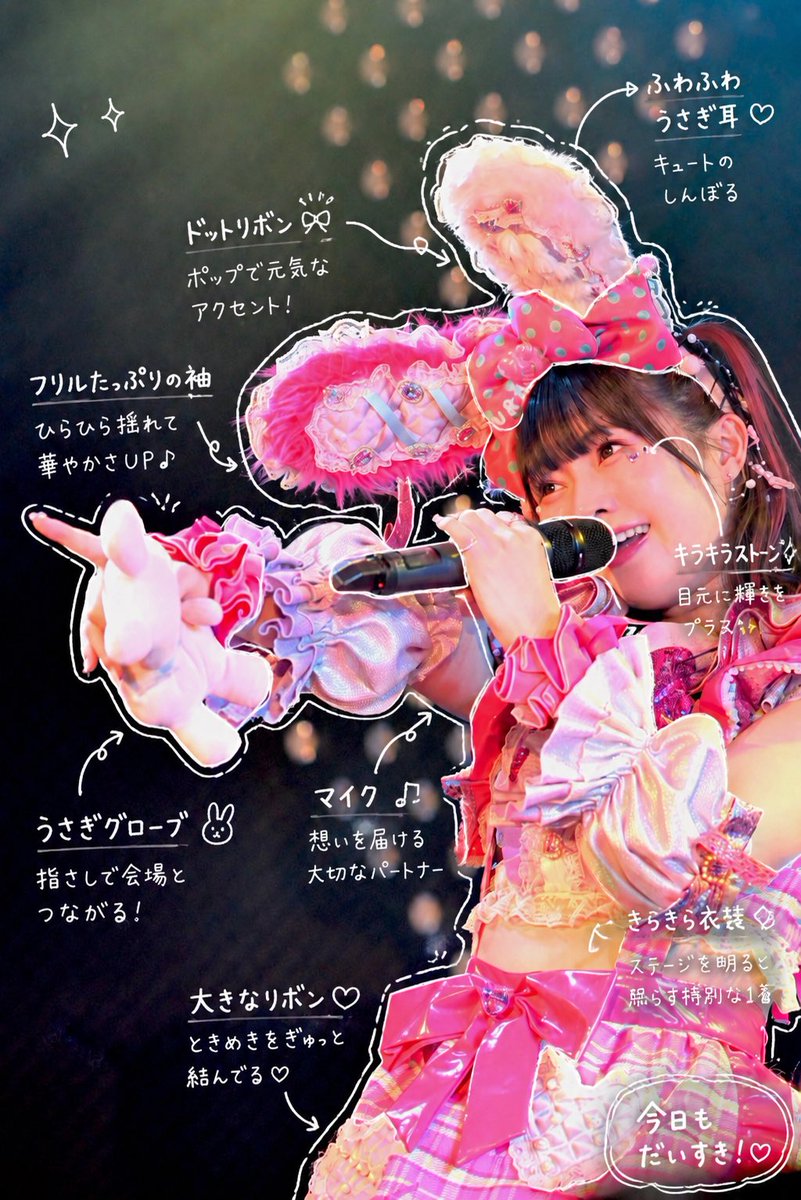
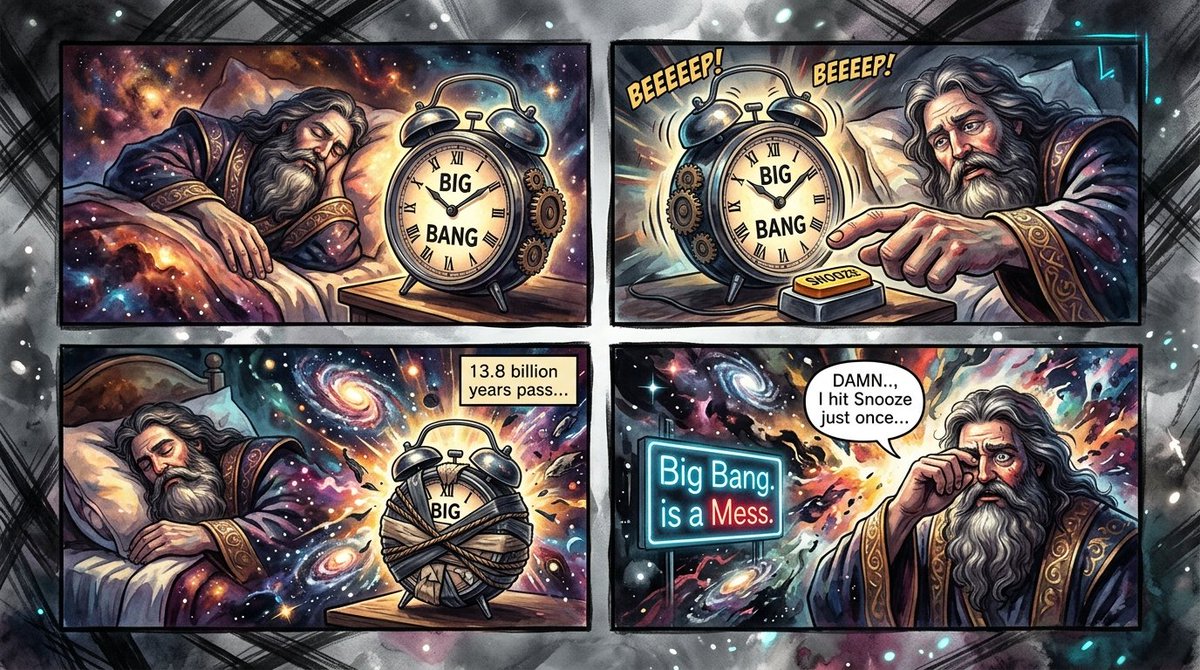
More cases in this category
Prioritized by category, input mode compatibility, quality, and lower risk.




Reuse and source notes
Use this prompt safely after previewing the case.
- 1.Copy the prompt or open it directly in Dovoo with the generation button.
- 2.Adjust variables, aspect ratio, and reference images for your own use case.
- 3.Before publishing or paid usage, verify source rights, attribution requirements, and brand or likeness risks.
Can I use this prompt commercially?
Commercial-use status is restricted. Review the original source, license, brand constraints, and legal requirements before paid usage.
Where does this case come from?
This case is imported from Awesome Seedance 2.0 Video Prompts; keep attribution visible and check the source URL before reuse.