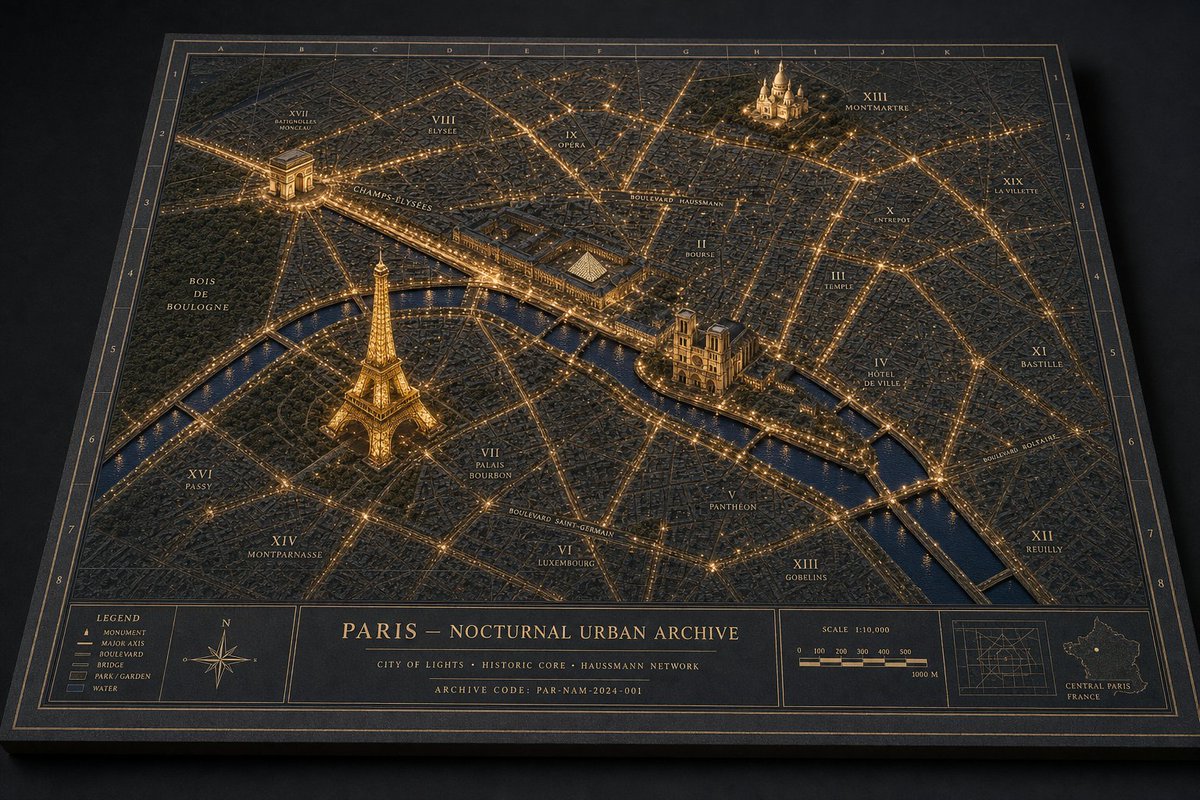
Paris Nocturnal Urban Archive Map
Generates a premium nighttime physical diorama map of Paris with glowing landmarks, labeled districts, and archival cartographic panels.
This is a GPT Image 2 prompt case for 其他灵感. Use the copy-ready prompt below to generate similar visuals, and review Awesome GPT Image 2 Prompts attribution plus commercial-use rights before reuse.
This prompt is designed for multiple reference images. We will open Dovoo with the prompt and the available preview image; add the remaining references in Dovoo before generating.
Prompt
Copy-ready prompt
Objective: To create a museum-quality 3D physical model map, titled {argument name="map title" default="PARIS – NOCTURNAL URBAN ARCHIVE"} ,exhibit{argument name="city" default="Paris"} The nighttime scene is presented as an architectural archive model, complete with glowing streets, miniature landmarks, and sculptural annotations. Canvas: 3:2 horizontal image, shot at a high angle reminiscent of a high-end desktop exhibit. The map is a thick rectangular project placed on a dark studio plane, featuring a dark navy blue background, warm gold lines, delicate paper texture, embossed topography, projection effects, and the realism of a matte museum display. Layout: The image is filled with a large rectangular archive city map, framed with a double-layered gold border. An alphanumeric grid is added to the map's edges: A–K at the top, 1–8 on the sides. The city occupies the upper three-quarters; structured information bars occupy the lower quarter. Main city model: The Seine is rendered as a deep navy blue river, flowing horizontally through the lower middle section, with glowing banks and bridges. Streets form a dense and precise Haussmannian network, composed of tiny, glowing amber lines. Main avenues are brighter and feature small sculpted labels. Parks are darker, deep green areas. The buildings are low-slung, dark-colored, and meticulously extruded to create a tactilely realistic 3D archival model. Four raised, illuminated landmark models are counted and placed: 1) The Eiffel Tower, tallest and glowing gold, near the river in the lower left/middle left quadrant; 2) The Arc de Triomphe in the upper left quadrant, with radiating avenues; 3) Notre Dame Cathedral in the island/river area in the middle right quadrant; 4) The Sacré-Cœur Basilica/Montmartre Cathedral, high in the upper right quadrant. Fifteen area annotations are counted and labeled using small serif gold font: “XVII BATIGNOLLES MONCEAU”, “VIII ELYSEE”, “IX OPERA”, “XVIII MONTMARTRE”, “XIX LA VILLETTE”, “X ENTREPOT”, “III TEMPLE”, “IV HOTEL DE VILLE”, “XI BASTILLE”, “XII REUILLY”, “XIII GOBELINS”, “V PANTHEON”, “VI LUXEMBOURG”, “VII PALAIS BOURBON”, “XVI PASSY”. Meanwhile, the large, dark-colored park on the left is labeled "BOIS DE BOULOGNE". Main route labels include "CHAMPS-ELYSEES" extending from the Arc de Triomphe, "BOULEVARD HAUSSMANN" across the upper middle section, "BOULEVARD SAINT-GERMAIN" in the lower middle section, and "BOULEVARD BOURDON" or similar smaller avenue labels near the right riverbank. Bottom information panel: Divide the information panel from left to right into five visible panels: 1) Legend panel, 2) Compass panel, 3) Central title panel, 4) Scale bar/illustration grid panel, 5) Miniature area location map panel. Bottom panel details: The legend panel must list five symbol categories: monuments, main axes, avenues, bridges, and parks/gardens. If space permits, a water feature color block can be added below. The compass panel contains a gorgeous gold compass rose with N/E/S/W markings. The central panel contains the main title.{argument name="map title" default="PARIS – NOCTURNAL URBAN ARCHIVE"} The subtitle "CITY OF LIGHTS · HISTORIC CORE · HAUSSMANN NETWORK" and the file code{argument name="archive code" default="PAR-NAM-2024-001"} The scale panel displays "SCALE 1:10,000" along with segmented bars from 0 to 1000 meters. The location panel displays a small outline map labeled "CENTRAL PARIS FRANCE". Visual style: ultra-detailed physical miniatures, not flat digital maps. Use restrained nighttime tones: charcoal black, navy blue waters, bronze gold, amber lighting, and soft deep green parks. Lighting should mimic the effect of miniature LEDs embedded along streets and monuments, with realistic shadows, bevels, engraved fonts, and archival cartographic precision. Constraints: All text remains in English or French-style Latin alphabets. No portraits, no cars, no modern UI, no watermarks. Maintain a consistent, high-end editorial archival map series aesthetic.Prompt variables
Editable argument placeholders found in the prompt, with their default values.
More cases in this category
Prioritized by category, input mode compatibility, quality, and lower risk.
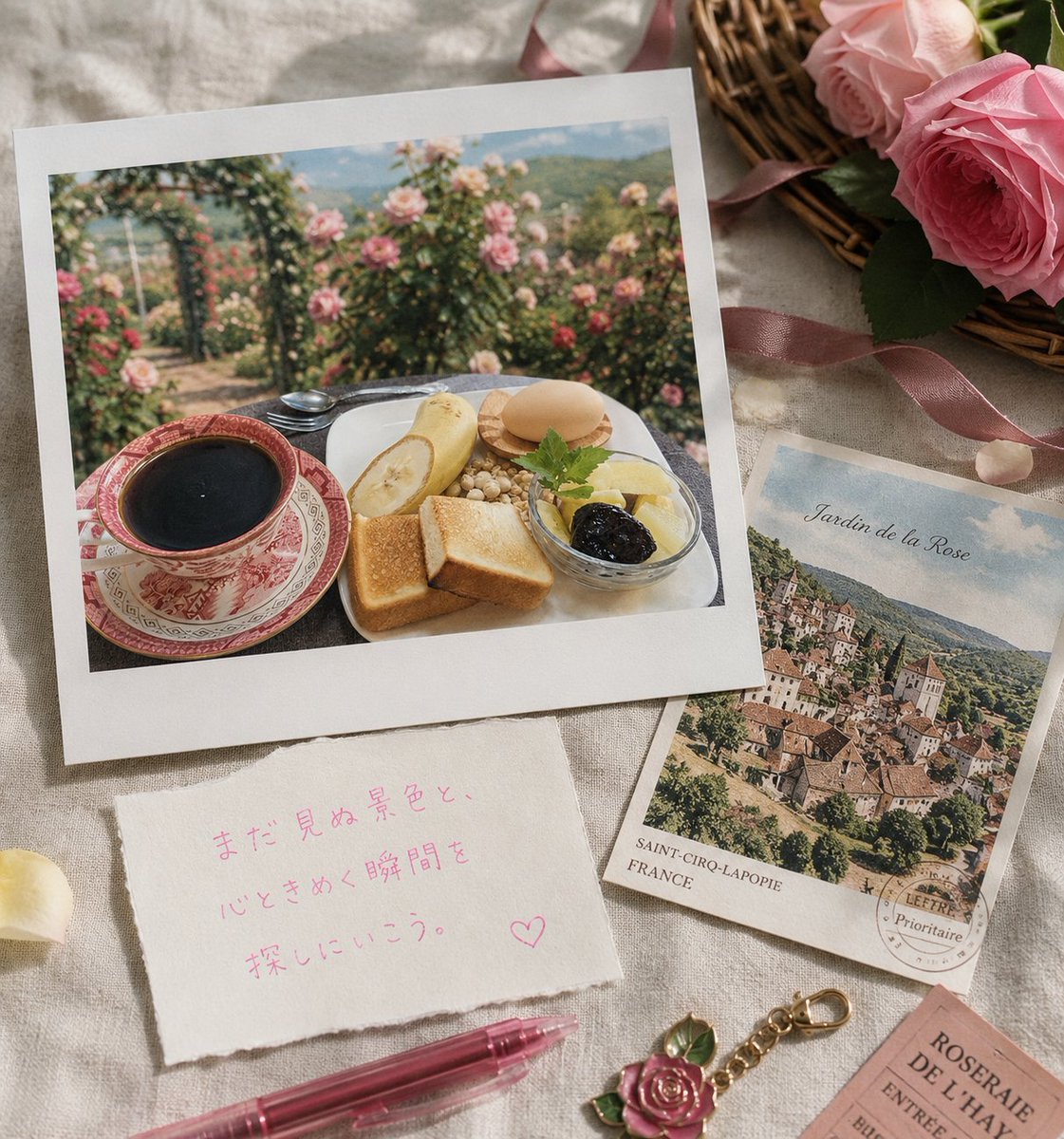
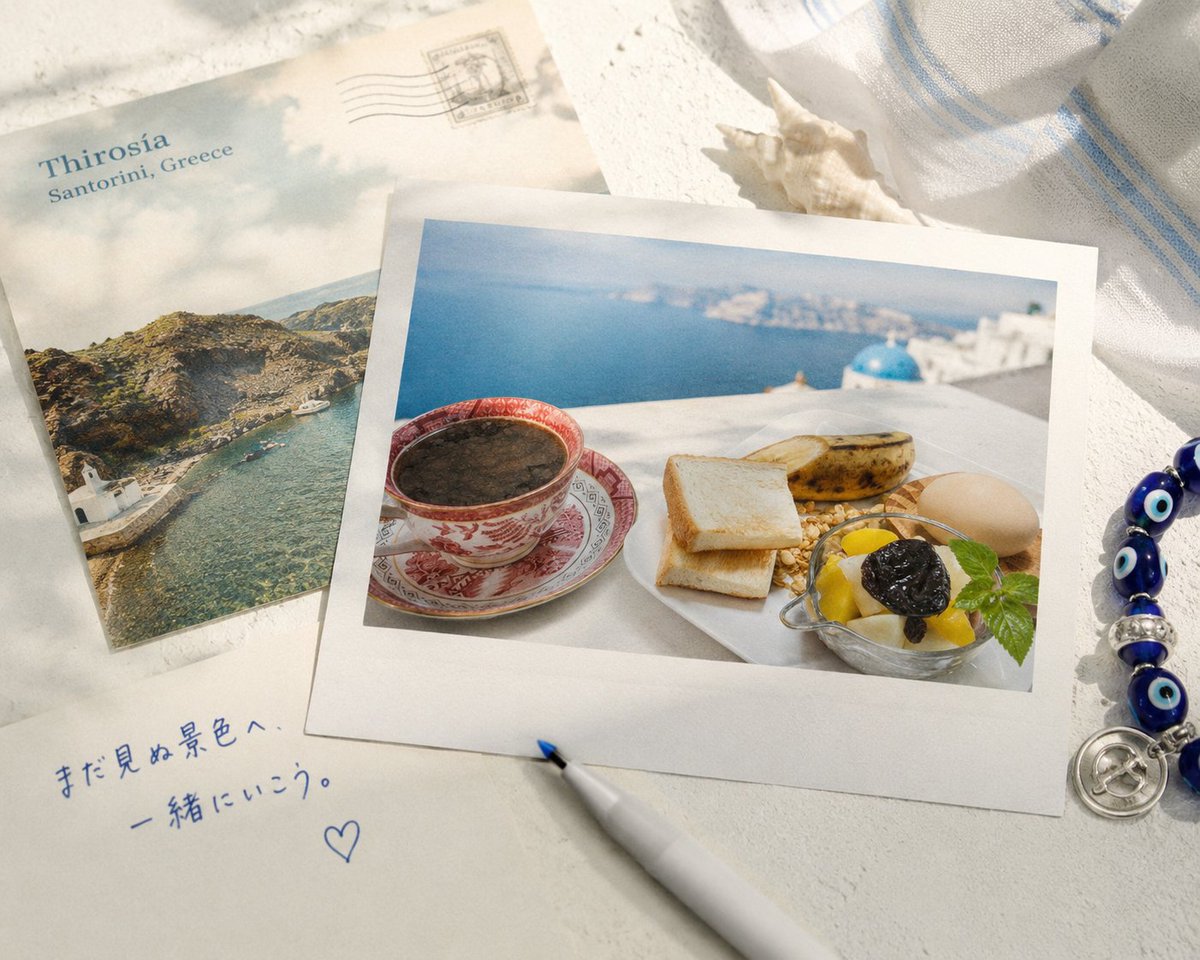
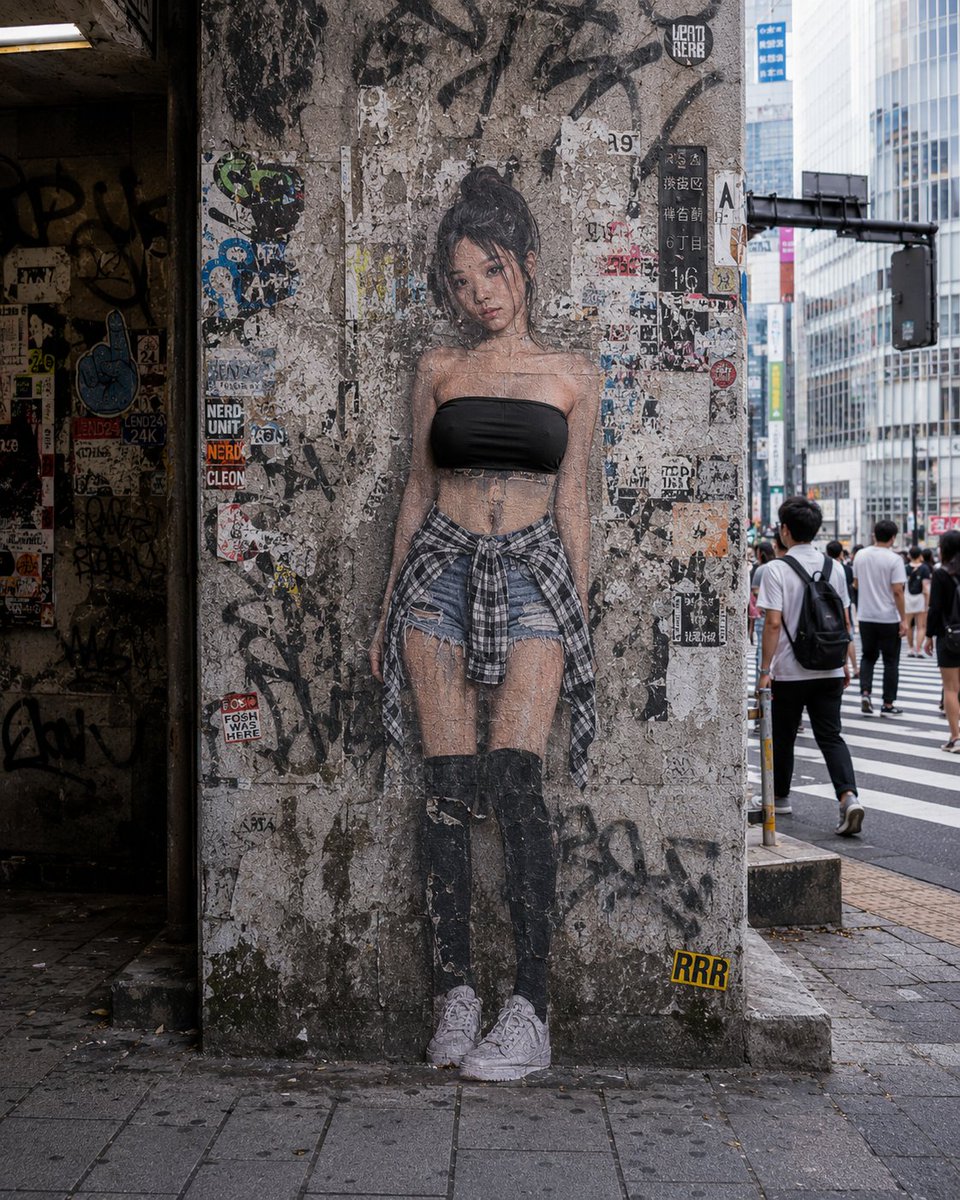

Reuse and source notes
Use this prompt safely after previewing the case.
- 1.Copy the prompt or open it directly in Dovoo with the generation button.
- 2.Adjust variables, aspect ratio, and reference images for your own use case.
- 3.Before publishing or paid usage, verify source rights, attribution requirements, and brand or likeness risks.
Can I use this prompt commercially?
Commercial-use status is allowed. Review the original source, license, brand constraints, and legal requirements before paid usage.
Where does this case come from?
This case is imported from Awesome GPT Image 2 Prompts; keep attribution visible and check the source URL before reuse.