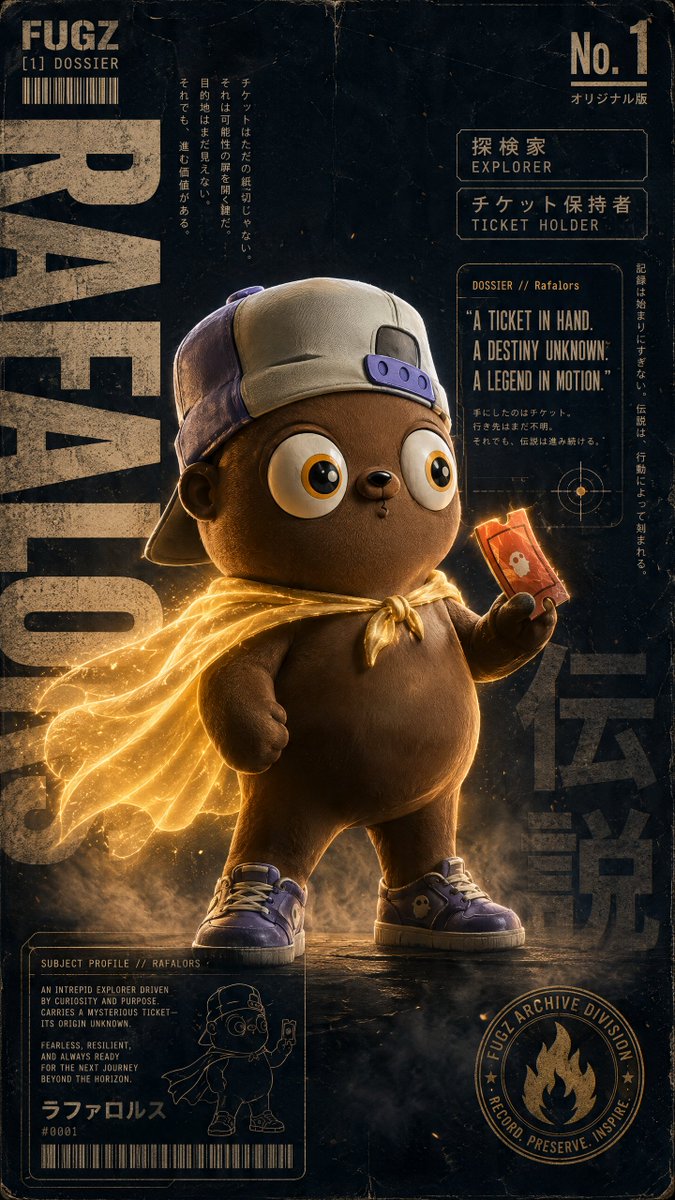
Vintage Mascot Explorer Dossier Poster
Generates a gritty vertical collector poster featuring a cute 3D explorer mascot with archive-style dossier typography and aged print texture.
This is a GPT Image 2 prompt case for Graphic & Poster. Use the copy-ready prompt below to generate similar visuals, and review Awesome GPT Image 2 Prompts attribution plus commercial-use rights before reuse.
Free 1K preview
Generate one preview image instantly, no sign-up required.
Prompt
Copy-ready prompt
Goal: Create a 9:16 vertical collector dossier poster for a cute 3D mascot hero named {argument name="character name" default="Rafalors"}, styled like an aged archive card on dark navy-black concrete/newsprint.

Canvas: Tall vertical poster, deep navy-black background with worn beige ink, heavy film grain, fine scratches, fold creases, scuffed corners, dust, smoky haze near the ground, subtle vignette, distressed print texture throughout.

Main subject: Center a full-body small brown otter/bear-like explorer mascot in high-quality 3D toy rendering, seen from a low three-quarter hero angle. The character has a round belly, short limbs, soft brown fur, huge cream-and-gold eyes, tiny black nose, small puckered mouth, and a brave innocent expression. Pose: weight on the back foot, left hand on hip, right arm extended holding one red-orange ticket upright. Outfit has exactly 4 visible pieces: a backward light beige baseball cap with purple side/back panels and purple strap, a glowing translucent golden scarf/cape tied at the neck and blowing dramatically to the left, purple high-top sneakers with beige soles and laces, and the red-orange mystery ticket with a small white emblem. Add warm golden rim light from the glowing scarf and ticket, with sparks and dust particles.

Layout and graphic elements: Use a gritty vintage dossier composition with asymmetrical typography and thin technical line boxes. Include exactly 8 main poster text/graphic areas: 1) top-left title block reading “FUGZ” with “[1] DOSSIER” and a barcode beneath; 2) enormous distressed vertical beige word “RAFALORS” running down the left edge, partially cropped; 3) a narrow vertical Japanese text column near upper left of center; 4) top-right edition block reading “No. 1” with small Japanese text beneath; 5) two stacked outlined label boxes on the upper right reading Japanese text plus “EXPLORER” and Japanese text plus “TICKET HOLDER”; 6) a right-side dossier quote card reading “DOSSIER // Rafalors” and “A TICKET IN HAND. A DESTINY UNKNOWN. A LEGEND IN MOTION.” with small Japanese lines and a target reticle; 7) bottom-left subject profile card with a small line-art sketch of the same character, English description text, Japanese name, “#0001”, and a barcode; 8) bottom-right circular archive seal reading “FUGZ ARCHIVE DIVISION” and “RECORD. PRESERVE. INSPIRE.” with a flame icon in the center. Also add large dark distressed Japanese characters behind the character on the lower right.

Typography and style: Bold condensed industrial sans-serif type, beige ink on navy, weathered letterpress edges, thin outlined UI boxes, barcode details, archive-file aesthetics, cinematic collectible poster mood. Keep the main character bright and sharply rendered while the background typography is faded and distressed.

Custom text: Use the main quote {argument name="quote" default="A TICKET IN HAND. A DESTINY UNKNOWN. A LEGEND IN MOTION."}; use top title {argument name="series title" default="FUGZ"}; use issue number {argument name="issue number" default="No. 1"}; use character fur color {argument name="fur color" default="warm dark brown"}.

Constraints: 9:16 aspect ratio, no photoreal human, no extra characters, no extra tickets, no clean modern background, preserve the aged concrete/newsprint texture, scratches, creases, and collector-dossier layout.
Prompt variables
Editable argument placeholders found in the prompt, with their default values.
Best for
- - Graphic & Poster visual exploration
- - Image generation and reference-image edits
- - Reusable briefs that keep source attribution visible
Change these parts
- - Subject, product, character, or scene
- - Aspect ratio, camera, lighting, and background
- - Brand, text, color, and output constraints
Recommended model and settings
- - Model: gpt-image-2
- - Input mode: Text to Image
- - Aspect ratio: source
- - Commercial status: review original source
How to use this prompt
- 1. Copy the prompt and preserve its structure for the first test.
- 2. Replace the subject, context, and publishing channel.
- 3. Change one camera, lighting, or style variable per iteration.
- 4. Inspect the output, source, text, and rights before reuse.
Limitations, source, and reuse cautions
- - Generated output is an editable draft, not factual, legal, or rights evidence.
- - Review the linked source, people, brands, logos, text, and third-party media before commercial use.
More cases in this category
Prioritized by category, input mode compatibility, quality, and lower risk.

Reuse and source notes
Use this prompt safely after previewing the case.
- 1.Copy the prompt or open it directly in Dovoo with the generation button.
- 2.Adjust variables, aspect ratio, and reference images for your own use case.
- 3.Before publishing or paid usage, verify source rights, attribution requirements, and brand or likeness risks.
Can I use this prompt commercially?
Commercial-use status is allowed. Review the original source, license, brand constraints, and legal requirements before paid usage.
Where does this case come from?
This case is imported from Awesome GPT Image 2 Prompts; keep attribution visible and check the source URL before reuse.