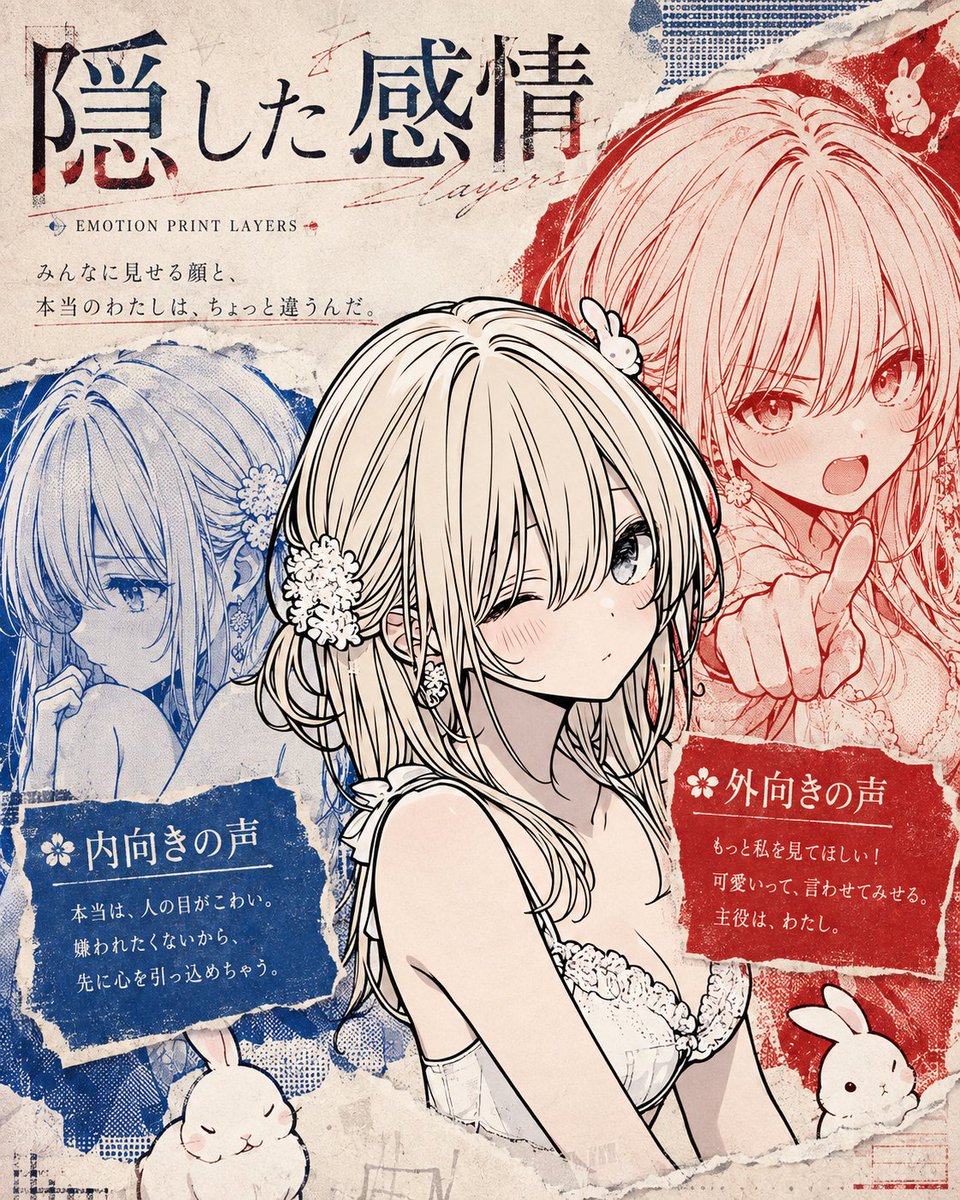
Hidden Emotion Layers Anime Poster
A vintage Japanese anime diagnostic poster showing one character’s hidden inner and outer emotional layers in blue and red.
This is a GPT Image 2 prompt case for Graphic & Poster. Use the copy-ready prompt below to generate similar visuals, and review Awesome GPT Image 2 Prompts attribution plus commercial-use rights before reuse.
Free 1K preview
Generate one preview image instantly, no sign-up required.
Prompt
Copy-ready prompt
Goal: Create a vertical Japanese anime-style diagnostic poster titled {argument name="headline text" default="隠した感情"}, presenting “hidden emotion print layers” for one girl character, with a central neutral portrait and two contrasting emotional versions printed behind her in blue and red.

Canvas: Vertical 4:5 poster, aged cream paper background with rough torn-paper collage edges, ink stains, halftone dots, faint scratches, stamped textures, and layered risograph/screenprint effects. Use a limited palette of navy blue, deep red, black line art, and warm off-white.

Layout: Large Japanese headline across the top left, with a small English subtitle beneath it reading “EMOTION PRINT LAYERS” and a handwritten cursive word “Layers” near the title. Under the subtitle, add a small Japanese tagline: “みんなに見せる顔と、本当のわたしは、ちょっと違うんだ。” The center foreground contains the main character in clean black-and-white line art, overlapping both colored background layers. Behind her are exactly 2 large monochrome emotion portraits: one blue portrait on the left and one red portrait on the right. Add exactly 2 torn label cards: a blue card at lower left and a red card at mid-lower right. Add exactly 3 small white rabbit motifs: one tiny rabbit icon near the red top corner, one plush-like rabbit at the bottom left, and one plush-like rabbit at the bottom right.

Subject details: The character is {argument name="character description" default="a delicate anime girl with very long pale blonde hair, soft gray eyes, blush, floral hair ornaments, small rabbit hair clip, earrings, and a lacy white camisole dress"}. The central portrait shows her shyly winking with one eye open, shoulders turned slightly, gentle blush, loose flowing hair and floral accessories. The blue left background portrait shows the same girl looking inward and melancholic, resting her hand near her mouth, with a quiet closed-off pose. The red right background portrait shows the same girl energetic and extroverted, smiling with open mouth and pointing directly toward the viewer.

Text content: Blue torn card title: “✿ 内向きの声”. Blue card body: “本当は、人の目がこわい。嫌われたくないから、先に心を引っ込めちゃう。” Red torn card title: “✿ 外向きの声”. Red card body: “もっと私を見てほしい!可愛いって、言わせてみせる。主役は、わたし。” Keep all Japanese text crisp and legible, printed in white on colored cards where appropriate.

Visual style: Manga illustration with fine expressive linework, soft blush shading, vintage poster typography, torn washi paper collage, overprinted red and blue ink layers, distressed halftone texture, slightly imperfect registration, decorative flower symbols, handmade zine aesthetic.

Constraints: Use exactly 1 central character, exactly 2 colored emotion portraits, exactly 2 text cards, and exactly 3 rabbit motifs. Do not add extra characters, extra cards, logos, watermarks, or modern UI elements. Keep the composition dense but balanced, with the central black-and-white portrait clearly dominant.
Prompt variables
Editable argument placeholders found in the prompt, with their default values.
Best for
- - Graphic & Poster visual exploration
- - Image generation and reference-image edits
- - Reusable briefs that keep source attribution visible
Change these parts
- - Subject, product, character, or scene
- - Aspect ratio, camera, lighting, and background
- - Brand, text, color, and output constraints
Recommended model and settings
- - Model: gpt-image-2
- - Input mode: Text to Image
- - Aspect ratio: source
- - Commercial status: review original source
How to use this prompt
- 1. Copy the prompt and preserve its structure for the first test.
- 2. Replace the subject, context, and publishing channel.
- 3. Change one camera, lighting, or style variable per iteration.
- 4. Inspect the output, source, text, and rights before reuse.
Limitations, source, and reuse cautions
- - Generated output is an editable draft, not factual, legal, or rights evidence.
- - Review the linked source, people, brands, logos, text, and third-party media before commercial use.
More cases in this category
Prioritized by category, input mode compatibility, quality, and lower risk.
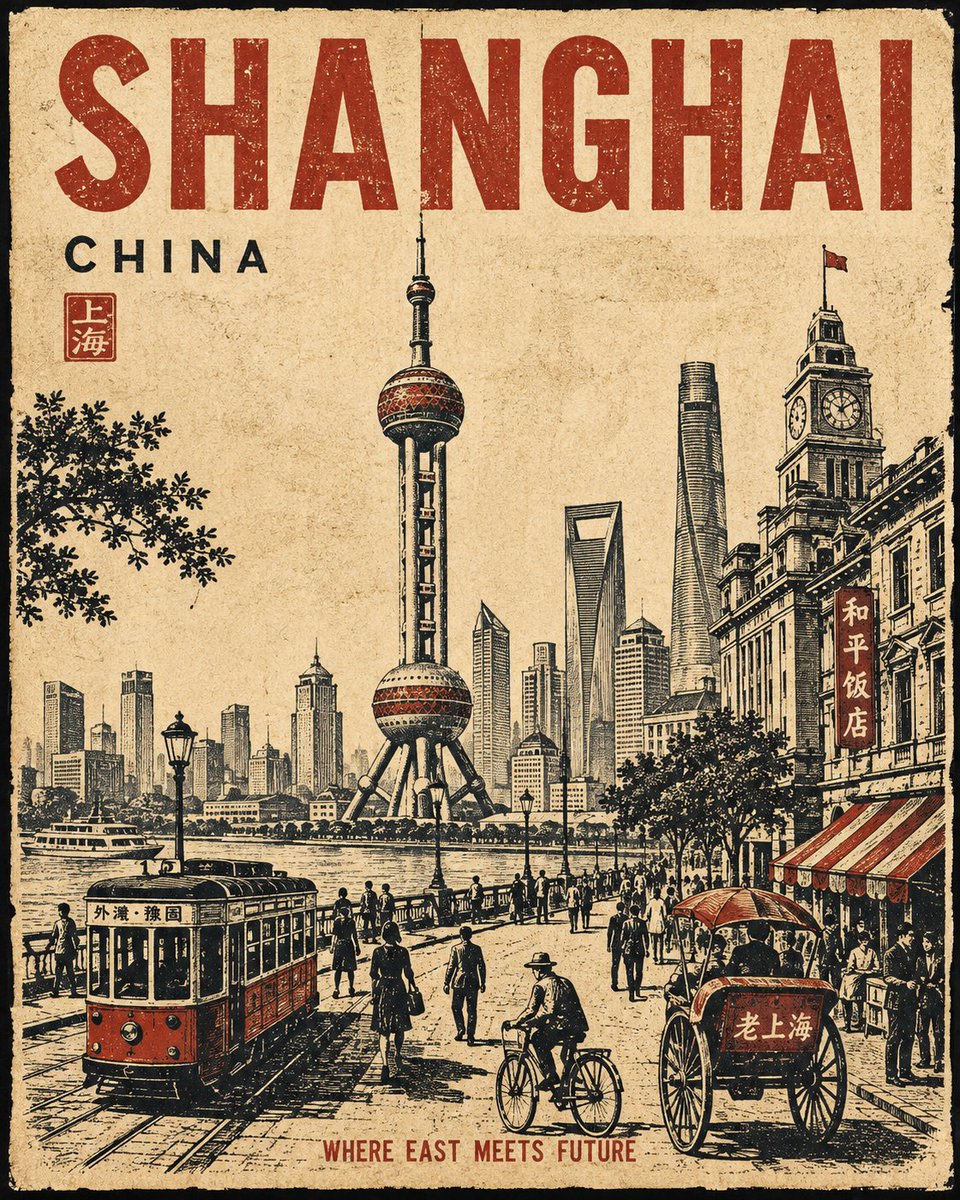
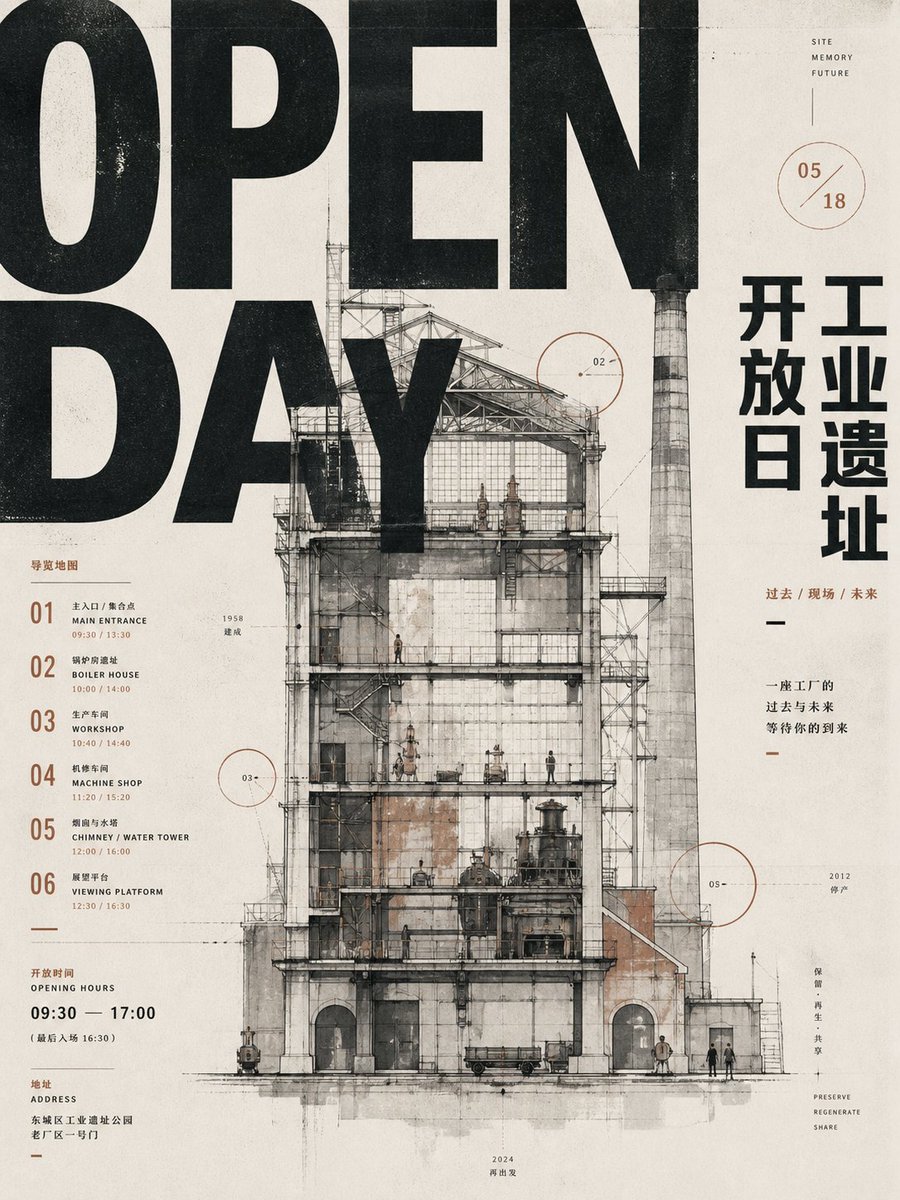
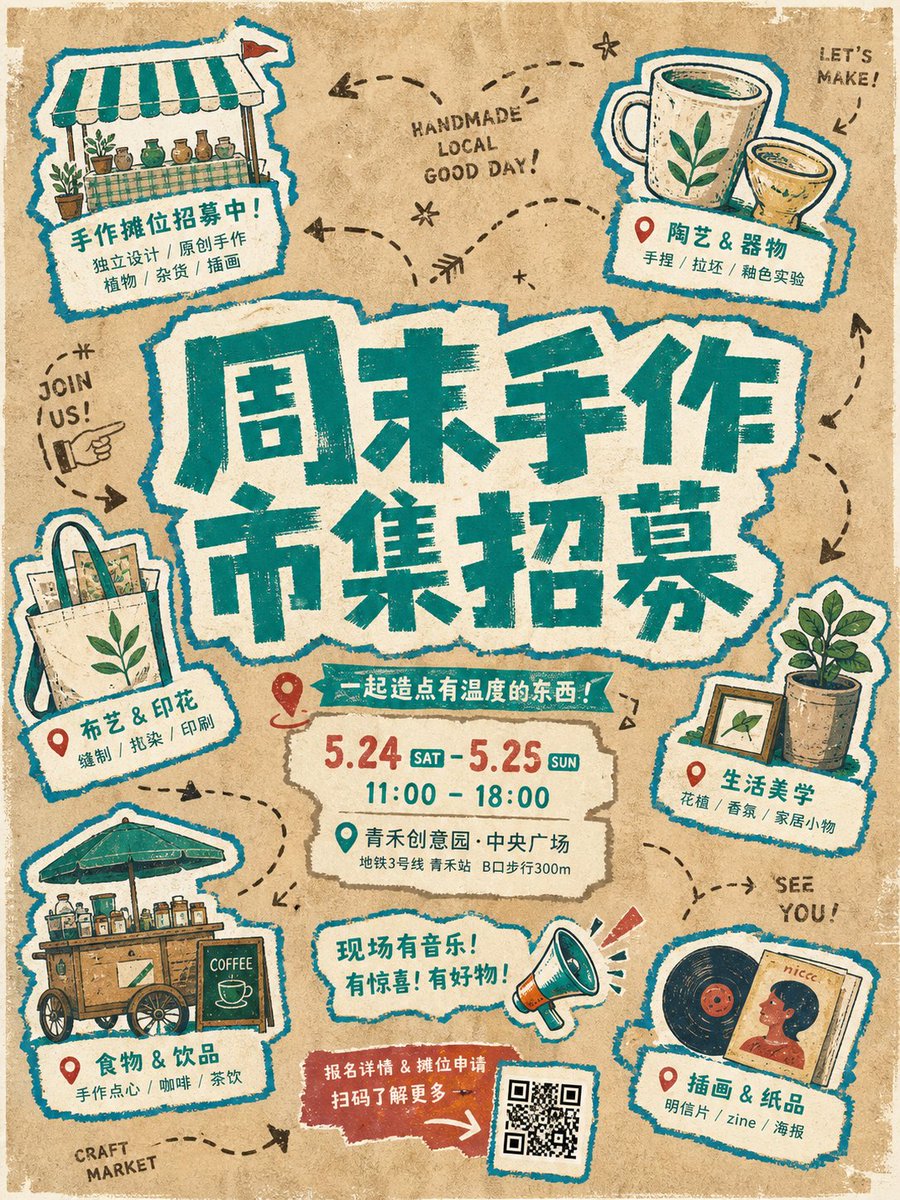

Reuse and source notes
Use this prompt safely after previewing the case.
- 1.Copy the prompt or open it directly in Dovoo with the generation button.
- 2.Adjust variables, aspect ratio, and reference images for your own use case.
- 3.Before publishing or paid usage, verify source rights, attribution requirements, and brand or likeness risks.
Can I use this prompt commercially?
Commercial-use status is allowed. Review the original source, license, brand constraints, and legal requirements before paid usage.
Where does this case come from?
This case is imported from Awesome GPT Image 2 Prompts; keep attribution visible and check the source URL before reuse.