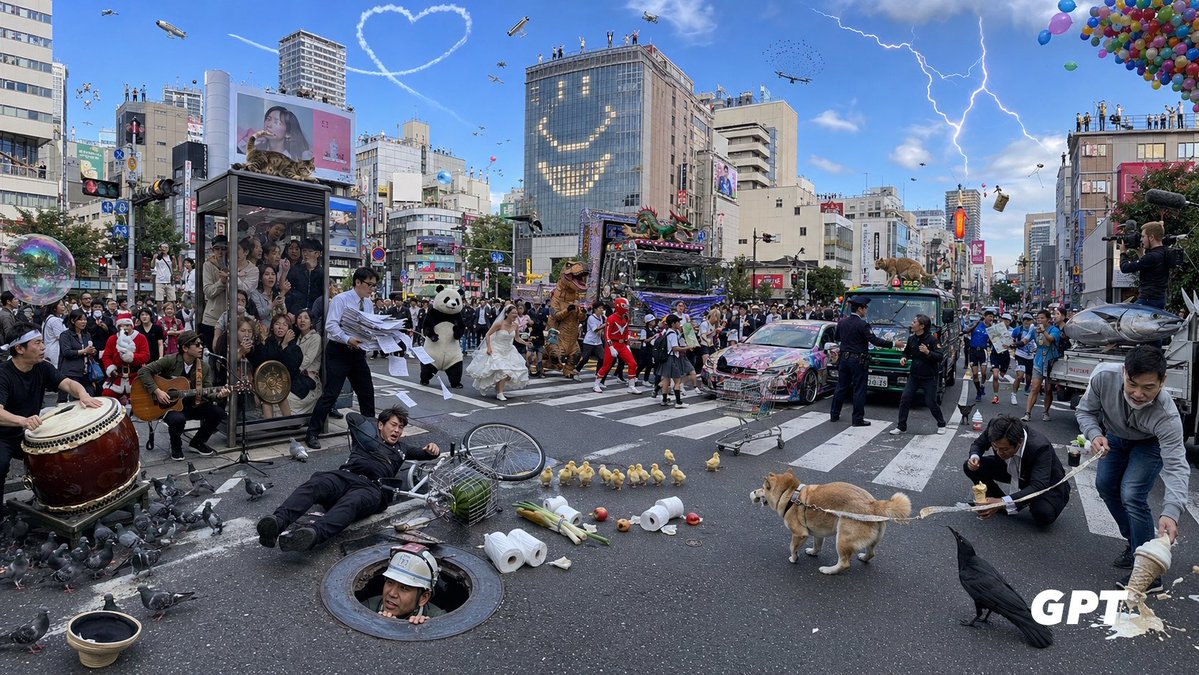
Chaotic Shibuya Scramble Crossing
A highly detailed photorealistic prompt for generating an absurdly crowded Tokyo scramble crossing full of surreal events and countable visual details.
This is a GPT Image 2 prompt case for Landscape & Nature. Use the copy-ready prompt below to generate similar visuals, and review Awesome GPT Image 2 Prompts attribution plus commercial-use rights before reuse.
Free 1K preview
Generate one preview image instantly, no sign-up required.
Prompt
Copy-ready prompt
Goal: Create an ultra-dense, chaotic photorealistic wide-angle street scene at a huge Japanese scramble crossing, like Shibuya in Tokyo, packed with absurd events happening simultaneously. The image should feel like a single candid news photograph with extreme information density, realistic lighting, and many tiny details.

Canvas: Wide horizontal 16:9 image, street-level perspective, slightly fisheye wide-angle lens, daytime under a bright blue sky. Dense city buildings, billboards, traffic lights, crosswalk stripes, signs, and crowds fill the background. Add a small white “GPT” watermark in the bottom-right corner.

Setting and background: Use {argument name="location" default="a busy Shibuya-style Tokyo scramble crossing"}. Surround the crossing with mid-rise commercial buildings, digital billboards, rooftop spectators, traffic signals, and urban signage. In the sky include exactly 8 aerial features: 1 heart-shaped skywriting trail, 1 blimp, 1 small helicopter, 1 airplane, 1 drone, 1 flock of tiny birds, 1 lightning bolt striking from clouds on the right, and 1 large cluster of colorful balloons in the upper-right corner. On one tall glass building, make lit windows form a large smiling face.

Main crowd and vehicles: Fill the intersection with a dense crowd of pedestrians and performers. Include exactly 5 main vehicles: 1 elaborately decorated neon parade truck with a dragon on top, 1 colorful graffiti-covered sports car, 1 green taxi, 1 small bus or van, and 1 silver fish-shaped parade float or vehicle at the far right. Add photographers and camera operators on the right edge documenting the chaos.

Foreground incidents and objects: Show exactly 12 prominent foreground details: 1 large taiko drum player on the far left, 1 seated guitarist near the drum, 1 transparent phone-booth-like glass box packed with people, 1 businessman dropping loose papers, 1 man in a black suit fallen beside a bicycle, 1 construction worker emerging from a round manhole, 1 overturned birdcage with green contents, 1 scattered group of pigeons, 1 row of ducklings crossing the road, 1 tan Shiba Inu dog on a leash, 1 large black crow in the lower-right foreground, and 1 man spilling noodles or creamy food from a bowl on the far right.

Costumed characters and performers: Include exactly 7 standout characters among the crowd: 1 Santa Claus, 1 panda mascot, 1 bride in a white wedding dress running through the crossing, 1 brown dinosaur mascot, 1 red superhero or sentai character, 1 schoolgirl in uniform, and 1 police officer trying to manage the scene.

Additional surreal details: Add exactly 7 extra chaotic props or actions: 1 giant soap bubble floating on the left, 1 shopping cart abandoned in the middle road, 1 microphone stand and speakers for street performance, 1 traffic cone near the vehicles, 1 airborne suitcase or box on the right, 1 small animal or mascot peeking from a vehicle roof, and scattered toilet paper rolls, apples, bottles, and debris across the crosswalk.

Visual style: Photorealistic, high-resolution documentary photography, crisp detail everywhere, natural shadows, realistic Japanese city atmosphere, no anime styling. Use {argument name="time of day" default="bright afternoon"}, {argument name="weather mood" default="sunny blue sky with dramatic lightning"}, {argument name="crowd density" default="extremely crowded"}, and {argument name="chaos level" default="maximum but still readable"}. Keep the composition balanced so every counted object is visible.
Prompt variables
Editable argument placeholders found in the prompt, with their default values.
Best for
- - Landscape & Nature visual exploration
- - Image generation and reference-image edits
- - Reusable briefs that keep source attribution visible
Change these parts
- - Subject, product, character, or scene
- - Aspect ratio, camera, lighting, and background
- - Brand, text, color, and output constraints
Recommended model and settings
- - Model: gpt-image-2
- - Input mode: Text to Image
- - Aspect ratio: source
- - Commercial status: review original source
How to use this prompt
- 1. Copy the prompt and preserve its structure for the first test.
- 2. Replace the subject, context, and publishing channel.
- 3. Change one camera, lighting, or style variable per iteration.
- 4. Inspect the output, source, text, and rights before reuse.
Limitations, source, and reuse cautions
- - Generated output is an editable draft, not factual, legal, or rights evidence.
- - Review the linked source, people, brands, logos, text, and third-party media before commercial use.
More cases in this category
Prioritized by category, input mode compatibility, quality, and lower risk.
Reuse and source notes
Use this prompt safely after previewing the case.
- 1.Copy the prompt or open it directly in Dovoo with the generation button.
- 2.Adjust variables, aspect ratio, and reference images for your own use case.
- 3.Before publishing or paid usage, verify source rights, attribution requirements, and brand or likeness risks.
Can I use this prompt commercially?
Commercial-use status is allowed. Review the original source, license, brand constraints, and legal requirements before paid usage.
Where does this case come from?
This case is imported from Awesome GPT Image 2 Prompts; keep attribution visible and check the source URL before reuse.