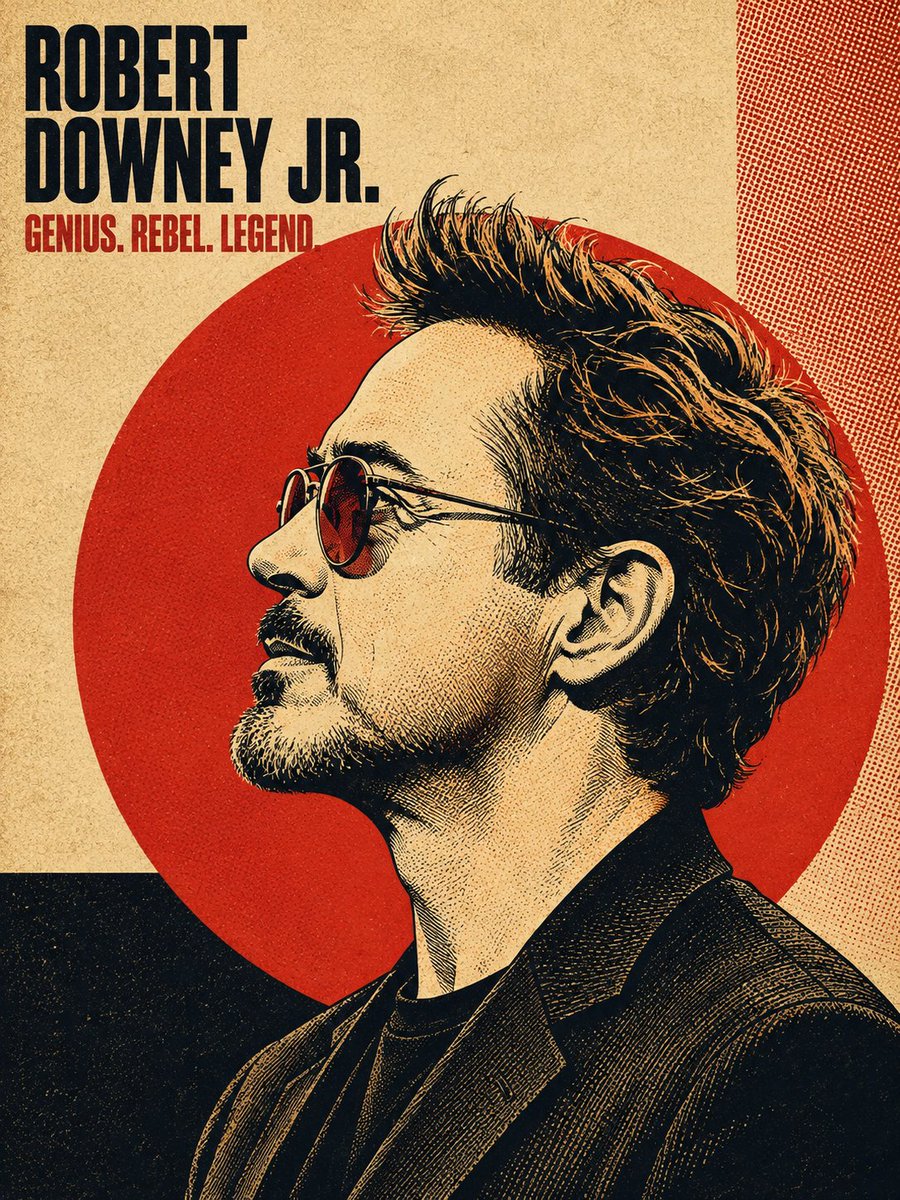
Vintage Halftone Portrait Poster
A complex 'smart prompt' structured in JSON for generating vintage 1960s-70s inspired halftone poster art with bold linework and offset print textures.
这是一个用于 平面设计和海报设计 的 GPT Image 2 提示词案例。你可以复制下方 prompt 生成相似图片;商用前请复核 Awesome GPT Image 2 Prompts 来源归因和原始权利。
需要完整提示词集合?请使用 平面设计和海报设计 主题页获取更多同类示例,或打开 GPT Image 2 提示词库 查看完整示例索引、可复用结构和来源归因。
免费 1K 极速预览
无需注册,立即生成一张预览图。
免费文本预览不保留参考图一致性。
4000/4000
提示词
可复制提示词
{"task": "Convert the uploaded reference photo (or a well-known likeness of the named person) into a vintage halftone bold poster-art style portrait illustration.", "input": {"subject_name": "{{PERSON_NAME}}", "reference_image": "{{UPLOADED_PHOTO_OR_NULL}}", "note": "Only the subject's name or an uploaded photo should be required from the user. All other parameters below are fixed art-direction rules."}, "output_exclusions": ["Do NOT include a small circular/rounded-corner inset photo of the real reference image in the corner of the poster — the final output is the illustration ONLY, full-bleed, no reference thumbnail overlay."], "art_style": {"medium": "digital illustration mimicking screen-printed / offset-lithograph poster art", "influences": ["1960s-70s bold political/protest poster art", "Shepard Fairey-style bold stencil illustration", "risograph print texture", "vintage magazine cover design", "retro concert/album poster art"], "line_work": "high-contrast ink linework with fine cross-hatching and stippling for shading, visible pen/brush strokes in hair strands", "rendering": "flat color blocking combined with engraving-style fine line shading — NOT photorealistic, NOT airbrushed, NOT smooth gradient shading"}, "composition": {"pose": "subject's head and upper shoulders/chest in a strict 90-degree side profile (facing left), eyes looking straight ahead in profile, chin slightly lifted, neutral/confident expression", "framing": "portrait orientation (4:5 or 3:4 aspect ratio), subject fills roughly 70-85% of vertical frame, cropped at mid-chest/shoulder", "focal_backdrop": "a large solid-color circle (sun/halo motif) centered behind the subject's head, circle diameter roughly 60-70% of canvas width, subject's hair and shoulders slightly overlap and break the circle's edge", "hair_treatment": "hair rendered as one of the most detailed elements — individual flowing strands, wind-swept or voluminous movement, strong directional lighting creating highlight streaks within the dark mass of hair"}, "background": {"base_texture": "coarse woven linen/canvas paper texture overlaid across the entire composition at low opacity", "layout": "asymmetric geometric color-block panels behind/around the circle — e.g. a solid dark rectangle in one lower corner, a contrasting stripe or panel along one edge, sometimes a fine halftone dot-pattern or crosshatch pattern filling one quadrant", "halftone_overlay": "visible CMYK-style halftone dot pattern subtly overlaid on background panels and occasionally bleeding into the portrait's shadow areas", "grain": "fine analog print grain/noise across the whole image for an aged, screen-printed look"}, "color_palette": {"instruction": "Select ONE cohesive limited palette (2-4 colors max) per poster, high contrast, no photographic gradients. Choose based on mood/subject or default to the classic scheme.", "classic_scheme": {"background_base": "warm cream / aged paper beige (#e8dcc4-ish)", "accent_circle": "bold poster red (#c1272d-ish)", "linework_shadow": "near-black ink (#1a1512-ish)", "highlight": "same cream as background used for lit skin/hair areas"}, "alt_scheme_dark": {"background_base": "black or deep charcoal", "accent_circle": "poster red or burnt orange", "linework_shadow": "black ink", "highlight": "warm cream/tan"}, "alt_scheme_cool": {"background_base": "deep navy blue", "accent_circle": "muted brick-red/orange", "linework_shadow": "navy/black ink", "highlight": "warm cream, with the subject's true eye color kept naturally visible as the one full-color accent"}, "duotone_option": "for a graphic pop-art variant, render the entire subject in a single duotone (e.g. mustard-yellow and black, or gold and black) instead of cream/red/black"}, "typography": {"headline": {"content": "subject's name (first name, or first+last stacked on two lines)", "placement": "top-left corner of the poster, inset from edges", "font_style": "extra-bold condensed slab-serif or grotesque sans-serif, all caps, tightly kerned, stacked on 1-2 lines, large scale (dominant typographic element)", "color": "matches the linework/shadow ink color, occasionally with a subtle drop shadow or outline for depth"}, "subheadline": {"content": "a short 2-4 word tagline/epithet related to the subject (e.g. an evocative title, nickname, or descriptor)", "placement": "directly below the headline, smaller scale", "font_style": "bold condensed sans-serif or slab-serif, all caps, single line", "color": "the poster's accent color (matches the circle color)"}}, "clothing_and_accessories": {"styling": "simple, era-appropriate or modern minimal clothing rendered in flat color with the same halftone/linework shading as the rest of the piece — collared shirts, blazers, off-shoulder tops, or textured jackets with visible fabric-fold linework", "accessories": "keep minimal — small jewelry (earrings, necklace) can be included if present in reference, rendered as simple line-art shapes"}, "lighting": {"style": "single hard directional light source (as if raking across the side profile), creating strong graphic shadow shapes rather than realistic soft shading", "shadow_rendering": "shadows built from crosshatching, stippling, and halftone dot density rather than smooth gradients"}, "quality_and_fidelity": {"likeness": "preserve accurate, recognizable facial proportions and features of the subject from the reference photo/name, translated into the illustrated line-art style — the illustration must be clearly identifiable as that specific person", "resolution": "crisp, poster-print-ready quality, sharp linework, no blur, no photographic artifacts", "consistency": "maintain identical composition, palette rules, and typography placement described above regardless of subject, so the whole set reads as one unified poster series"}}Best for
- - 平面海报 方向的视觉探索
- - 图片生成与参考图改写
- - 需要保留来源归因的可复用 brief
可以替换这些部分
- - 主体、产品、角色或场景
- - 画幅、镜头、光线和背景
- - 品牌、文字、颜色和输出限制
推荐模型与设置
- - 模型:gpt-image-2
- - 输入模式:图生图
- - 画幅:source
- - 商用状态:需复核原始来源
如何使用这个提示词
- 1. 复制提示词并先保留原始结构。
- 2. 替换主体、场景和输出渠道。
- 3. 每次只调整一个镜头、光线或风格变量。
- 4. 检查结果媒体、文字、来源和权利风险。
限制、来源与复用提醒
- - 生成结果是可编辑草稿,不是事实、法务或权利证明。
- - 商用前复核来源链接、人物、品牌、Logo、文字和第三方素材。
导入自 Awesome GPT Image 2 Prompts。需要保留来源归因。商业使用状态:allowed;付费使用前请复核原始权利。
同分类案例
优先推荐同分类、同输入模式且风险更低的案例。
复用与来源说明
看完案例后,再安全复用这个提示词。
- 1.复制 prompt,或点击生成入口在 Dovoo 中直接打开。
- 2.按你的用途调整变量、画面比例和参考图。
- 3.发布或商用前,复核来源权利、归因要求以及品牌、肖像或版权风险。
这个提示词可以商用吗?
当前商业使用状态为 allowed。付费或公开使用前,请复核原始来源、许可、品牌限制和法务要求。
这个案例来自哪里?
该案例导入自 Awesome GPT Image 2 Prompts;复用时请保留来源归因,并打开来源 URL 检查最新授权信息。