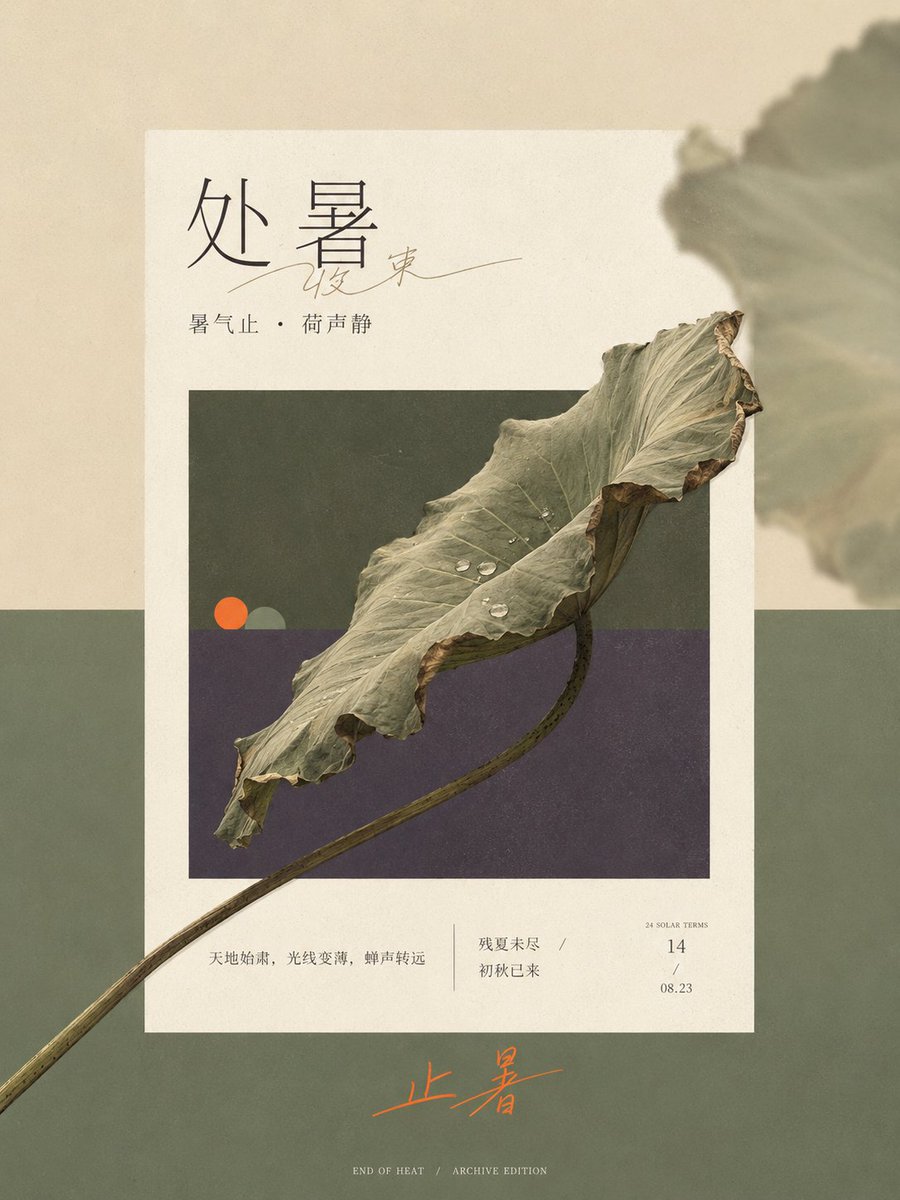
Solar Terms Editorial Visual
A sophisticated layout prompt for GPT-image2 that creates narrow vertical editorial visuals with multi-layered planar spaces and cross-border core forms.
這是一個平面設計和海報設計的GPT Image 2範例。請使用下方可直接使用的提示資訊產生類似的視覺素材,並在重複使用前查看Awesome GPT Image 2 Prompts署名和商業用途授權資訊。
需要完整的提示符號集?請使用 平面設計和海報設計 主題中心提供更多相關範例,或打開 GPT Image 2 提示庫 有關完整範例索引、可重複使用結構和來源歸屬的資訊。
Free 1K preview
Generate one preview image instantly, no sign-up required.
Free text preview doesn’t preserve reference-image consistency.
4000/4000
提示詞
可直接複製的提示
Generate a very narrow and long vertical editorial visual based on the {argument name="theme" default="End of Heat solar term"}. Let the external large color field, central warm white paper page, and the retracted theme window form three clear planar spaces. First, derive two structural colors from the state contrast and emotional temperature of the theme, covering the vast majority of the screen with a hard horizontal boundary. In the embedded window, repeat this set of divisions in the same direction and in a reduced proportion; the outer field is brighter and emptier, the inner window is deeper and denser, and paper white serves as the layer with the highest brightness of the whole painting. The weight of the screen is concentrated in the middle, the upper part retains a wide title area, and the lower part leaves a stretched emotional landing point. The edges of the paper are straight, no heavy floating shadows are used, and a wide annotation band is kept under the window.

Extract a continuous and recognizable core form from the direction, process, structural connection, and time change of the theme, organize it into a single oblique axis running through the middle, making it cross at least two boundaries from inside the window, pressing on the frame, entering the white space of the paper, and extending to the external color field. The cross-border form remains complete and continuous, the endpoints crossing the edge retain the clearest recognizable outline, and local details are moderately compressed; local forms go from dense to sparse along the oblique axis, and other auxiliary objects are reduced to quiet small geometric focal points, stably remaining inside the window and close to the color field boundary. Let the horizontal color boundary, vertical frame, rectangular paper, and inner window maintain a strict orthogonal order; only the core theme gets the right to break the rules, establishing space with accurate occlusion relationships rather than relying on perspective or dramatic projections.

Arrange a few homologous echoes on one edge of the theme's momentum: enlarge, crop, and reduce the transparency and contrast of the core form, strongly defocusing it until only soft color blocks remain, partially extending out of the canvas; the central subject remains clear, and the other side remains clean, giving the planar color field a shallow sense of air and memory. Color maintains a clear area order, with two structural colors together occupying about 80% of the screen. The theme's mediating color crosses two fields and stitches together cold/warm or state differences. A small-area emphasis color appears only twice at a long distance: at the visual focus inside the window and at the text gesture outside the paper. The specific hues change with the theme, but the brightness relationship remains stable with paper white being the highest, a few deep outlines pressing on the structure, and the emphasis color winning by saturation rather than area.

The text system continues the order and cross-border relationship of the image. The main title uses a slender, sharp, highly contrasting stroke, and exquisite editorial serif skeleton; Chinese adopts a thin and book-like typeface with relaxed spacing. Transform a keyword into a continuous free handwritten thin line, gently passing through or adjoining the printed title, forming a private handwriting that echoes the oblique axis of the theme. Explanatory information is indented at the bottom of the paper, listed in two groups of small fonts and date-type micro-words. The bottom edge outside the paper can use a set of handwritten text with long closing strokes to carry the second emphasis color, leaving only minimal metadata at the very bottom. Let titles, images, annotations, and footers decrease in density in sequence, not allowing text to press on the core recognition edges.

Process objects with non-directional soft daylight and low shadows, so the theme retains limited real material while still obeying planar color blocks. The entire image is covered with very light art paper fibers, fine printing dots, and low-contrast scanning particles; textures in the paper and window are slightly more obvious, and the outer pure color field is more restrained. The edges of objects allow for tiny printing softening and color bleeding, while key outlines and typeforms remain clean. The final image first presents a white paper window in a two-color long format and a theme form growing continuously from inside to outside the window, then reveals defocused edge shadows, exquisite headers, handwritten intervention, and micro-annotations, forming a modern paper-print visual where strict editorial order and a fresh sense of time coexist.
Theme: {argument name="theme" default="End of Heat solar term"}

Ratio 3:4
提示變數
提示符號中可編輯的參數佔位符及其預設值。
多變的
theme
預設
End of Heat solar term
Best for
- - 平面設計和海報設計 visual exploration
- - Image generation and reference-image edits
- - Reusable briefs that keep source attribution visible
Change these parts
- - Subject, product, character, or scene
- - Aspect ratio, camera, lighting, and background
- - Brand, text, color, and output constraints
Recommended model and settings
- - Model: gpt-image-2
- - Input mode: 圖生圖
- - Aspect ratio: source
- - Commercial status: review original source
How to use this prompt
- 1. Copy the prompt and preserve its structure for the first test.
- 2. Replace the subject, context, and publishing channel.
- 3. Change one camera, lighting, or style variable per iteration.
- 4. Inspect the output, source, text, and rights before reuse.
Limitations, source, and reuse cautions
- - Generated output is an editable draft, not factual, legal, or rights evidence.
- - Review the linked source, people, brands, logos, text, and third-party media before commercial use.
內容來自Awesome GPT Image 2 Prompts 。必須註明出處。商業用途狀態為allowed ;付費使用前請查看來源版權資訊。
此類案例更多
按類別、輸入模式相容性、品質和低風險進行優先排序。



重用和來源註釋
預覽案例後,請謹慎使用此提示。
- 1.複製提示或直接在 Dovoo 中使用生成按鈕開啟提示。
- 2.根據您的實際使用情況調整變數、寬高比和參考影像。
- 3.發布或付費使用前,請確認版權、署名要求以及品牌或肖像權風險。