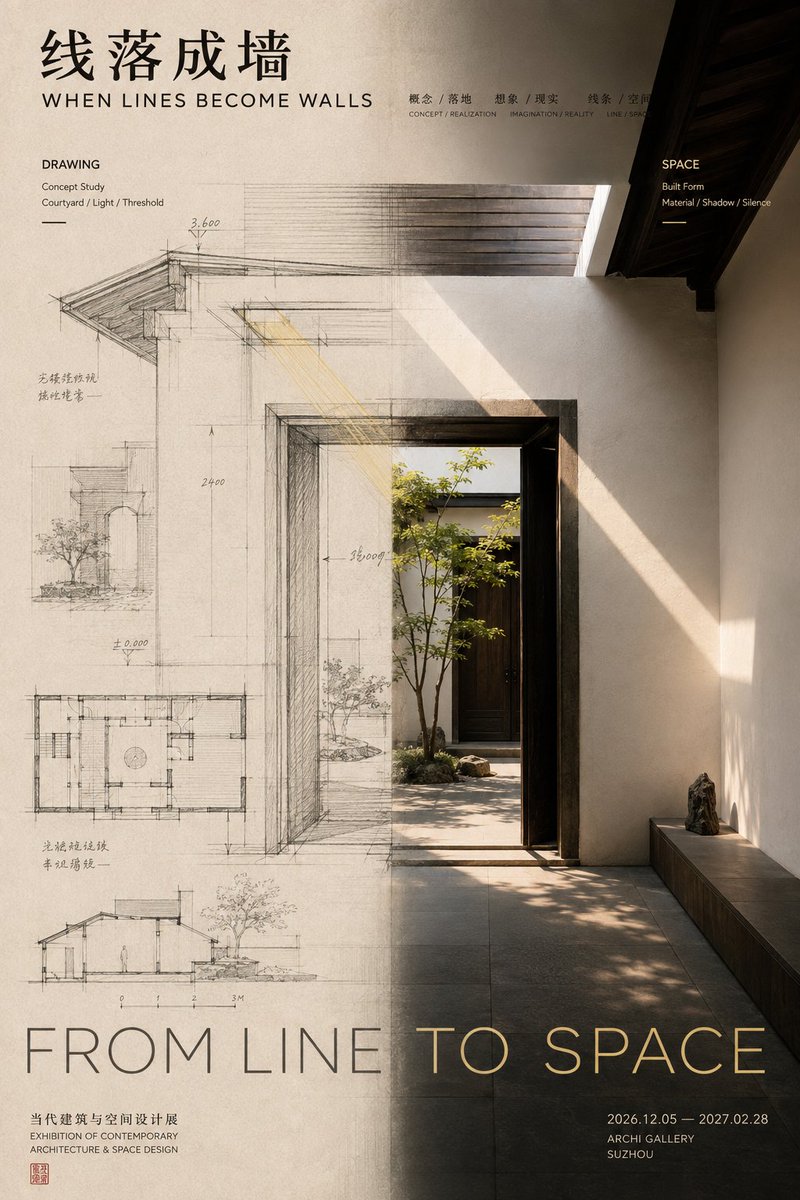
Conceptual Editorial Poster Design Framework
A complex instructional prompt for creating split-screen editorial posters that demonstrate a transition or transformation between two states.
這是一個平面設計和海報設計的GPT Image 2範例。請使用下方可直接使用的提示資訊產生類似的視覺素材,並在重複使用前查看Awesome GPT Image 2 Prompts署名和商業用途授權資訊。
需要完整的提示符號集?請使用 平面設計和海報設計 主題中心提供更多相關範例,或打開 GPT Image 2 提示庫 有關完整範例索引、可重複使用結構和來源歸屬的資訊。
Free 1K preview
Generate one preview image instantly, no sign-up required.
Free text preview doesn’t preserve reference-image consistency.
1535/4000
提示詞
可直接複製的提示
[Theme / Work Title]: {argument name="subject" default="____"}
[Left Status]: {argument name="left state" default="____"}
[Right Status]: {argument name="right state" default="____"}
[Relationship Type]: Before & After / Concept & Finished Product / Source & Spread / Entity & Transformation / Other
[Axis Change]: ____ → ____ → ____
[Chinese Title]: ____
[English Title]: ____
[Main Color Tone]: ____
[Secondary Color Tone]: ____
[Aspect Ratio]: 9:16

Generate an editorial design poster with exhibition visual quality, using a left-right composition.

Don't simply divide the screen into two columns; let the left and right visual areas express different states of the same theme, with the "middle boundary" being the actual point of change.

Use unequal proportional layouts (40:60, 45:55, 55:45) for the left and right areas based on the theme's weight, avoiding a mechanical 50:50 split. Establish a starting point or initial state on the left, and showcase the transformed result on the right.

The most crucial part is the axis transformation. Avoid rigid vertical lines; instead, choose a core element that runs through both areas and continuously changes as it crosses the axis (e.g., petals turning into stitches, a sketch becoming a real wall).

The layout should participate in this relationship, but all text must belong to the work itself. Control the colors to 2-4 main tones. The final reading order should guide the audience from the two states to the connection/change, and ultimately understand the cause and effect.
提示變數
提示符號中可編輯的參數佔位符及其預設值。
多變的
subject
預設
____
多變的
left state
預設
____
多變的
right state
預設
____
Best for
- - 平面設計和海報設計 visual exploration
- - Image generation and reference-image edits
- - Reusable briefs that keep source attribution visible
Change these parts
- - Subject, product, character, or scene
- - Aspect ratio, camera, lighting, and background
- - Brand, text, color, and output constraints
Recommended model and settings
- - Model: gpt-image-2
- - Input mode: 圖生圖
- - Aspect ratio: source
- - Commercial status: review original source
How to use this prompt
- 1. Copy the prompt and preserve its structure for the first test.
- 2. Replace the subject, context, and publishing channel.
- 3. Change one camera, lighting, or style variable per iteration.
- 4. Inspect the output, source, text, and rights before reuse.
Limitations, source, and reuse cautions
- - Generated output is an editable draft, not factual, legal, or rights evidence.
- - Review the linked source, people, brands, logos, text, and third-party media before commercial use.
內容來自Awesome GPT Image 2 Prompts 。必須註明出處。商業用途狀態為allowed ;付費使用前請查看來源版權資訊。
此類案例更多
按類別、輸入模式相容性、品質和低風險進行優先排序。
重用和來源註釋
預覽案例後,請謹慎使用此提示。
- 1.複製提示或直接在 Dovoo 中使用生成按鈕開啟提示。
- 2.根據您的實際使用情況調整變數、寬高比和參考影像。
- 3.發布或付費使用前,請確認版權、署名要求以及品牌或肖像權風險。