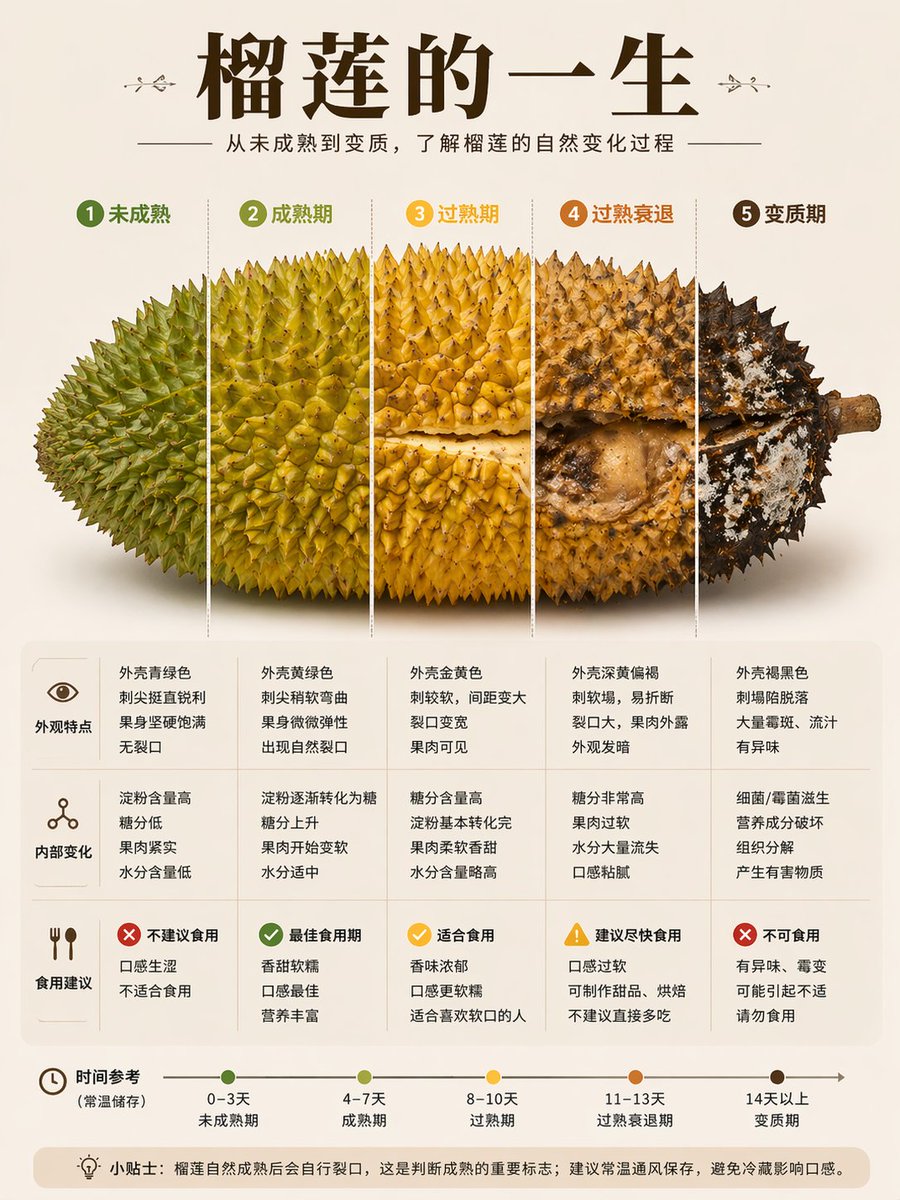
榴蓮成熟生命週期資訊圖
一張中國教育資訊圖海報,展示了榴槤的五個成熟階段,配有逼真的水果圖片、對比說明和儲存時間線,可用於社交媒體知識分享內容。
這是一個平面設計和海報設計的GPT Image 2範例。請使用下方可直接使用的提示資訊產生類似的視覺素材,並在重複使用前查看Awesome GPT Image 2 Prompts署名和商業用途授權資訊。
需要完整的提示符號集?請使用 平面設計和海報設計 主題中心提供更多相關範例,或打開 GPT Image 2 提示庫 有關完整範例索引、可重複使用結構和來源歸屬的資訊。
Free 1K preview
Generate one preview image instantly, no sign-up required.
4000/4000
提示詞
可直接複製的提示
{
  "type": "Chinese infographic poster",
  "topic": "jackfruit ripening lifecycle",
  "style": "clean editorial food science infographic, high information density, realistic cutout fruit photography combined with minimal flat design, warm neutral beige background, premium social-media educational graphic",
  "canvas": {
    "orientation": "portrait",
    "aspect_ratio": "3:4"
  },
  "headline": {
    "title": "{argument name=\"headline text\" default=\"The Life of a Durian\"}",
    "subtitle": "From never ripening to decaying, understand the natural changes of a durian"
  },
  "main_visual": {
    "subject": "one whole durian shown horizontally across the center, stem on the right, isolated on a light beige background with a soft diffuse shadow below",
    "segmentation": {
      "count": 5,
      "direction": "vertical slices separated by thin white divider lines",
      "stages": [
        {
          "index": 1,
          "label": "Immature",
          "badge_color": "olive green",
          "appearance": "leftmost section, green husk, dense sharp spikes, firm unripe look"
        },
        {
          "index": 2,
          "label": "Mature stage",
          "badge_color": "yellow green",
          "appearance": "greenish yellow husk, spikes slightly curved, shell beginning natural cracking"
        },
        {
          "index": 3,
          "label": "Overripe Period",
          "badge_color": "golden yellow",
          "appearance": "yellow husk, wider cracks, one horizontal opening reveals pale creamy flesh inside"
        },
        {
          "index": 4,
          "label": "Overripe decay",
          "badge_color": "orange brown",
          "appearance": "deeper yellow-brown shell, obvious split cavity with collapsed interior, darker surface stains"
        },
        {
          "index": 5,
          "label": "Deterioration stage",
          "badge_color": "dark brown",
          "appearance": "near-black rotten husk with white mold patches and severe decay around the right end near the stem"
        }
      ]
    }
  },
  "layout": {
    "sections": [
      {
        "title": "Appearance characteristics",
        "position": "lower table row 1 left label",
        "count": 5,
        "cells": [
          "Greenish-blue shell, straight and sharp thorn tips, firm and full fruit body, no cracks",
          "Yellow-green shell, slightly soft and curved thorn tips, slightly elastic fruit body, natural cracks appear",
          "Golden yellow shell, softer thorns, increased spacing, wider cracks, pulp visible",
          "Dark yellow-brown shell, collapsed thorns, easy to break, large cracks, exposed pulp, dark appearance",
          "The shell is brownish-black, with collapsed and fallen spines, numerous mold spots, oozing, and a foul odor."
        ]
      },
      {
        "title": "Internal changes",
        "position": "lower table row 2 left label",
        "count": 5,
        "cells": [
          "High starch content, low sugar content, firm flesh, and low moisture content.",
          "Starch gradually converts to sugar, sugar levels rise, the flesh begins to soften, and moisture content is moderate.",
          "High sugar content, starch is almost completely converted, the flesh is soft and fragrant, and the moisture content is slightly high.",
          "Very high sugar content, the flesh is overripe and soft, a large amount of moisture is lost, and the texture is sticky.",
          "Bacterial/mold growth, nutrient degradation, tissue decomposition, and production of harmful substances"
        ]
      },
      {
        "title": "Eating suggestions",
        "position": "lower table row 3 left label",
        "count": 5,
        "cells": [
          "Not recommended for consumption, astringent taste, not suitable for eating",
          "Best consumption period, sweet and soft, best taste, rich in nutrients",
          "Suitable for consumption, strong aroma, softer texture, suitable for those who like soft food",
          "Recommended to eat as soon as possible, overly soft texture, can be used for desserts and baking, not recommended to eat a lot directly",
          "Not edible, has an odor, moldy, may cause discomfort, do not eat"
        ]
      },
      {
        "title": "Time reference (room temperature storage)",
        "position": "bottom timeline",
        "count": 5,
        "labels": [
          "0–3 days Unripe",
          "4–7 days Ripe",
          "8–10 days Overripe",
          "11–13 days – Overripe decline period",
          "14+ days – Spoilage period"
        ]
      }
    ],
    "footer_note": "Tip: Durian will naturally crack open after ripening, which is an important indicator of maturity; it is recommended to store at room temperature in a ventilated place, avoiding refrigeration which can affect the taste."
  },
  "design_details": {
    "palette": [
      "beige",
      "dark brown",
      "olive green",
      "yellow green",
      "golden yellow",
      "orange brown"
    ],
    "typography": "large bold Chinese serif headline, smaller clean sans-serif body text",
    "icons": "4 small category icons on the left side of the table: eye for appearance, molecular/network icon for internal changes, fork-and-knife for eating advice, clock for timeline",
    "composition": "centered symmetrical infographic with large fruit dominating the upper middle and a rounded-corner comparison table beneath"
  }
}
提示變數
提示符號中可編輯的參數佔位符及其預設值。
多變的
headline text
預設
The Life of a Durian
Best for
- - 平面設計和海報設計 visual exploration
- - Image generation and reference-image edits
- - Reusable briefs that keep source attribution visible
Change these parts
- - Subject, product, character, or scene
- - Aspect ratio, camera, lighting, and background
- - Brand, text, color, and output constraints
Recommended model and settings
- - Model: gpt-image-2
- - Input mode: 文生圖
- - Aspect ratio: source
- - Commercial status: review original source
How to use this prompt
- 1. Copy the prompt and preserve its structure for the first test.
- 2. Replace the subject, context, and publishing channel.
- 3. Change one camera, lighting, or style variable per iteration.
- 4. Inspect the output, source, text, and rights before reuse.
Limitations, source, and reuse cautions
- - Generated output is an editable draft, not factual, legal, or rights evidence.
- - Review the linked source, people, brands, logos, text, and third-party media before commercial use.
內容來自Awesome GPT Image 2 Prompts 。必須註明出處。商業用途狀態為allowed ;付費使用前請查看來源版權資訊。
此類案例更多
按類別、輸入模式相容性、品質和低風險進行優先排序。




重用和來源註釋
預覽案例後,請謹慎使用此提示。
- 1.複製提示或直接在 Dovoo 中使用生成按鈕開啟提示。
- 2.根據您的實際使用情況調整變數、寬高比和參考影像。
- 3.發布或付費使用前,請確認版權、署名要求以及品牌或肖像權風險。