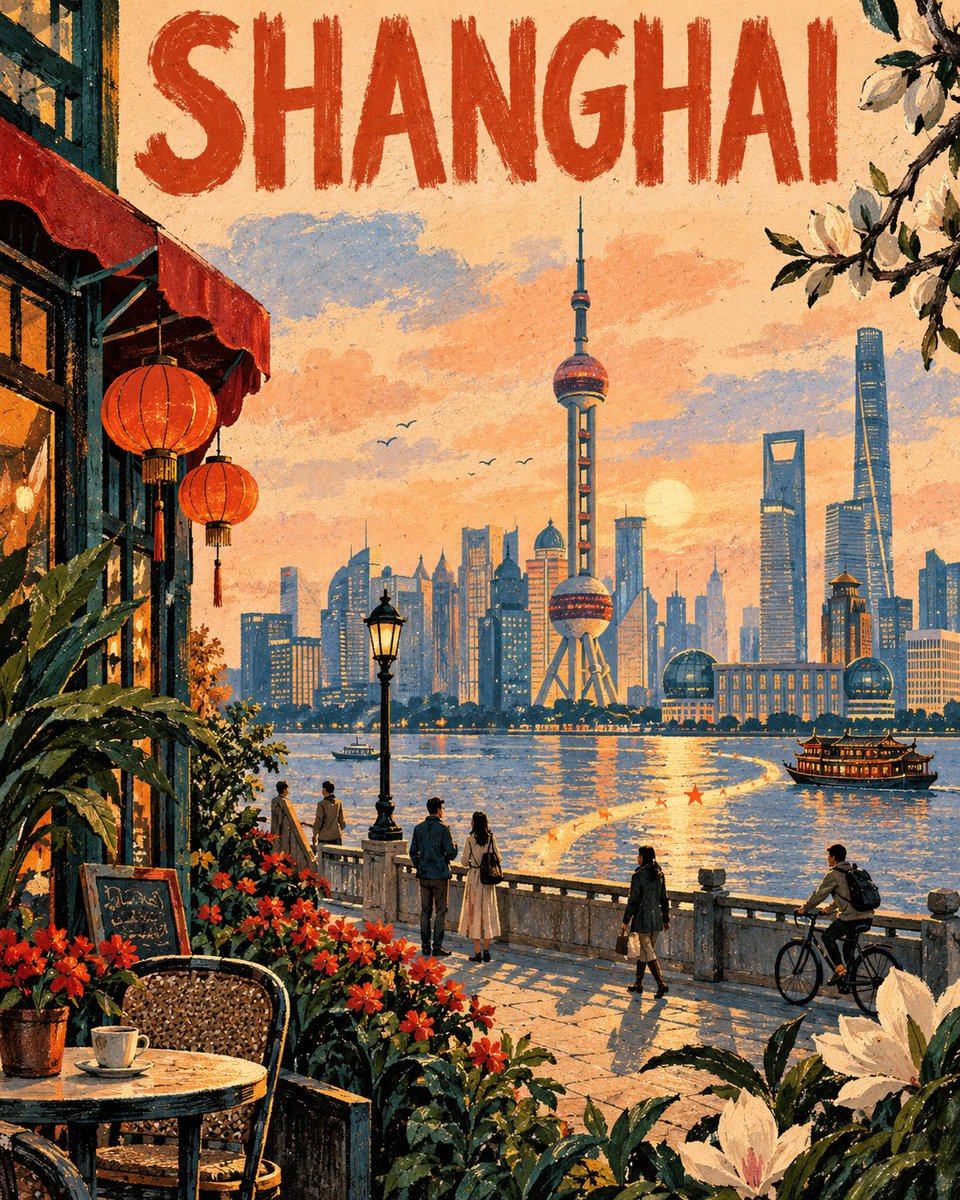
Geometric City Memory Poster
Generates stylized, mixed-media city posters that reimagine landmarks as geometric forms with a nostalgic, tactile feel and unique decorative elements.
這是一個平面設計和海報設計的GPT Image 2範例。請使用下方可直接使用的提示資訊產生類似的視覺素材,並在重複使用前查看Awesome GPT Image 2 Prompts署名和商業用途授權資訊。
需要完整的提示符號集?請使用 平面設計和海報設計 主題中心提供更多相關範例,或打開 GPT Image 2 提示庫 有關完整範例索引、可重複使用結構和來源歸屬的資訊。
Free 1K preview
Generate one preview image instantly, no sign-up required.
Free text preview doesn’t preserve reference-image consistency.
3113/4000
提示詞
可直接複製的提示
City: {argument name="city name" default="[City Name]"}
Landmark: {argument name="landmark" default="[Landmark Name]"}

Create an original, vertical emotional city poster themed around the specified “City” and “Landmark”. The landmark should serve as a mid-ground, recognizable visual anchor, simplified into elegant geometric forms rather than realistic rendering. Reconstruct the surrounding areas as poetic memories of the city – not precise copies of photos or existing artwork.

Composition

Divide the scene into three distinct layers:

Foreground — Oversized, native plants, seasonal flowers, architectural fragments, cafe furniture, street objects, or foliage associated with the city, partially cutting into the frame from the bottom and sides.

Mid-ground — Several people in natural poses enjoying ordinary city moments: walking, reading, cycling, conversing, resting, or gazing towards the landmark. Keep people secondary, avoiding deliberate tourist posing.

Background — The landmark situated within a streamlined cityscape, surrounded by sky, trees, bodies of water, hills, or architecture consistent with the local character.

Add a unique “memory ribbon”: an irregular, flowing band starting near a corner, naturally transforming into roads, rivers, shadows, flowerbeds, or beams of light, guiding the eye towards the landmark. Add several tiny, star-shaped color markings along the way.

Visual Language

Employ an original mixed-media illustration style combining large areas of oil pastel blocks, dry powder charcoal outlines, manual pressure variations, broken edges, imperfect overlaps, scraped highlights, warm uncoated paper textures, selective double outlines, heavy impasto, uneven transparency, visible hand-drawn strokes, and deliberately left negative space. Avoid smooth digital gradients, glossy 3D rendering, and photorealism.

Color Scheme

Automatically derive a color scheme based on the city’s emotional characteristics, climate, season, and cultural atmosphere. Use one primary background color, 2–3 supporting colors, and a small amount of a striking contrasting accent color.

Typography

Display the precise city name at the top, in all capital letters. The font should be large, spacious, clear, and readable, and hand-drawn in charcoal or thick oil pastel. Display only the city name. Do not include slogans, descriptions, dates, logos, signatures, watermarks, borders, frames, or other typographic elements.

Create a composition that is asymmetrical, with a calm rhythm, strong framing, ample breathing room, and a surprising local detail. Make the final image feel like a rediscovered travel poster from a fictional city archive – intimate, modern, nostalgic, textured, and uniquely original.

Negative Prompts: photorealistic photography, precise imitation of reference artwork, copied compositions, copied brushstrokes, artist signatures, watermarks, generic tourist advertising, cluttered skylines, excessive landmarks, distorted architecture, repetitive people, overly large people, smooth vector illustrations, glossy 3D rendering, plastic textures, neon overload
提示變數
提示符號中可編輯的參數佔位符及其預設值。
多變的
city name
預設
[City Name]
多變的
landmark
預設
[Landmark Name]
Best for
- - 平面設計和海報設計 visual exploration
- - Image generation and reference-image edits
- - Reusable briefs that keep source attribution visible
Change these parts
- - Subject, product, character, or scene
- - Aspect ratio, camera, lighting, and background
- - Brand, text, color, and output constraints
Recommended model and settings
- - Model: gpt-image-2
- - Input mode: 圖生圖
- - Aspect ratio: source
- - Commercial status: review original source
How to use this prompt
- 1. Copy the prompt and preserve its structure for the first test.
- 2. Replace the subject, context, and publishing channel.
- 3. Change one camera, lighting, or style variable per iteration.
- 4. Inspect the output, source, text, and rights before reuse.
Limitations, source, and reuse cautions
- - Generated output is an editable draft, not factual, legal, or rights evidence.
- - Review the linked source, people, brands, logos, text, and third-party media before commercial use.
內容來自Awesome GPT Image 2 Prompts 。必須註明出處。商業用途狀態為allowed ;付費使用前請查看來源版權資訊。
此類案例更多
按類別、輸入模式相容性、品質和低風險進行優先排序。
重用和來源註釋
預覽案例後,請謹慎使用此提示。
- 1.複製提示或直接在 Dovoo 中使用生成按鈕開啟提示。
- 2.根據您的實際使用情況調整變數、寬高比和參考影像。
- 3.發布或付費使用前,請確認版權、署名要求以及品牌或肖像權風險。