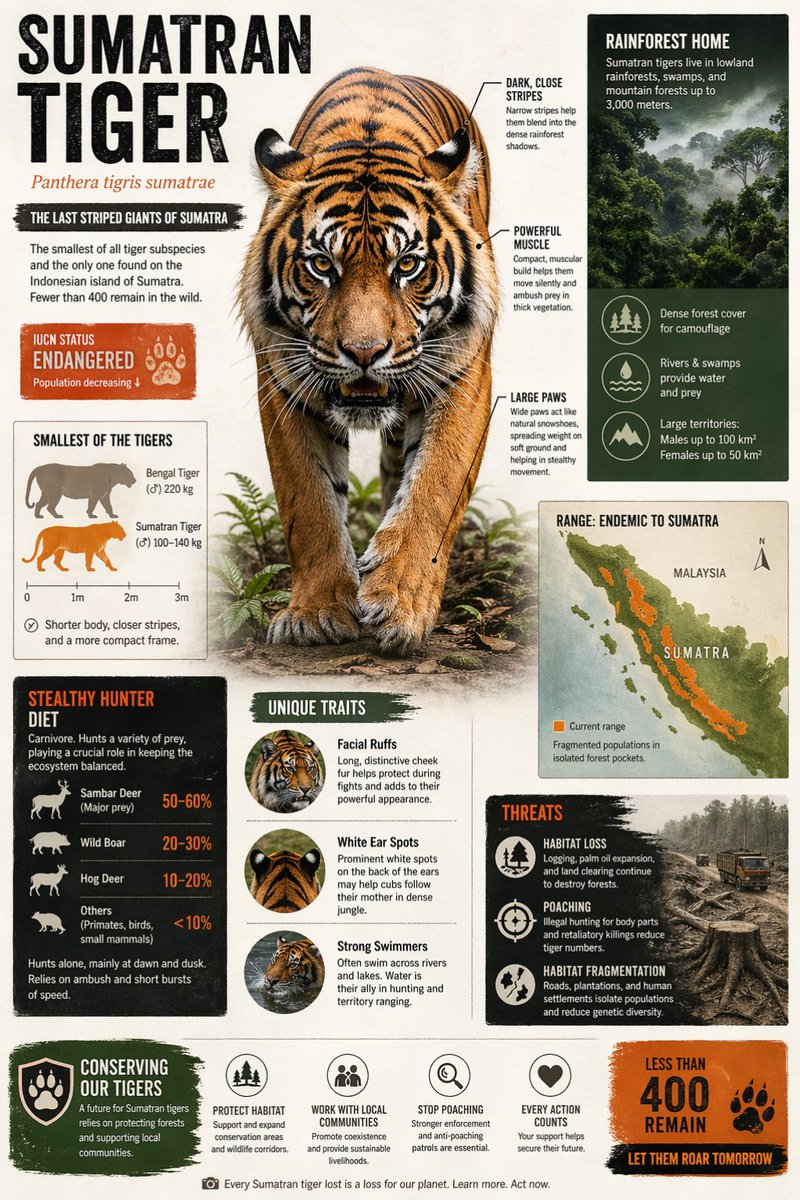
Infográfico sobre a conservação do tigre-de-sumatra
Um pôster infográfico detalhado sobre a vida selvagem, apresentando um tigre-de-sumatra central com informações sobre habitat, distribuição geográfica, dieta, características, ameaças e conservação, para uso educacional ou de conscientização.
Este é um exemplo de prompt GPT Image 2 para Gráfico e pôster . Use o prompt pronto para copiar abaixo para gerar visuais semelhantes e revise a atribuição Awesome GPT Image 2 Prompts e os direitos de uso comercial antes de reutilizá-los.
Free 1K preview
Generate one preview image instantly, no sign-up required.
Incitar
prompt pronto para copiar
{
  "type": "wildlife conservation infographic poster",
  "subject": {
    "animal": "{argument name=\"animal name\" default=\"Sumatran Tiger\"}",
    "scientific_name": "{argument name=\"scientific name\" default=\"Panthera tigris sumatrae\"}",
    "pose": "front-facing full-body tiger walking directly toward the viewer, one forepaw stepping forward, intense eye contact, realistic anatomy, detailed fur and whiskers",
    "style": "high-detail natural history illustration mixed with editorial infographic design",
    "background": "off-white paper texture with subtle grain, clean poster layout"
  },
  "composition": {
    "centerpiece": "large central tiger occupying most of the vertical space, grounded on a small patch of soil and low jungle plants",
    "callouts": {
      "count": 3,
      "labels": [
        "DARK, CLOSE STRIPES",
        "POWERFUL MUSCLE",
        "LARGE PAWS"
      ],
      "style": "thin annotation lines pointing to stripe pattern, shoulder-body mass, and front paws"
    }
  },
  "layout": {
    "sections": [
      {
        "title": "{argument name=\"main title\" default=\"Sumatran Tiger\"}",
        "position": "top left",
        "count": 3,
        "labels": [
          "Panthera tigris sumatrae",
          "THE LAST STRIPED GIANTS OF SUMATRA",
          "The smallest of all tiger subspecies and the only one found on the Indonesian island of Sumatra. Fewer than 400 remain in the wild."
        ]
      },
      {
        "title": "IUCN STATUS",
        "position": "left upper-middle",
        "count": 2,
        "labels": [
          "ENDANGERED",
          "Population decreasing"
        ]
      },
      {
        "title": "SMALLEST OF THE TIGERS",
        "position": "left middle",
        "count": 2,
        "labels": [
          "Bengal Tiger (♂) 220 kg",
          "Sumatran Tiger (♂) 100–140 kg"
        ],
        "visual": "size comparison panel with two tiger silhouettes and a horizontal 0m to 3m scale"
      },
      {
        "title": "STEALTHY HUNTER DIET",
        "position": "bottom left",
        "count": 4,
        "labels": [
          "Sambar Deer 50–60%",
          "Wild Boar 20–30%",
          "Hog Deer 10–20%",
          "Others <10%"
        ],
        "notes": "includes short paragraph about solitary hunting at dawn and dusk using ambush and short bursts of speed"
      },
      {
        "title": "RAINFOREST HOME",
        "position": "top right",
        "count": 4,
        "labels": [
          "Dense forest cover for camouflage",
          "Rivers & swamps provide water and prey",
          "Large territories: Males up to 100 km² Females up to 50 km²",
          "Sumatran tigers live in lowland rainforests, swamps, and mountain forests up to 3,000 meters."
        ],
        "visual": "misty rainforest photo-style panel with three circular habitat icons"
      },
      {
        "title": "RANGE: ENDEMIC TO SUMATRA",
        "position": "right middle",
        "count": 3,
        "labels": [
          "MALAYSIA",
          "SUMATRA",
          "Current range"
        ],
        "visual": "map of western Indonesia with Sumatra highlighted in orange and fragmented tiger population zones marked"
      },
      {
        "title": "UNIQUE TRAITS",
        "position": "lower center",
        "count": 3,
        "labels": [
          "Facial Ruffs",
          "White Ear Spots",
          "Strong Swimmers"
        ],
        "visual": "three circular close-up images with short explanatory text for each trait"
      },
      {
        "title": "THREATS",
        "position": "lower right",
        "count": 3,
        "labels": [
          "HABITAT LOSS",
          "POACHING",
          "HABITAT FRAGMENTATION"
        ],
        "visual": "dark panel with white icons and a deforested landscape photo showing tree stumps and heavy machinery"
      },
      {
        "title": "CONSERVING OUR TIGERS",
        "position": "bottom left strip",
        "count": 5,
        "labels": [
          "A future for Sumatran tigers relies on protecting forest and supporting local communities.",
          "PROTECT HABITAT",
          "WORK WITH LOCAL COMMUNITIES",
          "STOP POACHING",
          "EVERY ACTION COUNTS"
        ]
      },
      {
        "title": "LESS THAN 400 REMAIN",
        "position": "bottom right corner",
        "count": 2,
        "labels": [
          "LESS THAN 400 REMAIN",
          "LET THEM ROAR TOMORROW"
        ]
      },
      {
        "title": "footer",
        "position": "lower center",
        "count": 1,
        "labels": [
          "Every Sumatran tiger lost is a loss for our planet. Learn more. Act now."
        ]
      }
    ]
  },
  "design": {
    "palette": [
      "black",
      "warm orange",
      "forest green",
      "cream",
      "white",
      "muted gray"
    ],
    "typography": "bold condensed uppercase display font for headers, smaller clean sans-serif for body text, occasional distressed paint-stroke header backplates",
    "icons": "flat white conservation and habitat icons inside circular badges",
    "mood": "urgent, educational, conservation-focused, premium editorial poster"
  },
  "rendering": {
    "aspect_ratio": "2:3 vertical",
    "quality": "print-ready, crisp text, highly legible, polished magazine infographic aesthetic"
  }
}
Variáveis de prompt
Marcadores de posição editáveis para argumentos encontrados no prompt, com seus valores padrão.
Best for
- - Gráfico e pôster visual exploration
- - Image generation and reference-image edits
- - Reusable briefs that keep source attribution visible
Change these parts
- - Subject, product, character, or scene
- - Aspect ratio, camera, lighting, and background
- - Brand, text, color, and output constraints
Recommended model and settings
- - Model: gpt-image-2
- - Input mode: Texto para Imagem
- - Aspect ratio: source
- - Commercial status: review original source
How to use this prompt
- 1. Copy the prompt and preserve its structure for the first test.
- 2. Replace the subject, context, and publishing channel.
- 3. Change one camera, lighting, or style variable per iteration.
- 4. Inspect the output, source, text, and rights before reuse.
Limitations, source, and reuse cautions
- - Generated output is an editable draft, not factual, legal, or rights evidence.
- - Review the linked source, people, brands, logos, text, and third-party media before commercial use.
Mais casos nesta categoria
Priorizados por categoria, compatibilidade do modo de entrada, qualidade e menor risco.





Reutilização e notas de origem
Utilize esta instrução com segurança após visualizar o caso.
- 1.Copie o prompt ou abra-o diretamente no Dovoo com o botão de geração.
- 2.Ajuste as variáveis, a proporção e as imagens de referência de acordo com o seu caso específico.
- 3.Antes de publicar ou utilizar o conteúdo mediante pagamento, verifique os direitos da fonte, os requisitos de atribuição e os riscos relacionados à marca ou à imagem.