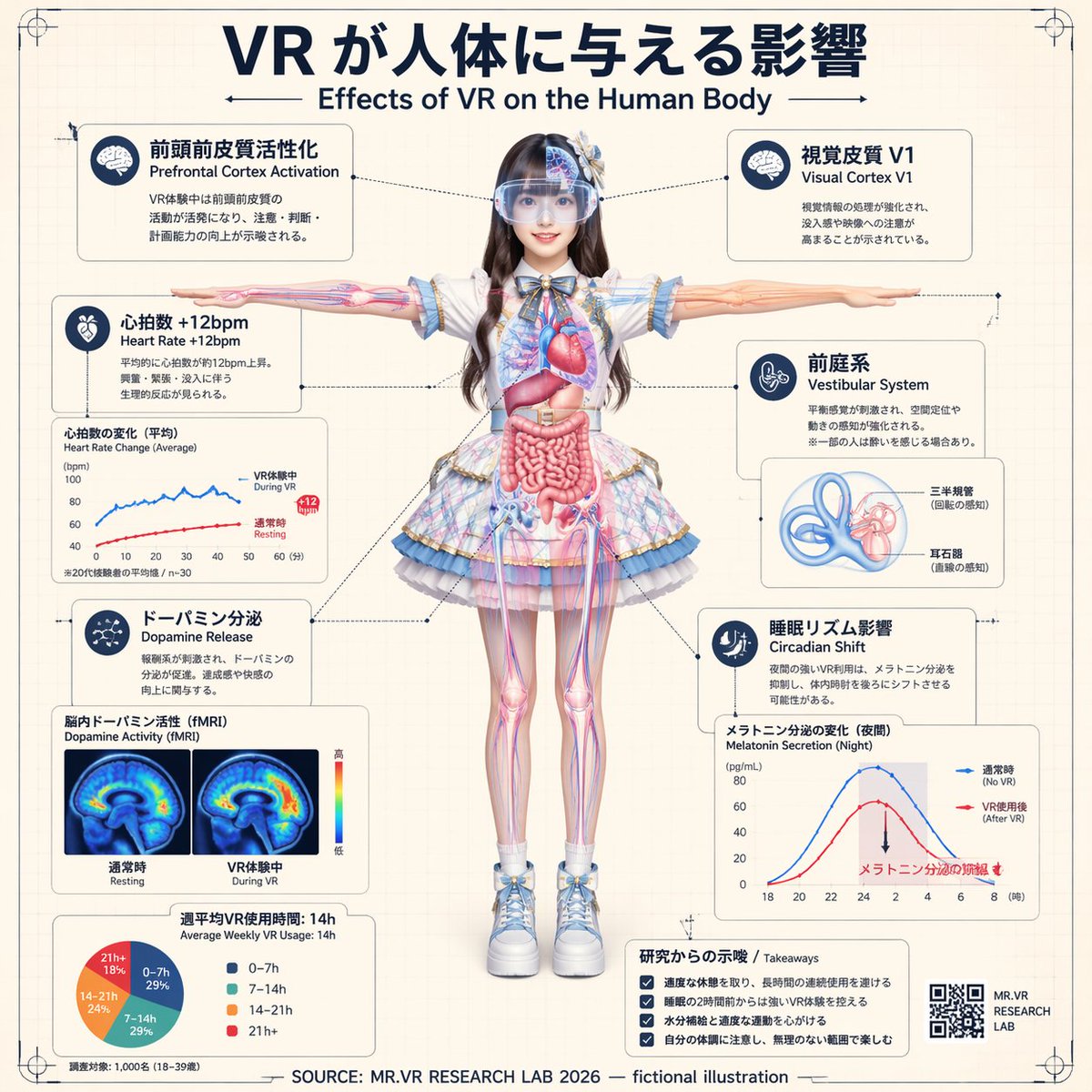
Infografika: Wpływ VR na organizm człowieka
Dwujęzyczny japońsko-angielski plakat naukowy przedstawiający dziewczynę z anime z nakładkami anatomicznymi i wieloma wykresami, nadający się do tworzenia edukacyjnych infografik o zdrowiu w technologii VR.
To jest przykładowy przykład GPT Image 2 dla Grafika i plakat . Skorzystaj z poniższego przykładu gotowego do skopiowania, aby wygenerować podobne materiały wizualne i sprawdź atrybucję Awesome GPT Image 2 Prompts oraz prawa do użytku komercyjnego przed ponownym wykorzystaniem.
Potrzebujesz pełnego zestawu podpowiedzi? Użyj Grafika i plakat aby uzyskać więcej powiązanych przykładów, odwiedź centrum tematyczne lub otwórz GPT Image 2 szybki katalog aby zobaczyć pełny przykładowy indeks, struktury wielokrotnego użytku i informacje o źródle.
Free 1K preview
Generate one preview image instantly, no sign-up required.
4000/4000
Opis
Monit o przygotowanie do kopiowania
{
  "anatomy_overlay": {
    "visible_parts": [
      "glowing brain in the head",
      "heart and lungs in the chest",
      "digestive organs in the abdomen",
      "reproductive/urinary region glow in the pelvis",
      "arteries through both arms",
      "veins through both arms",
      "arteries and veins through both legs",
      "inner ear balance structures highlighted near the head"
    ],
    "visible_parts_count": 8
  },
  "character": {
    "age_appearance": "teen to young adult",
    "face": "Show every face clearly with natural, detailed facial features",
    "gender_presentation": "female",
    "hair": {
      "color": "dark brown",
      "style": "long wavy twin sections falling over shoulders and down past chest, center-parted with small decorative floral hair accessory"
    },
    "outfit": "frilly pastel idol dress with short puff sleeves, layered skirt, blue ribbon bow at the collar, lace trim, white ankle socks, blue high-top sneakers",
    "pose": "standing straight, full body centered, arms extended horizontally to both sides"
  },
  "composition": "symmetrical poster with callouts on both sides of the character, charts anchored in the lower corners, title large and bold at top",
  "layout": {
    "border": "thin decorative technical frame around all edges with corner ornaments and small measurement-like marks",
    "branding": {
      "count": 3,
      "items": [
        "SOURCE: MR.VR RESEARCH LAB 2026",
        "MR.VR RESEARCH LAB",
        "QR code at bottom right"
      ]
    },
    "charts": {
      "count": 4,
      "items": [
        {
          "chart_type": "line graph with blue and red lines",
          "labels": [
            "During VR experience",
            "Normal state",
            "+12"
          ],
          "position": "left lower-middle",
          "subtitle": "Heart Rate Change (Average)",
          "title": "心拍数の変化(平均)"
        },
        {
          "chart_type": "two brain scan panels with color scale",
          "labels": [
            "Normal state",
            "During VR experience",
            "Resting",
            "During VR"
          ],
          "position": "left lower",
          "subtitle": "Dopamine Activity (fMRI)",
          "title": "脳内ドーパミン活性(fMRI)"
        },
        {
          "chart_type": "line graph with blue and red curves",
          "labels": [
            "Normal state",
            "After VR viewing",
            "No VR",
            "After VR",
            "メラトニン分泌が抑制"
          ],
          "position": "right lower",
          "subtitle": "Melatonin Secretion (Night)",
          "title": "メラトニン分泌の変化(夜間)"
        },
        {
          "chart_type": "pie chart",
          "labels": [
            "0–7h",
            "7–14h",
            "14–21h",
            "21h+"
          ],
          "position": "left lower",
          "subtitle": "Average Weekly VR Usage: 14h",
          "title": "Weekly average VR usage time: 14h"
        }
      ]
    },
    "diagrams": {
      "count": 1,
      "items": [
        {
          "labels": [
            "Semicircular canals",
            "Otolith organs"
          ],
          "position": "right middle-lower near vestibular box",
          "title": "inner ear balance diagram"
        }
      ]
    },
    "info_boxes": {
      "count": 6,
      "items": [
        {
          "icon": "brain",
          "position": "upper left",
          "subtitle": "Prefrontal Cortex Activation",
          "title": "Prefrontal cortex activation"
        },
        {
          "icon": "brain",
          "position": "upper right",
          "subtitle": "Visual Cortex V1",
          "title": "Visual cortex V1"
        },
        {
          "icon": "heart",
          "position": "left upper-middle",
          "subtitle": "Heart Rate +12bpm",
          "title": "Heart rate +12bpm"
        },
        {
          "icon": "head and balance",
          "position": "right middle",
          "subtitle": "Vestibular System",
          "title": "Vestibular system"
        },
        {
          "icon": "molecule/network",
          "position": "left lower-middle",
          "subtitle": "Dopamine Release",
          "title": "ドーパミン分泌"
        },
        {
          "icon": "moon and stars",
          "position": "right lower-middle",
          "subtitle": "Circadian Shift",
          "title": "睡眠リズム影響"
        }
      ]
    },
    "main_centerpiece": "full-body character in T-pose-like stance with dotted callout lines connecting body regions to surrounding information boxes",
    "research_box": {
      "bullet_count": 4,
      "count": 1,
      "position": "bottom center-right",
      "title": "研究からの示唆 / Takeaways"
    },
    "title_block": {
      "count": 2,
      "lines": [
        "VR が人体に与える影響",
        "Effects of VR on the Human Body"
      ],
      "position": "top center"
    }
  },
  "quality": "sharp, publication-ready, square format",
  "style": {
    "background": "warm off-white paper tone with faint grid",
    "overall": "clean Japanese educational infographic mixed with kawaii anime character art and scientific visualization",
    "palette": "navy blue, cream, soft pastel pink, pastel blue, medical reds and blues",
    "rendering": "high-detail polished poster design, crisp vector UI boxes, soft character shading, realistic anatomy illustrations composited into the body"
  },
  "subject": "front-facing full-body anime idol girl with semi-transparent anatomical overlay",
  "text_density": "high, bilingual Japanese and English subtitles throughout",
  "type": "medical infographic poster"
}
Best for
- - Grafika i plakat visual exploration
- - Image generation and reference-image edits
- - Reusable briefs that keep source attribution visible
Change these parts
- - Subject, product, character, or scene
- - Aspect ratio, camera, lighting, and background
- - Brand, text, color, and output constraints
Recommended model and settings
- - Model: gpt-image-2
- - Input mode: Tekst na obraz
- - Aspect ratio: source
- - Commercial status: review original source
How to use this prompt
- 1. Copy the prompt and preserve its structure for the first test.
- 2. Replace the subject, context, and publishing channel.
- 3. Change one camera, lighting, or style variable per iteration.
- 4. Inspect the output, source, text, and rights before reuse.
Limitations, source, and reuse cautions
- - Generated output is an editable draft, not factual, legal, or rights evidence.
- - Review the linked source, people, brands, logos, text, and third-party media before commercial use.
Zaimportowano z Awesome GPT Image 2 Prompts . Wymagane jest podanie źródła. Status do użytku komercyjnego to allowed ; przed płatnym użyciem sprawdź prawa autorskie do źródła.
Więcej przypadków w tej kategorii
Priorytety według kategorii, zgodności trybu wprowadzania, jakości i niższego ryzyka.
Ponowne wykorzystanie i źródło notatek
Użyj tego monitu bezpiecznie po zapoznaniu się ze sprawą.
- 1.Skopiuj monit lub otwórz go bezpośrednio w Dovoo za pomocą przycisku generowania.
- 2.Dostosuj zmienne, proporcje obrazu i obrazy referencyjne do własnego przypadku użycia.
- 3.Przed publikacją lub płatnym wykorzystaniem należy sprawdzić prawa autorskie do źródła, wymogi dotyczące atrybucji oraz ryzyko związane z marką lub podobizną.