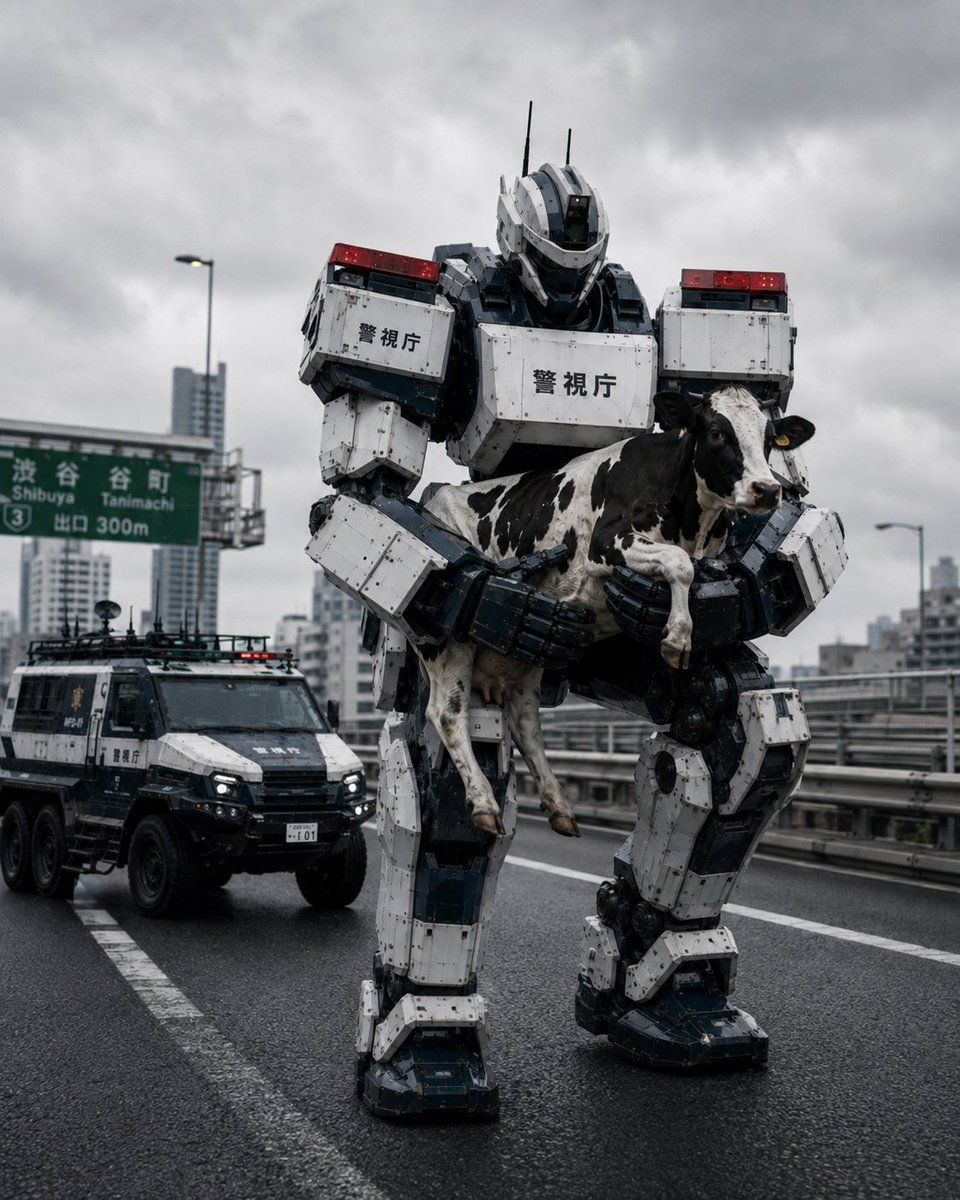
Tokyo Police Robot Rescuing Cow
A cinematic photorealistic scene of a giant Japanese police mech carrying a cow on a rainy Tokyo expressway, useful for sci-fi news or concept art.
To jest przykładowy przykład GPT Image 2 dla Ilustracja i sztuka . Skorzystaj z poniższego przykładu gotowego do skopiowania, aby wygenerować podobne materiały wizualne i sprawdź atrybucję Awesome GPT Image 2 Prompts oraz prawa do użytku komercyjnego przed ponownym wykorzystaniem.
Potrzebujesz pełnego zestawu podpowiedzi? Użyj Ilustracja i sztuka aby uzyskać więcej powiązanych przykładów, odwiedź centrum tematyczne lub otwórz GPT Image 2 szybki katalog aby zobaczyć pełny przykładowy indeks, struktury wielokrotnego użytku i informacje o źródle.
Free 1K preview
Generate one preview image instantly, no sign-up required.
1597/4000
Opis
Monit o przygotowanie do kopiowania
Create a photorealistic cinematic news-style image of a massive humanoid police robot from the Tokyo Metropolitan Police heavy machinery response unit standing on a wet elevated expressway in Tokyo, carefully carrying one black-and-white Holstein cow in both armored hands as if rescuing or detaining it. The robot is about three stories tall, built from white and dark navy modular armor plates with visible bolts, hydraulic joints, scuffed paint, rain grime, red emergency light bars on both shoulders, thin antennae on its helmet, and Japanese police markings reading {argument name="police marking text" default="Metropolitan Police Department"} on the chest and shoulder armor. The cow should be full-sized, dangling but unharmed, with four visible legs, black patches, a white face stripe, yellow ear tag, and a confused expression. Behind the robot on the left, include exactly one futuristic armored police vehicle with six large wheels, black-and-white livery, roof equipment, small red-and-blue lights, headlights on, and Japanese police markings. Set the scene on a rainy urban highway with reflective asphalt, lane markings, guardrails, and a green overhead road sign showing Shibuya and Tanimachi with an exit distance, plus blurred high-rise buildings in the background. Use an overcast stormy gray sky, misty atmosphere, damp surfaces, realistic scale, low-angle street-level perspective, 35mm documentary photography look, sharp foreground detail, subtle motion realism, dramatic but plausible lighting, no cartoon style, no extra animals, no extra robots, no people, no watermark.Zmienne monitujące
Edytowalne symbole zastępcze argumentów znalezione w monicie, wraz z ich wartościami domyślnymi.
Zmienny
police marking text
Domyślny
Metropolitan Police Department
Best for
- - Ilustracja i sztuka visual exploration
- - Image generation and reference-image edits
- - Reusable briefs that keep source attribution visible
Change these parts
- - Subject, product, character, or scene
- - Aspect ratio, camera, lighting, and background
- - Brand, text, color, and output constraints
Recommended model and settings
- - Model: gpt-image-2
- - Input mode: Tekst na obraz
- - Aspect ratio: source
- - Commercial status: review original source
How to use this prompt
- 1. Copy the prompt and preserve its structure for the first test.
- 2. Replace the subject, context, and publishing channel.
- 3. Change one camera, lighting, or style variable per iteration.
- 4. Inspect the output, source, text, and rights before reuse.
Limitations, source, and reuse cautions
- - Generated output is an editable draft, not factual, legal, or rights evidence.
- - Review the linked source, people, brands, logos, text, and third-party media before commercial use.
Zaimportowano z Awesome GPT Image 2 Prompts . Wymagane jest podanie źródła. Status do użytku komercyjnego to allowed ; przed płatnym użyciem sprawdź prawa autorskie do źródła.
Więcej przypadków w tej kategorii
Priorytety według kategorii, zgodności trybu wprowadzania, jakości i niższego ryzyka.
Ponowne wykorzystanie i źródło notatek
Użyj tego monitu bezpiecznie po zapoznaniu się ze sprawą.
- 1.Skopiuj monit lub otwórz go bezpośrednio w Dovoo za pomocą przycisku generowania.
- 2.Dostosuj zmienne, proporcje obrazu i obrazy referencyjne do własnego przypadku użycia.
- 3.Przed publikacją lub płatnym wykorzystaniem należy sprawdzić prawa autorskie do źródła, wymogi dotyczące atrybucji oraz ryzyko związane z marką lub podobizną.