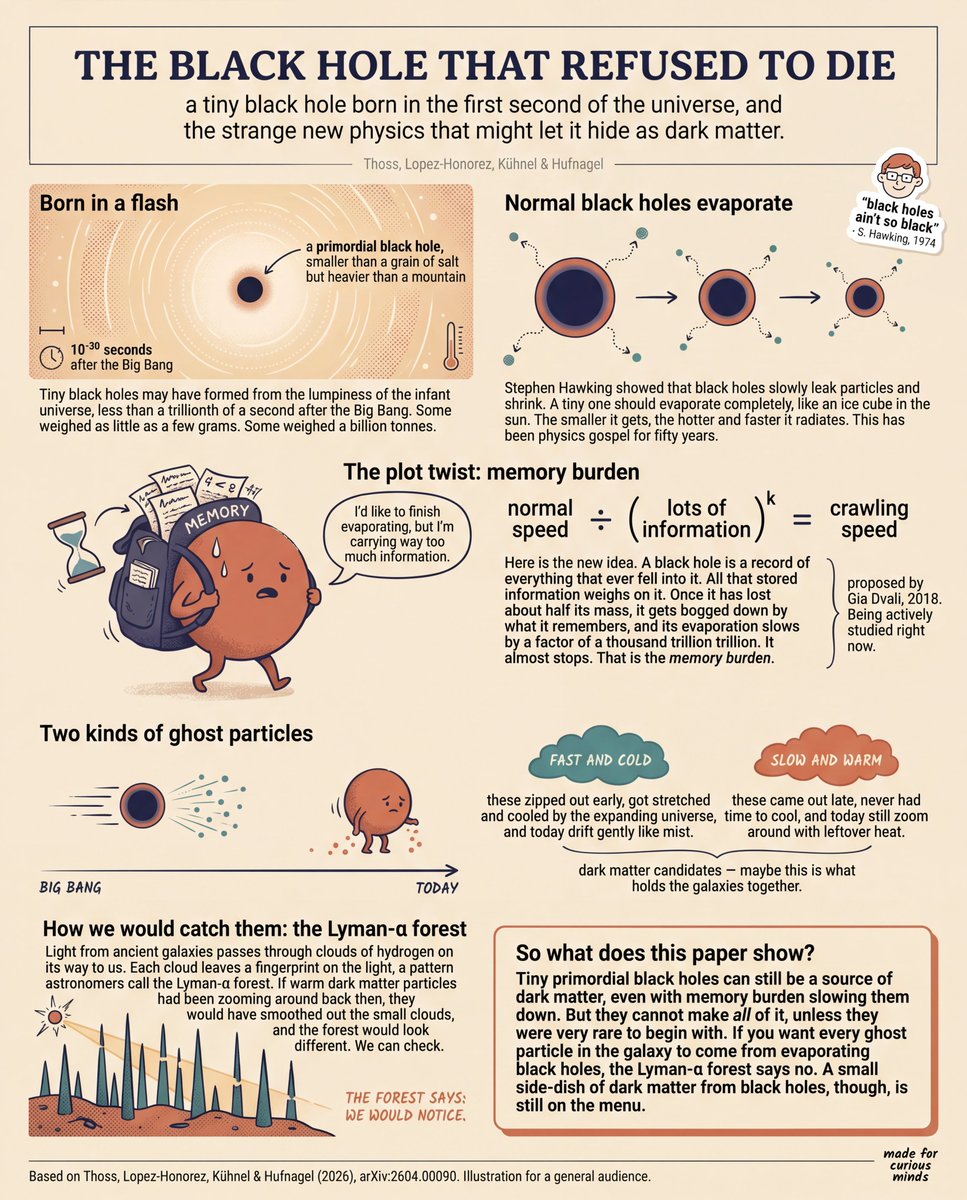
Infografika o fizyce czarnych dziur dla nastolatków
To polecenie generuje gęstą, jednostronicową infografikę naukową, która w przystępnym, przystępnym stylu wyjaśnia złożoną teorię czarnych dziur i ciemnej materii, nadającą się do publikacji w mediach społecznościowych lub artykułów edukacyjnych.
To jest przykładowy przykład GPT Image 2 dla Grafika i plakat . Skorzystaj z poniższego przykładu gotowego do skopiowania, aby wygenerować podobne materiały wizualne i sprawdź atrybucję Awesome GPT Image 2 Prompts oraz prawa do użytku komercyjnego przed ponownym wykorzystaniem.
Potrzebujesz pełnego zestawu podpowiedzi? Użyj Grafika i plakat aby uzyskać więcej powiązanych przykładów, odwiedź centrum tematyczne lub otwórz GPT Image 2 szybki katalog aby zobaczyć pełny przykładowy indeks, struktury wielokrotnego użytku i informacje o źródle.
Free 1K preview
Generate one preview image instantly, no sign-up required.
4000/4000
Opis
Monit o przygotowanie do kopiowania
{
  "type": "editorial science infographic poster",
  "style": "friendly magazine-style educational infographic for teenagers, combining hand-drawn physics diagrams, cartoon characters, and clean editorial typography",
  "topic": "primordial black holes, Hawking evaporation, and memory-burden dark matter",
  "canvas": {
    "orientation": "portrait",
    "background": "warm cream paper texture with subtle grain",
    "border": "thin muted gray rectangular border around the full page"
  },
  "headline": {
    "title": "THE BLACK HOLE THAT REFUSED TO DIE",
    "subtitle": "a tiny black hole born in the first second of the universe, and the strange new physics that might let it hide as dark matter.",
    "credit": "Thoss, Lopez-Honorez, Kühnel & Hufnagel"
  },
  "layout": {
    "sections": [
      {
        "title": "Born in a flash",
        "position": "top left",
        "count": 4,
        "labels": [
          "swirling early-universe birth diagram",
          "primordial black hole smaller than a grain of salt but heavier than a mountain",
          "10^-30 seconds after the Big Bang clock icon",
          "thermometer icon"
        ]
      },
      {
        "title": "Normal black holes evaporate",
        "position": "top right",
        "count": 4,
        "labels": [
          "three black hole stages shrinking left to right",
          "outgoing particle squiggles around each stage",
          "Stephen Hawking explanation paragraph",
          "sticker quote: \"black holes ain't so black\" — S. Hawking, 1974"
        ]
      },
      {
        "title": "The plot twist: memory burden",
        "position": "middle center",
        "count": 4,
        "labels": [
          "sad overloaded cartoon black hole with backpack labeled MEMORY",
          "speech bubble about being too full of information to finish evaporating",
          "equation: normal speed ÷ (lots of information)^k = crawling speed",
          "brace note about proposal by Gia Dvali, 2018"
        ]
      },
      {
        "title": "Two kinds of ghost particles",
        "position": "lower middle",
        "count": 5,
        "labels": [
          "fast moving particle on the left",
          "slow warm particle character on the right",
          "timeline from BIG BANG to TODAY",
          "FAST AND COLD cloud label",
          "SLOW AND WARM cloud label"
        ]
      },
      {
        "title": "How we would catch them: the Lyman-α forest",
        "position": "bottom left",
        "count": 4,
        "labels": [
          "paragraph about ancient galaxies passing through hydrogen clouds",
          "spiky absorption-forest landscape graphic",
          "handwritten note: THE FOREST SAYS: WE WOULD NOTICE.",
          "axis from us to distant quasars concept"
        ]
      },
      {
        "title": "So what does this paper show?",
        "position": "bottom right",
        "count": 1,
        "labels": [
          "rounded rectangular summary box"
        ]
      }
    ],
    "count": 6
  },
  "visuals": {
    "color_palette": [
      "warm beige",
      "dark navy",
      "rust orange",
      "dusty teal",
      "soft brown",
      "muted gray"
    ],
    "illustration_notes": "flat vector shapes with slightly sketchy outlines, soft shadows, rounded forms, playful but scientifically literate",
    "typography": "large serif all-caps for headline, bold sans-serif section headers, compact readable body text, occasional handwritten accent text"
  },
  "objects": {
    "count": 15,
    "items": [
      "1 full-page border",
      "1 headline block",
      "1 early-universe swirl diagram",
      "1 tiny primordial black hole dot with callout",
      "1 clock icon",
      "1 thermometer icon",
      "3 evaporating black hole diagrams",
      "1 Hawking quote sticker badge",
      "1 backpack-carrying cartoon black hole character",
      "1 speech bubble",
      "1 equation block",
      "2 cloud labels",
      "1 bottom-left spectral forest illustration"
    ]
  },
  "text_blocks": {
    "count": 9,
    "items": [
      "headline title",
      "headline subtitle",
      "author credit",
      "Born in a flash body text",
      "Normal black holes evaporate body text",
      "memory burden explanatory paragraph",
      "ghost particles captions",
      "Lyman-alpha forest explanation",
      "final takeaway summary"
    ]
  },
  "composition": "densely packed but readable single-page explainer with multiple illustrated callouts, clear left-to-right and top-to-bottom reading flow, designed like a shareable social media science poster that makes an advanced physics paper feel approachable to a curious teenager"
}
Best for
- - Grafika i plakat visual exploration
- - Image generation and reference-image edits
- - Reusable briefs that keep source attribution visible
Change these parts
- - Subject, product, character, or scene
- - Aspect ratio, camera, lighting, and background
- - Brand, text, color, and output constraints
Recommended model and settings
- - Model: gpt-image-2
- - Input mode: Tekst na obraz
- - Aspect ratio: source
- - Commercial status: review original source
How to use this prompt
- 1. Copy the prompt and preserve its structure for the first test.
- 2. Replace the subject, context, and publishing channel.
- 3. Change one camera, lighting, or style variable per iteration.
- 4. Inspect the output, source, text, and rights before reuse.
Limitations, source, and reuse cautions
- - Generated output is an editable draft, not factual, legal, or rights evidence.
- - Review the linked source, people, brands, logos, text, and third-party media before commercial use.
Zaimportowano z Awesome GPT Image 2 Prompts . Wymagane jest podanie źródła. Status do użytku komercyjnego to allowed ; przed płatnym użyciem sprawdź prawa autorskie do źródła.
Więcej przypadków w tej kategorii
Priorytety według kategorii, zgodności trybu wprowadzania, jakości i niższego ryzyka.

Ponowne wykorzystanie i źródło notatek
Użyj tego monitu bezpiecznie po zapoznaniu się ze sprawą.
- 1.Skopiuj monit lub otwórz go bezpośrednio w Dovoo za pomocą przycisku generowania.
- 2.Dostosuj zmienne, proporcje obrazu i obrazy referencyjne do własnego przypadku użycia.
- 3.Przed publikacją lub płatnym wykorzystaniem należy sprawdzić prawa autorskie do źródła, wymogi dotyczące atrybucji oraz ryzyko związane z marką lub podobizną.