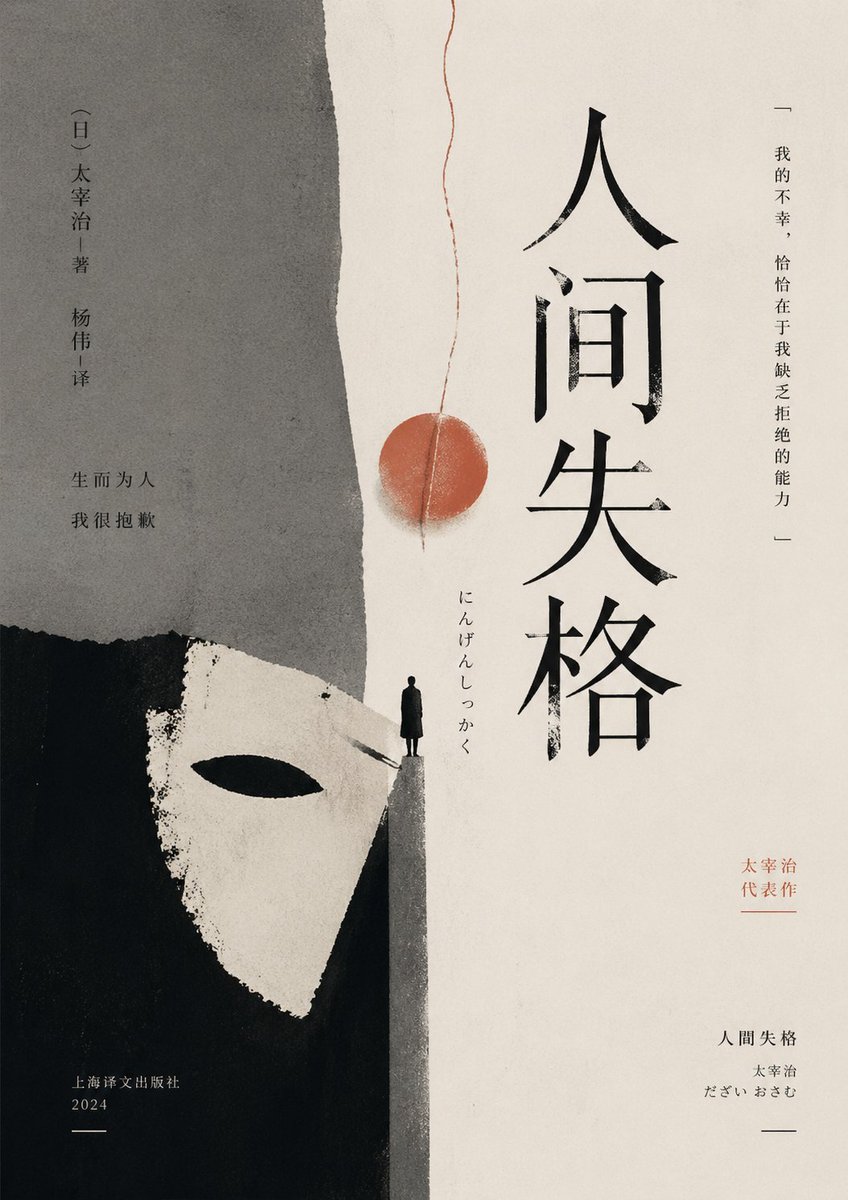
Minimalistyczna okładka „No Long Human”
Nastrojowa, minimalistyczna okładka książki literackiej stanowi zachętę do stworzenia eleganckiego, wschodnioazjatyckiego wydania klasycznej powieści z kolażowymi teksturami i symbolicznymi obrazami.
To jest przykładowy przykład GPT Image 2 dla Grafika i plakat . Skorzystaj z poniższego przykładu gotowego do skopiowania, aby wygenerować podobne materiały wizualne i sprawdź atrybucję Awesome GPT Image 2 Prompts oraz prawa do użytku komercyjnego przed ponownym wykorzystaniem.
Free 1K preview
Generate one preview image instantly, no sign-up required.
Opis
Monit o przygotowanie do kopiowania
A minimalist literary book cover in a refined East Asian editorial style, portrait orientation, with a warm off-white paper background and subtle grainy print texture. The composition is vertically split into 2 large abstract fields: a rough torn gray paper shape occupying the upper left half, and a deep black painted block occupying the lower left corner. Emerging from the black area is 1 stark white theatrical mask shape with a single black eye slit, cropped large and angled upward, suggesting alienation and hidden identity. At the center-bottom where the gray and white fields meet, place 1 tiny solitary human figure in a long dark coat standing on a narrow triangular ledge, facing forward, emphasizing isolation and vulnerability. From near the top center, let 1 thin red thread descend vertically with a slight waviness, ending around the middle in 1 muted red circular seal-like disc, aligned above the figure. Set 1 large vertical title in bold expressive black Chinese calligraphy on the right-center: {argument name="title text" default="No Longer Human"}. Add 1 small vertical Japanese reading beside it: "にんげんしっかく". On the far right margin, add 1 vertical quote in fine black text: "—— 我的不幸,恰恰在于我缺乏拒绝的能力 ——". On the upper left, add 1 vertical author and translator credit in small black type: "【日】太宰治|著 杨伟|译". Below that, add 1 short two-line Chinese phrase in black: "生而为人\n我很抱歉". On the lower right, add 1 small red vertical note: "太宰治\n代表作". Beneath it add 1 small publication block in black with 3 lines: "人间失格", "太宰治", "だざい おさむ". On the lower left, add 1 publisher block in small black text: "上海译文出版社\n2024" with a short horizontal line beneath. Use restrained negative space, asymmetrical balance, raw paper collage edges, sumi-ink and gouache textures, muted charcoal black gray and faded vermilion palette, elegant literary melancholy, premium contemporary Chinese novel cover design.Zmienne monitujące
Edytowalne symbole zastępcze argumentów znalezione w monicie, wraz z ich wartościami domyślnymi.
Best for
- - Grafika i plakat visual exploration
- - Image generation and reference-image edits
- - Reusable briefs that keep source attribution visible
Change these parts
- - Subject, product, character, or scene
- - Aspect ratio, camera, lighting, and background
- - Brand, text, color, and output constraints
Recommended model and settings
- - Model: gpt-image-2
- - Input mode: Tekst na obraz
- - Aspect ratio: source
- - Commercial status: review original source
How to use this prompt
- 1. Copy the prompt and preserve its structure for the first test.
- 2. Replace the subject, context, and publishing channel.
- 3. Change one camera, lighting, or style variable per iteration.
- 4. Inspect the output, source, text, and rights before reuse.
Limitations, source, and reuse cautions
- - Generated output is an editable draft, not factual, legal, or rights evidence.
- - Review the linked source, people, brands, logos, text, and third-party media before commercial use.
Więcej przypadków w tej kategorii
Priorytety według kategorii, zgodności trybu wprowadzania, jakości i niższego ryzyka.
Ponowne wykorzystanie i źródło notatek
Użyj tego monitu bezpiecznie po zapoznaniu się ze sprawą.
- 1.Skopiuj monit lub otwórz go bezpośrednio w Dovoo za pomocą przycisku generowania.
- 2.Dostosuj zmienne, proporcje obrazu i obrazy referencyjne do własnego przypadku użycia.
- 3.Przed publikacją lub płatnym wykorzystaniem należy sprawdzić prawa autorskie do źródła, wymogi dotyczące atrybucji oraz ryzyko związane z marką lub podobizną.