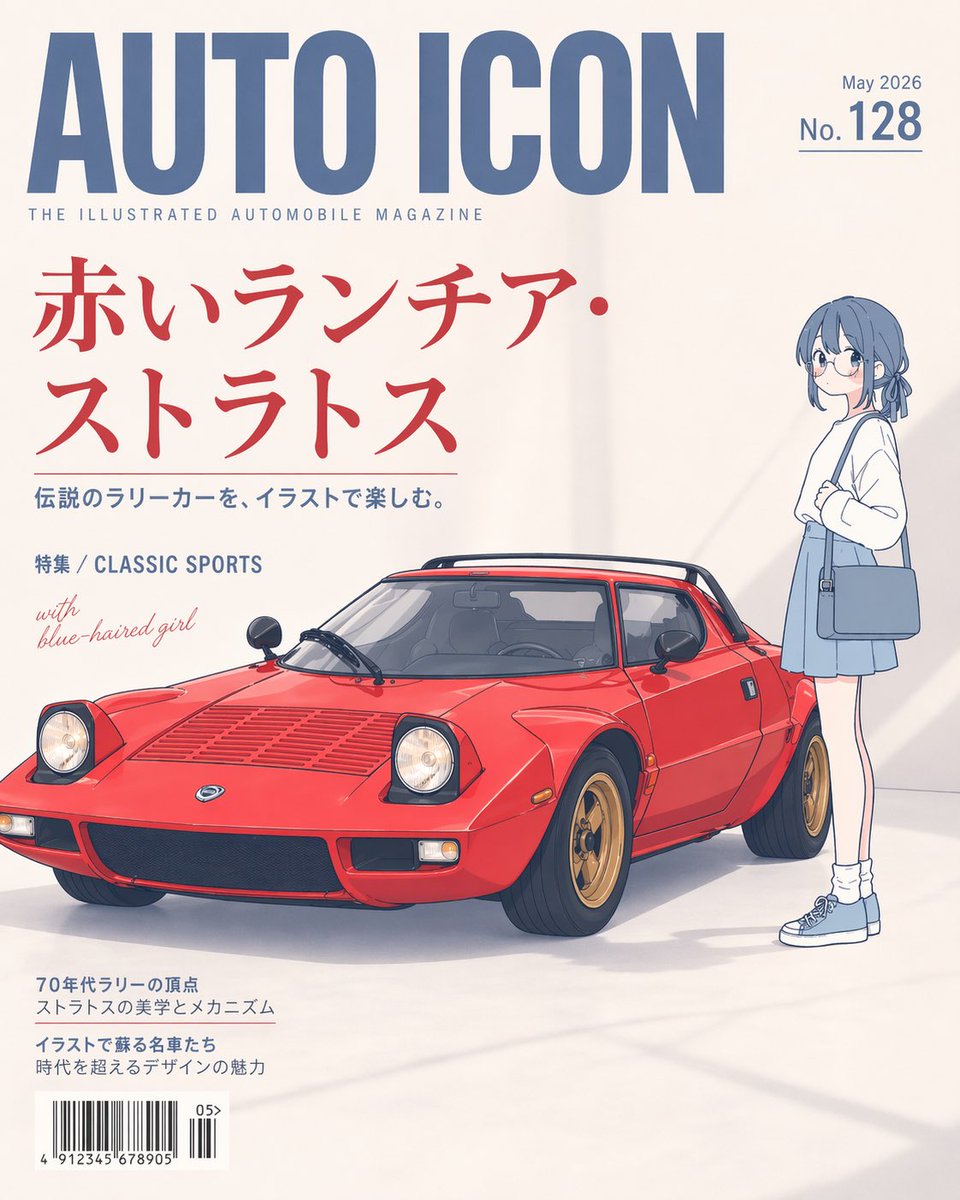
Ilustrowana okładka magazynu o klasycznych samochodach
To polecenie pozwala na stworzenie stylowej okładki magazynu inspirowanej Japonią, przedstawiającej klasyczny czerwony samochód sportowy i dziewczynę z anime. Okładka idealnie nadaje się na plakat do czasopism lub fałszywe okładki publikacji.
To jest przykładowy przykład GPT Image 2 dla Grafika i plakat . Skorzystaj z poniższego przykładu gotowego do skopiowania, aby wygenerować podobne materiały wizualne i sprawdź atrybucję Awesome GPT Image 2 Prompts oraz prawa do użytku komercyjnego przed ponownym wykorzystaniem.
Free 1K preview
Generate one preview image instantly, no sign-up required.
Opis
Monit o przygotowanie do kopiowania
A clean editorial magazine cover on an off-white studio background, designed like a premium illustrated automobile magazine. The main headline at the top is huge condensed blue sans-serif text reading {argument name="magazine title" default="AUTO ICON"}, with a small subtitle beneath it reading "THE ILLUSTRATED AUTOMOBILE MAGAZINE". In the top right, place small blue issue text reading {argument name="issue date" default="May 2026"} above a larger blue number line reading "No.128" with a thin underline. The central feature is a beautifully illustrated classic {argument name="car model" default="red Lancia Stratos"}, shown in a front three-quarter view facing left, low and wedge-shaped, bright glossy red paint, black roof spoiler, pop-up headlights raised, detailed vents on the hood, black grille, gold wheels, realistic tires, and subtle reflections and shadows on the floor. To the right of the car stands a slim anime-style {argument name="companion character" default="blue-haired girl"}, full body, facing left toward the car, short muted blue bob haircut with a small tied section in back, minimalist facial detail, white long-sleeve top, pale blue skirt, white socks, blue sneakers, and a blue shoulder bag, posed casually with one arm bent near her chest. Use a refined blend of soft cel-shaded anime illustration and realistic automotive rendering, with lots of negative space and elegant print-layout balance. Add large red Japanese cover text on the left in two lines reading {argument name="main cover line" default="赤いランチア・ストラトス"}, with a smaller blue Japanese subheading beneath it reading "伝説のラリーカーを、イラストで楽しむ。" Add another small blue line reading "特集 / CLASSIC SPORTS" and a handwritten-style light red note saying "with blue-haired girl". At the bottom left, include two blocks of small Japanese cover copy and a realistic barcode with tiny issue digits. Keep the overall aesthetic minimal, sophisticated, airy, and poster-like, with soft daylight shadows and a high-end Japanese magazine cover composition.Zmienne monitujące
Edytowalne symbole zastępcze argumentów znalezione w monicie, wraz z ich wartościami domyślnymi.
Best for
- - Grafika i plakat visual exploration
- - Image generation and reference-image edits
- - Reusable briefs that keep source attribution visible
Change these parts
- - Subject, product, character, or scene
- - Aspect ratio, camera, lighting, and background
- - Brand, text, color, and output constraints
Recommended model and settings
- - Model: gpt-image-2
- - Input mode: Tekst na obraz
- - Aspect ratio: source
- - Commercial status: review original source
How to use this prompt
- 1. Copy the prompt and preserve its structure for the first test.
- 2. Replace the subject, context, and publishing channel.
- 3. Change one camera, lighting, or style variable per iteration.
- 4. Inspect the output, source, text, and rights before reuse.
Limitations, source, and reuse cautions
- - Generated output is an editable draft, not factual, legal, or rights evidence.
- - Review the linked source, people, brands, logos, text, and third-party media before commercial use.
Więcej przypadków w tej kategorii
Priorytety według kategorii, zgodności trybu wprowadzania, jakości i niższego ryzyka.
Ponowne wykorzystanie i źródło notatek
Użyj tego monitu bezpiecznie po zapoznaniu się ze sprawą.
- 1.Skopiuj monit lub otwórz go bezpośrednio w Dovoo za pomocą przycisku generowania.
- 2.Dostosuj zmienne, proporcje obrazu i obrazy referencyjne do własnego przypadku użycia.
- 3.Przed publikacją lub płatnym wykorzystaniem należy sprawdzić prawa autorskie do źródła, wymogi dotyczące atrybucji oraz ryzyko związane z marką lub podobizną.