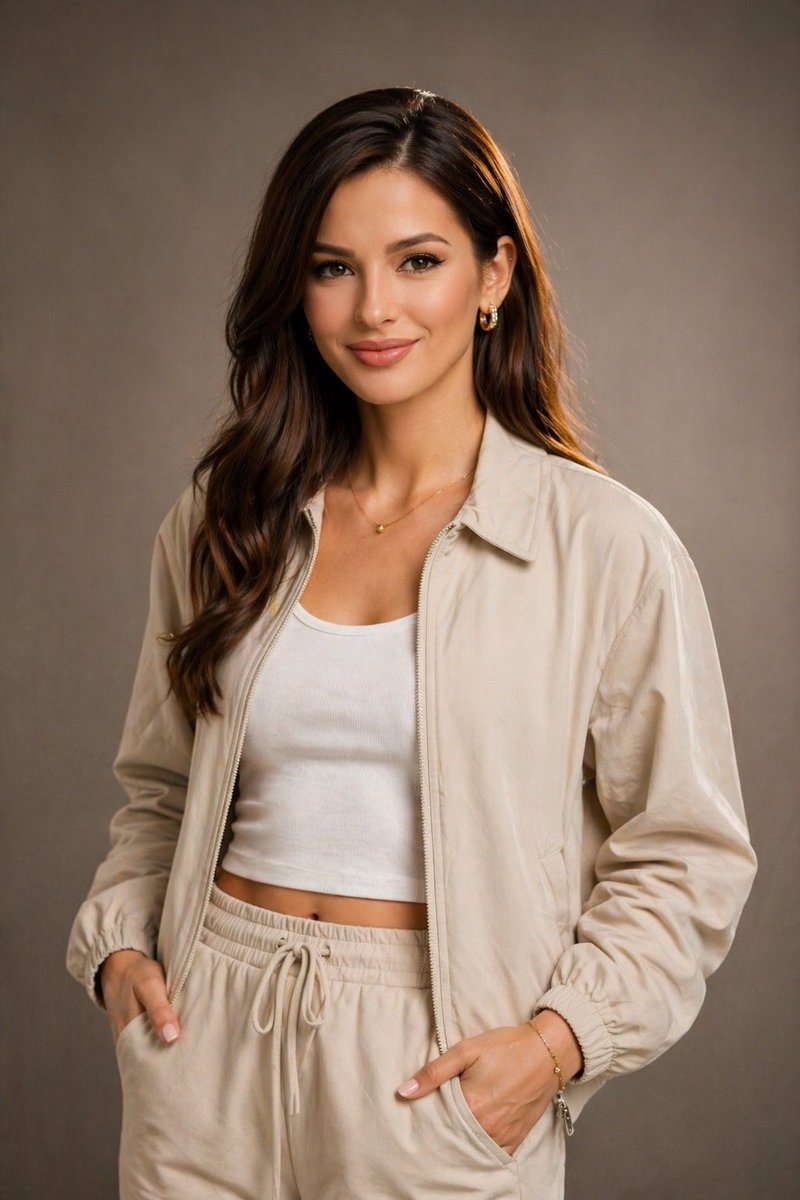
Portret studyjny w neutralnym stylu ulicznym
To polecenie pozwala na stworzenie realistycznego portretu studyjnego przedstawiającego połowę postaci, z czystym oświetleniem i minimalistycznym, neutralnym stylem, idealnego do celów redakcyjnych, wizerunkowych lub portretowych.
To jest przykładowy przykład GPT Image 2 dla Portret i charakter . Skorzystaj z poniższego przykładu gotowego do skopiowania, aby wygenerować podobne materiały wizualne i sprawdź atrybucję Awesome GPT Image 2 Prompts oraz prawa do użytku komercyjnego przed ponownym wykorzystaniem.
Free 1K preview
Generate one preview image instantly, no sign-up required.
Opis
Monit o przygotowanie do kopiowania
A high-end studio fashion portrait of a {argument name="subject gender" default="woman"} in her mid-30s to early 40s with a naturally fit build, shown in a half-body to upper-thigh framing, standing in a relaxed, confident pose with both hands tucked into her pants pockets. She has long, dark chestnut-brown wavy hair parted near the center, softly cascading over her shoulders, and wears 2 small gold hoop earrings on one visible ear, a delicate gold necklace, and a thin bracelet. Her outfit is modern minimal casual streetwear in soft neutral tones: a light beige zip-front jacket worn open, a fitted white cropped tank top, and matching light beige drawstring jogger pants. Shoot at eye level with an 85mm portrait lens at f/2.8, keeping the subject tack sharp with shallow depth of field. Use professional studio lighting with 1 softbox key light from the front-left, subtle fill to soften shadows, and 1 gentle warm rim light along the hair and shoulder for separation. The background is a clean studio backdrop with a smooth taupe-to-warm-gray neutral gradient and no distractions. The image should feel highly realistic and editorial, with natural skin tones, balanced color grading, ultra-high detail, crisp fabric texture, soft natural shadows, no noise, no motion blur, no cartoon styling, and no anatomical distortions.Zmienne monitujące
Edytowalne symbole zastępcze argumentów znalezione w monicie, wraz z ich wartościami domyślnymi.
Best for
- - Portret i charakter visual exploration
- - Image generation and reference-image edits
- - Reusable briefs that keep source attribution visible
Change these parts
- - Subject, product, character, or scene
- - Aspect ratio, camera, lighting, and background
- - Brand, text, color, and output constraints
Recommended model and settings
- - Model: gpt-image-2
- - Input mode: Tekst na obraz
- - Aspect ratio: source
- - Commercial status: review original source
How to use this prompt
- 1. Copy the prompt and preserve its structure for the first test.
- 2. Replace the subject, context, and publishing channel.
- 3. Change one camera, lighting, or style variable per iteration.
- 4. Inspect the output, source, text, and rights before reuse.
Limitations, source, and reuse cautions
- - Generated output is an editable draft, not factual, legal, or rights evidence.
- - Review the linked source, people, brands, logos, text, and third-party media before commercial use.
Więcej przypadków w tej kategorii
Priorytety według kategorii, zgodności trybu wprowadzania, jakości i niższego ryzyka.
Ponowne wykorzystanie i źródło notatek
Użyj tego monitu bezpiecznie po zapoznaniu się ze sprawą.
- 1.Skopiuj monit lub otwórz go bezpośrednio w Dovoo za pomocą przycisku generowania.
- 2.Dostosuj zmienne, proporcje obrazu i obrazy referencyjne do własnego przypadku użycia.
- 3.Przed publikacją lub płatnym wykorzystaniem należy sprawdzić prawa autorskie do źródła, wymogi dotyczące atrybucji oraz ryzyko związane z marką lub podobizną.