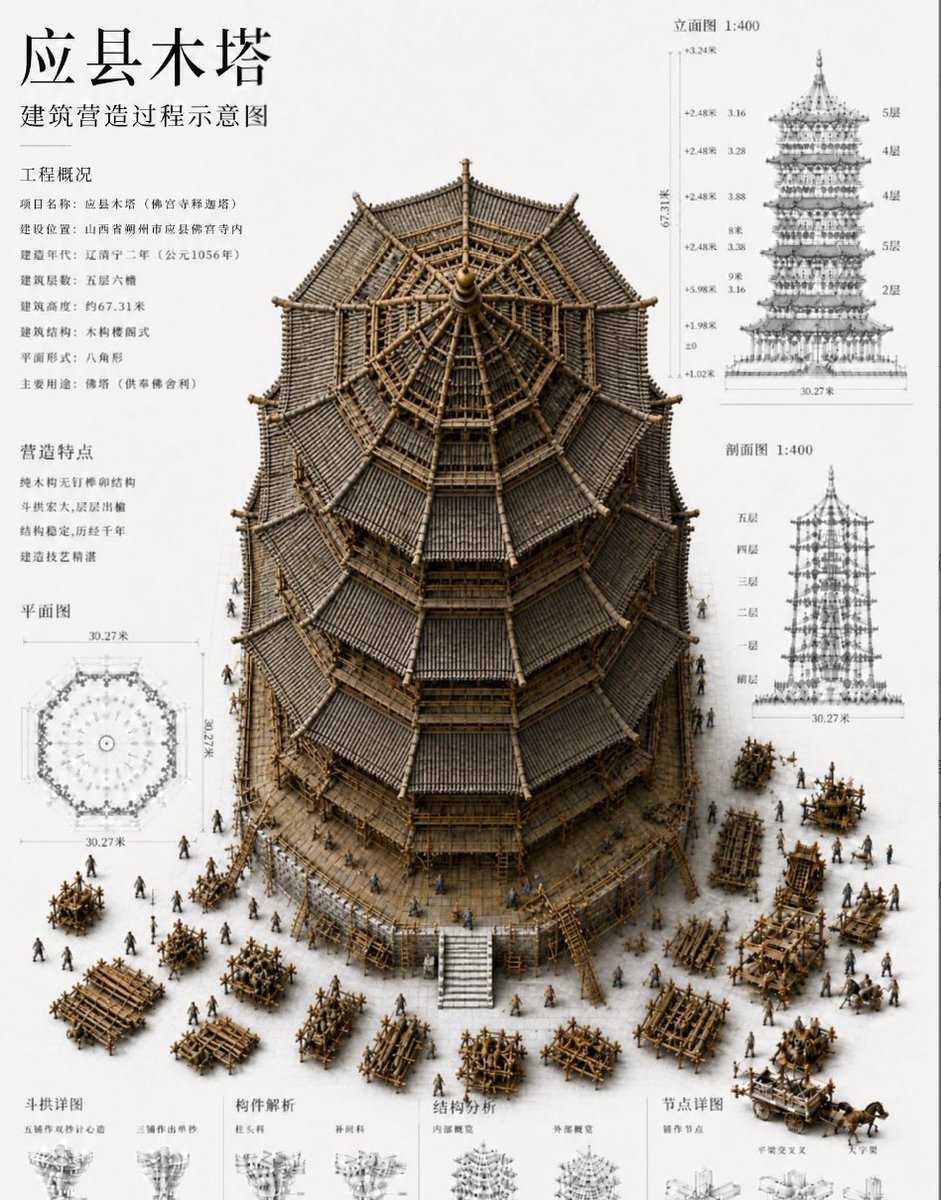
Chińska drewniana deska do budowy pagody
Generuje gęstą planszę prezentacyjną chińskiej architektury, przedstawiającą proces budowy starożytnej drewnianej pagody wraz z diagramami, adnotacjami i centralnym modelem 3D.
To jest przykładowy przykład GPT Image 2 dla Wnętrza i architektura . Skorzystaj z poniższego przykładu gotowego do skopiowania, aby wygenerować podobne materiały wizualne i sprawdź atrybucję Awesome GPT Image 2 Prompts oraz prawa do użytku komercyjnego przed ponownym wykorzystaniem.
Potrzebujesz pełnego zestawu podpowiedzi? Użyj Wnętrza i architektura aby uzyskać więcej powiązanych przykładów, odwiedź centrum tematyczne lub otwórz GPT Image 2 szybki katalog aby zobaczyć pełny przykładowy indeks, struktury wielokrotnego użytku i informacje o źródle.
Free 1K preview
Generate one preview image instantly, no sign-up required.
3679/4000
Opis
Monit o przygotowanie do kopiowania
Objective: Create a high-density Chinese architectural showcase project, demonstrating the construction process of ancient wooden pagodas with a realistic 3D cross-section/isometric model of the {argument name="building name" default="Yingxian Wooden Pagoda"} under construction at the center.

Canvas: Vertical poster, off-white drawing paper background, 4:5 aspect ratio, simple museum exhibition/architectural blueprint style. Use black Chinese fonts, fine gray measurement lines, and dark brown wood textures. The image should present a texture combining technical architectural boards and miniature models.

Layout: Place a large octagonal wooden pagoda detail model in the center, occupying most of the poster space. Show the pagoda from a slightly overhead front angle to observe the roof structure and internal radial wooden frame. Arrange numerous miniature construction workers, scaffolding, wood piles, wheelbarrows, ladders, cranes, and assembly frames around the bottom. The surrounding drawings and text must be aligned like professional architectural drawings.

Text Content: Place a large title in the upper left corner: "Yingxian Wooden Pagoda". Below it, place a subtitle: "Schematic diagram of the architectural construction process". Add two information blocks on the left side with the titles "Project Overview" and "Construction Features", containing multiple lines of short Chinese text describing the project name, location, construction period, height, structural type, plane form, and craftsmanship features. Ensure Chinese characters are clear and without garbled characters.

Required Chart Elements: Include 7 main annotation areas: 1) Central 3D wooden pagoda construction model, 2) Left side "Project Overview" text block, 3) Left side "Construction Features" text block, 4) Lower left corner "Floor Plan" octagonal plan, marking the dimension of approximately 30.27 meters, 5) Upper right corner "Elevation 1:400" elevation drawing with floor labels and vertical dimensions, 6) Right middle "Section 1:400" section drawing with floor labels, 7) A row of small technical detail panels at the bottom, labeling categories such as "Dougong Details", "Component Analysis", "Structural Analysis", and "Node Details".

Main Details: The pagoda should be an octagonal multi-eave Chinese wooden pagoda with a dark gray tiled roof, exposed brown wooden beams, dense Dougong brackets, layered eaves, a central pagoda finial, and a visible radial roof frame at the top. Add a construction scene: unfinished upper internal trusses, scaffolding around the lower level, wooden fences, and workers carrying wooden beams. Use {argument name="primary material" default="wooden timber frame"} as the main building material and {argument name="drawing scale" default="1:400"} as the scale label for the elevation and section drawings.

Visual Style: Highly detailed architectural visualization, realistic miniature model rendering, precise technical annotations, fine ink lines, soft shadows, soft brown and gray tones, and no bright colors. Combine photorealistic 3D construction models with clear 2D blueprints. Make the typesetting similar to formal Chinese architectural drawings.

Constraints: Maintain the dense Chinese layout and the clarity of technical drawings. Do not add logos, watermarks, English labels, or modern architecture. Keep all charts spatially organized, and do not overlap text on the main pagoda. Ensure Chinese characters are displayed correctly, especially the title {argument name="main title" default="Yingxian Wooden Pagoda"} and subtitle {argument name="subtitle" default="Schematic diagram of the architectural construction process"}.
Zmienne monitujące
Edytowalne symbole zastępcze argumentów znalezione w monicie, wraz z ich wartościami domyślnymi.
Zmienny
building name
Domyślny
Yingxian Wooden Pagoda
Zmienny
primary material
Domyślny
wooden timber frame
Zmienny
drawing scale
Domyślny
1:400
Zmienny
main title
Domyślny
Yingxian Wooden Pagoda
Zmienny
subtitle
Domyślny
Schematic diagram of the architectural construction process
Best for
- - Wnętrza i architektura visual exploration
- - Image generation and reference-image edits
- - Reusable briefs that keep source attribution visible
Change these parts
- - Subject, product, character, or scene
- - Aspect ratio, camera, lighting, and background
- - Brand, text, color, and output constraints
Recommended model and settings
- - Model: gpt-image-2
- - Input mode: Tekst na obraz
- - Aspect ratio: source
- - Commercial status: review original source
How to use this prompt
- 1. Copy the prompt and preserve its structure for the first test.
- 2. Replace the subject, context, and publishing channel.
- 3. Change one camera, lighting, or style variable per iteration.
- 4. Inspect the output, source, text, and rights before reuse.
Limitations, source, and reuse cautions
- - Generated output is an editable draft, not factual, legal, or rights evidence.
- - Review the linked source, people, brands, logos, text, and third-party media before commercial use.
Zaimportowano z Awesome GPT Image 2 Prompts . Wymagane jest podanie źródła. Status do użytku komercyjnego to allowed ; przed płatnym użyciem sprawdź prawa autorskie do źródła.
Related prompt packs
Więcej przypadków w tej kategorii
Priorytety według kategorii, zgodności trybu wprowadzania, jakości i niższego ryzyka.


Ponowne wykorzystanie i źródło notatek
Użyj tego monitu bezpiecznie po zapoznaniu się ze sprawą.
- 1.Skopiuj monit lub otwórz go bezpośrednio w Dovoo za pomocą przycisku generowania.
- 2.Dostosuj zmienne, proporcje obrazu i obrazy referencyjne do własnego przypadku użycia.
- 3.Przed publikacją lub płatnym wykorzystaniem należy sprawdzić prawa autorskie do źródła, wymogi dotyczące atrybucji oraz ryzyko związane z marką lub podobizną.