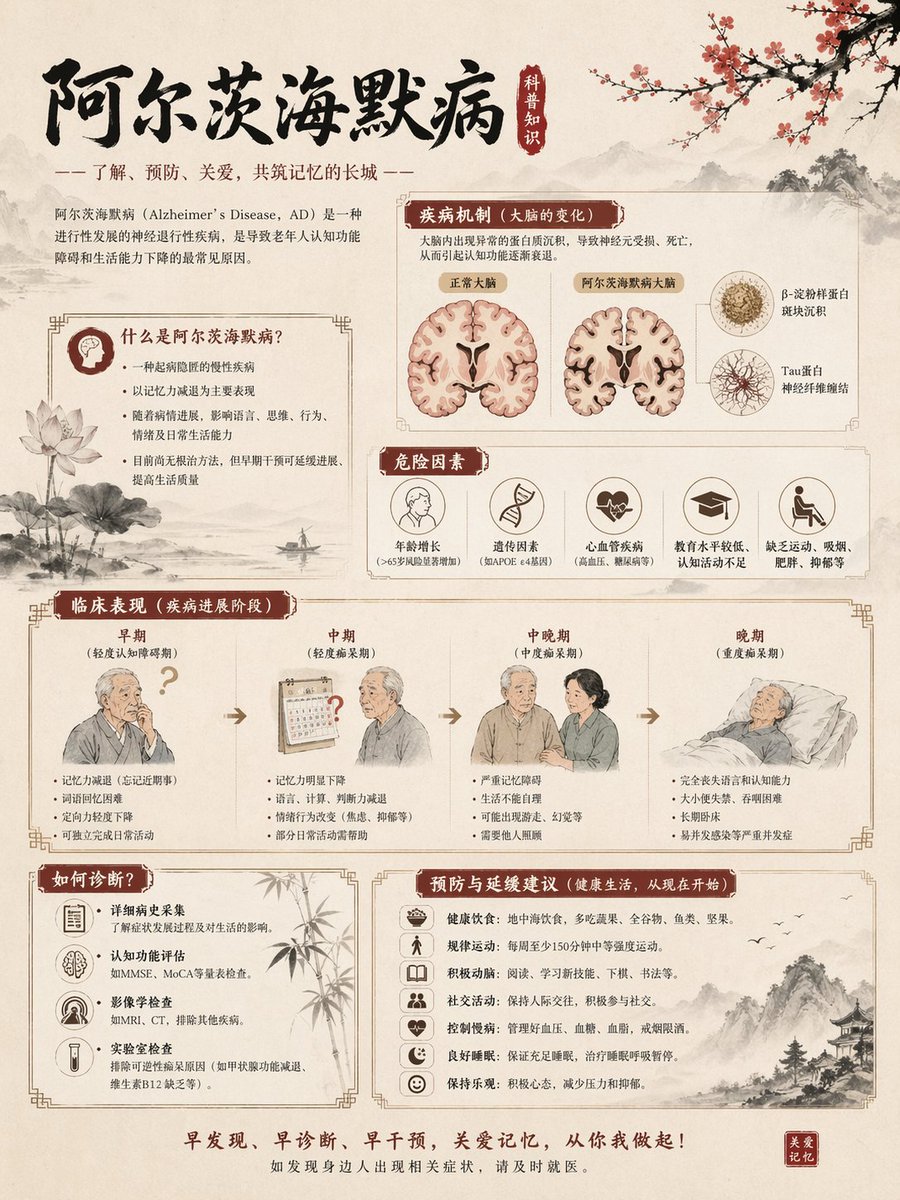
Chińska infografika na temat świadomości choroby Alzheimera
Tradycyjny chiński plakat infograficzny o tematyce medycznej, wyjaśniający chorobę Alzheimera. Zaprojektowany na potrzeby edukacji w zakresie zdrowia publicznego, kampanii uświadamiających i postów porównawczych w mediach społecznościowych.
To jest przykładowy przykład GPT Image 2 dla Grafika i plakat . Skorzystaj z poniższego przykładu gotowego do skopiowania, aby wygenerować podobne materiały wizualne i sprawdź atrybucję Awesome GPT Image 2 Prompts oraz prawa do użytku komercyjnego przed ponownym wykorzystaniem.
Potrzebujesz pełnego zestawu podpowiedzi? Użyj Grafika i plakat aby uzyskać więcej powiązanych przykładów, odwiedź centrum tematyczne lub otwórz GPT Image 2 szybki katalog aby zobaczyć pełny przykładowy indeks, struktury wielokrotnego użytku i informacje o źródle.
Free 1K preview
Generate one preview image instantly, no sign-up required.
4000/4000
Opis
Monit o przygotowanie do kopiowania
{
  "type": "traditional Chinese medical infographic poster",
  "topic": "Alzheimer's Disease",
  "style": {
    "overall": "elegant health education poster in Chinese ink-wash and vintage parchment style",
    "palette": "warm beige background, dark brown text, muted red title banners, soft gray ink landscape accents",
    "rendering": "clean infographic mixed with hand-painted watercolor illustration and light line-art icons",
    "mood": "serious, informative, compassionate"
  },
  "canvas": {
    "orientation": "portrait",
    "composition": "single-page poster with header, multiple boxed information panels, and footer slogan"
  },
  "text": {
    "main_title": "Alzheimer's Disease",
    "subtitle": "— Understanding, Prevention, and Care, Building a Great Wall of Memory Together —",
    "body_language": "Simplified Chinese",
    "footer_slogan": "Early detection, early diagnosis, and early intervention. Care for memory starts with you and me!",
    "footer_note": "If you notice relevant symptoms in those around you, please seek medical attention promptly."
  },
  "decorative_elements": {
    "count": 6,
    "items": [
      "plum blossom branch across the upper right corner",
      "misty mountain landscape in the background",
      "lotus flowers and leaves at lower left",
      "small boat on water near left-center bottom",
      "bamboo illustration beside the diagnosis section",
      "distant mountains and pavilion at lower right with flying birds"
    ]
  },
  "layout": {
    "sections": [
      {
        "title": "What is Alzheimer's disease?",
        "position": "upper left",
        "count": 4,
        "labels": [
          "A chronic illness with an insidious onset.",
          "Mainly manifested by memory decline.",
          "As the condition progresses, it affects language, thinking, behavior, emotions, and the ability to perform daily activities.",
          "Currently, there is no cure, but early intervention can slow the progression and improve quality of life."
        ]
      },
      {
        "title": "Disease mechanisms (changes in the brain)",
        "position": "upper right",
        "count": 4,
        "labels": [
          "Abnormal protein deposits appear in the brain, leading to neuronal damage and death, resulting in a gradual decline in cognitive function.",
          "Normal brain",
          "Brain of an Alzheimer's patient",
          "Deposits of β-amyloid plaques and Tau protein neurofibrillary tangles"
        ]
      },
      {
        "title": "Risk factors",
        "position": "middle right",
        "count": 5,
        "labels": [
          "Age increase (risk increases significantly > 65 years old)",
          "Genetic factors (such as APOE ε4 gene)",
          "Cardiovascular diseases (hypertension, diabetes, etc.)",
          "Lower education level, insufficient cognitive activity",
          "Lack of exercise, smoking, obesity, depression, etc."
        ]
      },
      {
        "title": "Clinical manifestations (disease progression stages)",
        "position": "middle to lower center",
        "count": 4,
        "labels": [
          "Early stage (mild cognitive impairment)",
          "Mid-stage (mild dementia)",
          "Mid-to-late stage (moderate dementia)",
          "Late stage (severe dementia)"
        ]
      },
      {
        "title": "How to diagnose?",
        "position": "lower left",
        "count": 4,
        "labels": [
          "Detailed medical history taking",
          "Cognitive function assessment",
          "Imaging examination",
          "Laboratory tests"
        ]
      },
      {
        "title": "Prevention and delay suggestions (healthy living, starting now)",
        "position": "lower right",
        "count": 7,
        "labels": [
          "Healthy diet: Mediterranean diet, eat plenty of vegetables and fruits, whole grains, fish, and nuts.",
          "Regular exercise: at least 150 minutes of moderate-intensity exercise per week.",
          "Stay mentally active: reading, learning new skills, playing chess, calligraphy, etc.",
          "Social activities: Maintain social connections and actively participate in social events.",
          "Manage chronic diseases: Control blood pressure, blood sugar, and cholesterol levels, and quit smoking and limit alcohol consumption.",
          "Good sleep: Ensure adequate sleep and treat sleep apnea.",
          "Stay optimistic: Maintain a positive attitude and reduce stress and depression."
        ]
      }
    ],
    "centerpiece": "a large multi-panel educational layout with red section headers and thin ornamental borders"
  },
  "illustrations": {
    "count": 14,
    "items": [
      "2 cross-sectional brain diagrams comparing healthy and Alzheimer’s brains",
      "2 circular pathology insets showing amyloid plaque and tau tangle",
      "5 round risk-factor icons",
      "4 patient-stage illustrations showing progression from mild confusion to bedridden late stage",
      "1 clipboard icon in diagnosis section plus supporting medical-style icons"
    ]
  },
  "typography": {
    "headline": "large expressive black brush-calligraphy title",
    "section_headers": "white Chinese text on dark red brushstroke banners",
    "body": "neat printed Chinese serif text with moderate spacing"
  },
  "quality": "high-resolution, balanced editorial composition, polished healthcare infographic suitable for social media sharing, public education, or clinic awareness poster"
}
Best for
- - Grafika i plakat visual exploration
- - Image generation and reference-image edits
- - Reusable briefs that keep source attribution visible
Change these parts
- - Subject, product, character, or scene
- - Aspect ratio, camera, lighting, and background
- - Brand, text, color, and output constraints
Recommended model and settings
- - Model: gpt-image-2
- - Input mode: Tekst na obraz
- - Aspect ratio: source
- - Commercial status: review original source
How to use this prompt
- 1. Copy the prompt and preserve its structure for the first test.
- 2. Replace the subject, context, and publishing channel.
- 3. Change one camera, lighting, or style variable per iteration.
- 4. Inspect the output, source, text, and rights before reuse.
Limitations, source, and reuse cautions
- - Generated output is an editable draft, not factual, legal, or rights evidence.
- - Review the linked source, people, brands, logos, text, and third-party media before commercial use.
Zaimportowano z Awesome GPT Image 2 Prompts . Wymagane jest podanie źródła. Status do użytku komercyjnego to allowed ; przed płatnym użyciem sprawdź prawa autorskie do źródła.
Więcej przypadków w tej kategorii
Priorytety według kategorii, zgodności trybu wprowadzania, jakości i niższego ryzyka.





Ponowne wykorzystanie i źródło notatek
Użyj tego monitu bezpiecznie po zapoznaniu się ze sprawą.
- 1.Skopiuj monit lub otwórz go bezpośrednio w Dovoo za pomocą przycisku generowania.
- 2.Dostosuj zmienne, proporcje obrazu i obrazy referencyjne do własnego przypadku użycia.
- 3.Przed publikacją lub płatnym wykorzystaniem należy sprawdzić prawa autorskie do źródła, wymogi dotyczące atrybucji oraz ryzyko związane z marką lub podobizną.