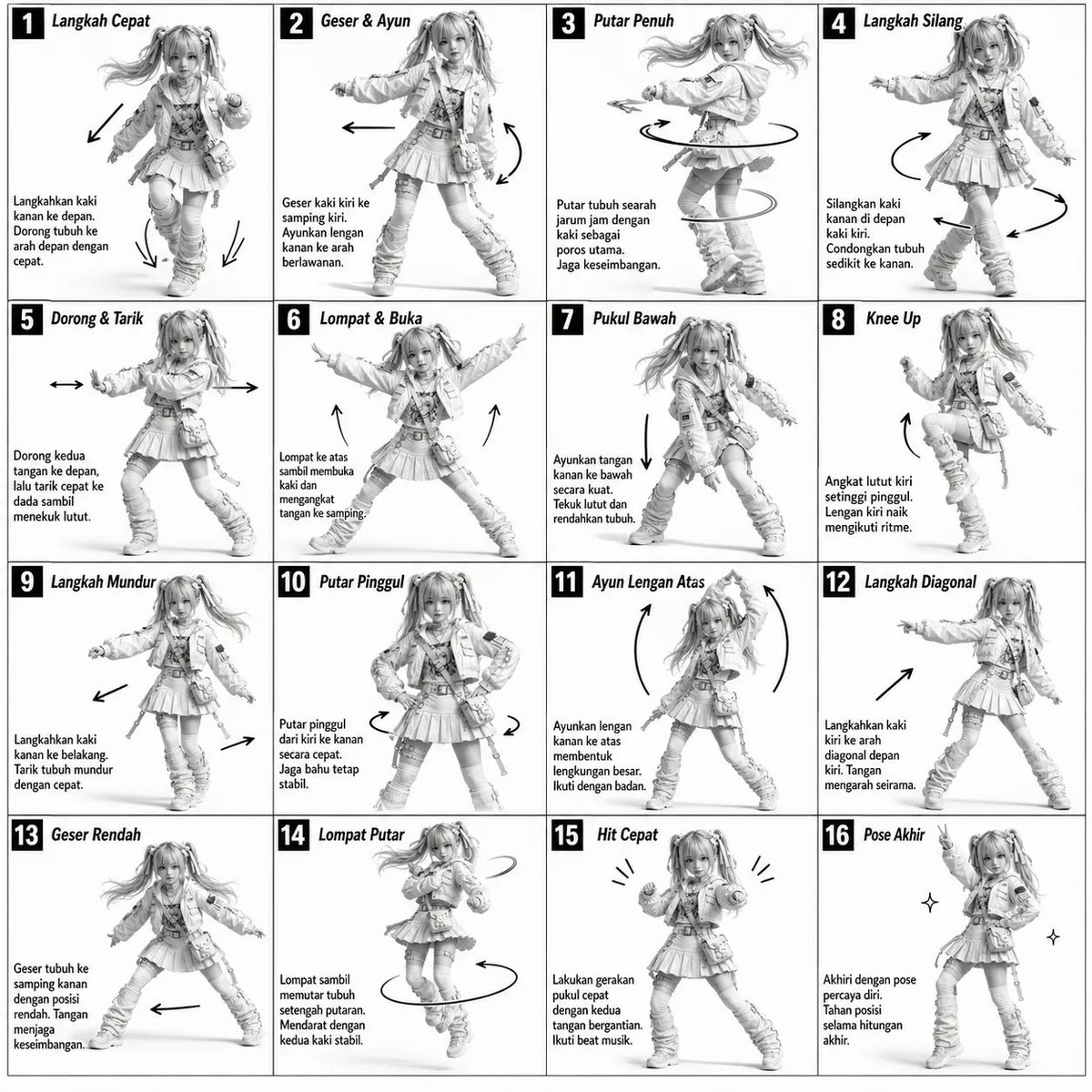
Arkusz referencyjny tańca 3D w skali szarości
Podpowiedź w formie technicznego diagramu dla monochromatycznej karty ruchu 4x4 z tekstem instruktażowym i strzałkami ruchu.
To jest przykładowy przykład GPT Image 2 dla Anime i gry . Skorzystaj z poniższego przykładu gotowego do skopiowania, aby wygenerować podobne materiały wizualne i sprawdź atrybucję Awesome GPT Image 2 Prompts oraz prawa do użytku komercyjnego przed ponownym wykorzystaniem.
Potrzebujesz pełnego zestawu podpowiedzi? Użyj Anime i gry aby uzyskać więcej powiązanych przykładów, odwiedź centrum tematyczne lub otwórz GPT Image 2 szybki katalog aby zobaczyć pełny przykładowy indeks, struktury wielokrotnego użytku i informacje o źródle.
Free 1K preview
Generate one preview image instantly, no sign-up required.
1364/4000
Opis
Monit o przygotowanie do kopiowania
Monochromatic grayscale illustration, 3D-rendered character, clean instructional reference sheet.
White background, comic-style cell grid layout, technical diagram aesthetic.
[LAYOUT]
4×4 grid layout (16 panels total).
Each panel separated by thin black border lines.
Panels are evenly sized and consistently aligned.
Each cell is clearly numbered from 1 to 16.
[CHARACTER]
{argument name="subject" default="Young female dancer with an athletic build, ponytail hairstyle, wearing a crop top, baggy pants, and sneakers"}.
The same character must appear consistently in all panels.
[PANEL STRUCTURE – per cell]
Top-left: bold number badge + {argument name="language" default="Korean"} title text
Center: full-body character pose illustration
Bottom-left: {argument name="language" default="Korean"} description text (3–4 lines)
Overlay: directional arrows indicating movement flow
[ARROWS / MOTION INDICATORS]
Curved arrows, straight arrows, and circular rotation indicators.
Arrows should be placed around the character to clearly show movement direction and flow.
[RENDERING STYLE]
Highly detailed 3D sculpted style.
Soft studio lighting with subtle shadows.
No color — grayscale only.
Clean linework, polished finish, game concept art quality.
[NEGATIVE PROMPT]
No background scenery.
No color tones.
No additional characters.
No cluttered or complex backgrounds.
Zmienne monitujące
Edytowalne symbole zastępcze argumentów znalezione w monicie, wraz z ich wartościami domyślnymi.
Zmienny
subject
Domyślny
Young female dancer with an athletic build, ponytail hairstyle, wearing a crop top, baggy pants, and sneakers
Zmienny
language
Domyślny
Korean
Best for
- - Anime i gry visual exploration
- - Image generation and reference-image edits
- - Reusable briefs that keep source attribution visible
Change these parts
- - Subject, product, character, or scene
- - Aspect ratio, camera, lighting, and background
- - Brand, text, color, and output constraints
Recommended model and settings
- - Model: gpt-image-2
- - Input mode: Tekst na obraz
- - Aspect ratio: source
- - Commercial status: review original source
How to use this prompt
- 1. Copy the prompt and preserve its structure for the first test.
- 2. Replace the subject, context, and publishing channel.
- 3. Change one camera, lighting, or style variable per iteration.
- 4. Inspect the output, source, text, and rights before reuse.
Limitations, source, and reuse cautions
- - Generated output is an editable draft, not factual, legal, or rights evidence.
- - Review the linked source, people, brands, logos, text, and third-party media before commercial use.
Zaimportowano z Awesome GPT Image 2 Prompts . Wymagane jest podanie źródła. Status do użytku komercyjnego to allowed ; przed płatnym użyciem sprawdź prawa autorskie do źródła.
Więcej przypadków w tej kategorii
Priorytety według kategorii, zgodności trybu wprowadzania, jakości i niższego ryzyka.
Ponowne wykorzystanie i źródło notatek
Użyj tego monitu bezpiecznie po zapoznaniu się ze sprawą.
- 1.Skopiuj monit lub otwórz go bezpośrednio w Dovoo za pomocą przycisku generowania.
- 2.Dostosuj zmienne, proporcje obrazu i obrazy referencyjne do własnego przypadku użycia.
- 3.Przed publikacją lub płatnym wykorzystaniem należy sprawdzić prawa autorskie do źródła, wymogi dotyczące atrybucji oraz ryzyko związane z marką lub podobizną.