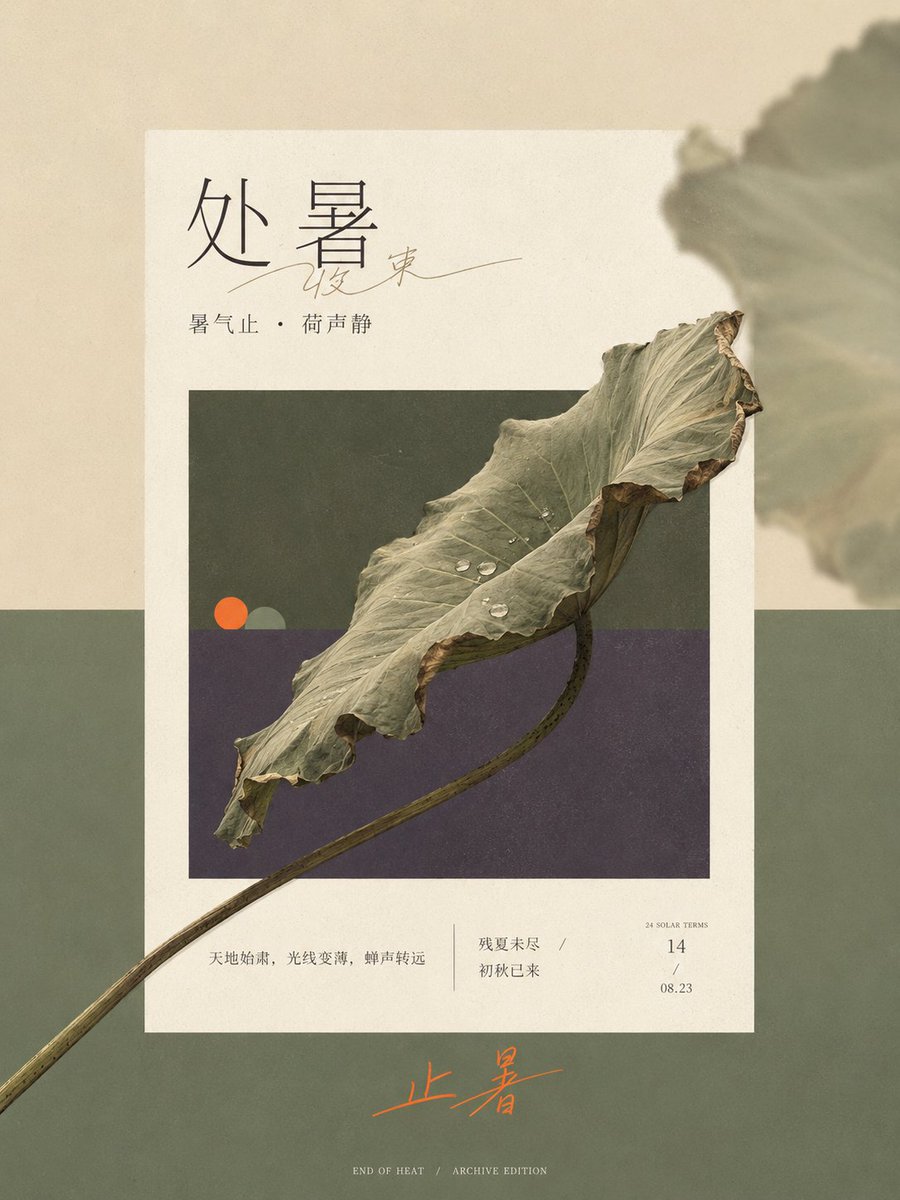
Solar Terms Editorial Visual
A sophisticated layout prompt for GPT-image2 that creates narrow vertical editorial visuals with multi-layered planar spaces and cross-border core forms.
이것은 그래픽 및 포스터 에 대한 GPT Image 2 프롬프트 사례입니다. 아래의 복사 가능한 프롬프트를 사용하여 유사한 시각 자료를 생성하고, 재사용하기 전에 Awesome GPT Image 2 Prompts 의 저작자 표시 및 상업적 사용 권한을 검토하십시오.
전체 프롬프트 세트가 필요하신가요? 다음을 사용하세요. 그래픽 및 포스터 더 많은 관련 예시를 보려면 주제 허브를 열거나 다음을 열어보세요. GPT Image 2 프롬프트 카탈로그 전체 예제 색인, 재사용 가능한 구조 및 출처 표기는 다음을 참조하십시오.
Free 1K preview
Generate one preview image instantly, no sign-up required.
Free text preview doesn’t preserve reference-image consistency.
4000/4000
프롬프트
복사 준비 프롬프트
Generate a very narrow and long vertical editorial visual based on the {argument name="theme" default="End of Heat solar term"}. Let the external large color field, central warm white paper page, and the retracted theme window form three clear planar spaces. First, derive two structural colors from the state contrast and emotional temperature of the theme, covering the vast majority of the screen with a hard horizontal boundary. In the embedded window, repeat this set of divisions in the same direction and in a reduced proportion; the outer field is brighter and emptier, the inner window is deeper and denser, and paper white serves as the layer with the highest brightness of the whole painting. The weight of the screen is concentrated in the middle, the upper part retains a wide title area, and the lower part leaves a stretched emotional landing point. The edges of the paper are straight, no heavy floating shadows are used, and a wide annotation band is kept under the window.

Extract a continuous and recognizable core form from the direction, process, structural connection, and time change of the theme, organize it into a single oblique axis running through the middle, making it cross at least two boundaries from inside the window, pressing on the frame, entering the white space of the paper, and extending to the external color field. The cross-border form remains complete and continuous, the endpoints crossing the edge retain the clearest recognizable outline, and local details are moderately compressed; local forms go from dense to sparse along the oblique axis, and other auxiliary objects are reduced to quiet small geometric focal points, stably remaining inside the window and close to the color field boundary. Let the horizontal color boundary, vertical frame, rectangular paper, and inner window maintain a strict orthogonal order; only the core theme gets the right to break the rules, establishing space with accurate occlusion relationships rather than relying on perspective or dramatic projections.

Arrange a few homologous echoes on one edge of the theme's momentum: enlarge, crop, and reduce the transparency and contrast of the core form, strongly defocusing it until only soft color blocks remain, partially extending out of the canvas; the central subject remains clear, and the other side remains clean, giving the planar color field a shallow sense of air and memory. Color maintains a clear area order, with two structural colors together occupying about 80% of the screen. The theme's mediating color crosses two fields and stitches together cold/warm or state differences. A small-area emphasis color appears only twice at a long distance: at the visual focus inside the window and at the text gesture outside the paper. The specific hues change with the theme, but the brightness relationship remains stable with paper white being the highest, a few deep outlines pressing on the structure, and the emphasis color winning by saturation rather than area.

The text system continues the order and cross-border relationship of the image. The main title uses a slender, sharp, highly contrasting stroke, and exquisite editorial serif skeleton; Chinese adopts a thin and book-like typeface with relaxed spacing. Transform a keyword into a continuous free handwritten thin line, gently passing through or adjoining the printed title, forming a private handwriting that echoes the oblique axis of the theme. Explanatory information is indented at the bottom of the paper, listed in two groups of small fonts and date-type micro-words. The bottom edge outside the paper can use a set of handwritten text with long closing strokes to carry the second emphasis color, leaving only minimal metadata at the very bottom. Let titles, images, annotations, and footers decrease in density in sequence, not allowing text to press on the core recognition edges.

Process objects with non-directional soft daylight and low shadows, so the theme retains limited real material while still obeying planar color blocks. The entire image is covered with very light art paper fibers, fine printing dots, and low-contrast scanning particles; textures in the paper and window are slightly more obvious, and the outer pure color field is more restrained. The edges of objects allow for tiny printing softening and color bleeding, while key outlines and typeforms remain clean. The final image first presents a white paper window in a two-color long format and a theme form growing continuously from inside to outside the window, then reveals defocused edge shadows, exquisite headers, handwritten intervention, and micro-annotations, forming a modern paper-print visual where strict editorial order and a fresh sense of time coexist.
Theme: {argument name="theme" default="End of Heat solar term"}

Ratio 3:4
프롬프트 변수
프롬프트에 있는 편집 가능한 인수 자리 표시자와 해당 기본값입니다.
변하기 쉬운
theme
기본
End of Heat solar term
Best for
- - 그래픽 및 포스터 visual exploration
- - Image generation and reference-image edits
- - Reusable briefs that keep source attribution visible
Change these parts
- - Subject, product, character, or scene
- - Aspect ratio, camera, lighting, and background
- - Brand, text, color, and output constraints
Recommended model and settings
- - Model: gpt-image-2
- - Input mode: 이미지 to 이미지
- - Aspect ratio: source
- - Commercial status: review original source
How to use this prompt
- 1. Copy the prompt and preserve its structure for the first test.
- 2. Replace the subject, context, and publishing channel.
- 3. Change one camera, lighting, or style variable per iteration.
- 4. Inspect the output, source, text, and rights before reuse.
Limitations, source, and reuse cautions
- - Generated output is an editable draft, not factual, legal, or rights evidence.
- - Review the linked source, people, brands, logos, text, and third-party media before commercial use.
Awesome GPT Image 2 Prompts 에서 가져왔습니다. 출처 표기가 필요합니다. 상업적 이용 가능 여부는 allowed 입니다. 유료 사용 전에 원저작권 정보를 확인하세요.
이 범주에 속하는 더 많은 사례
범주, 입력 방식 호환성, 품질 및 위험도에 따라 우선순위가 정해집니다.


재사용 및 출처 참고 사항
사례를 미리 확인한 후 이 안내 메시지를 안전하게 사용하십시오.
- 1.프롬프트를 복사하거나 Dovoo의 생성 버튼을 사용하여 직접 엽니다.
- 2.사용 사례에 맞게 변수, 화면 비율 및 참조 이미지를 조정하십시오.
- 3.출판 또는 유료 사용 전에 저작권, 출처 표기 요건 및 브랜드 또는 초상권 관련 위험을 확인하십시오.