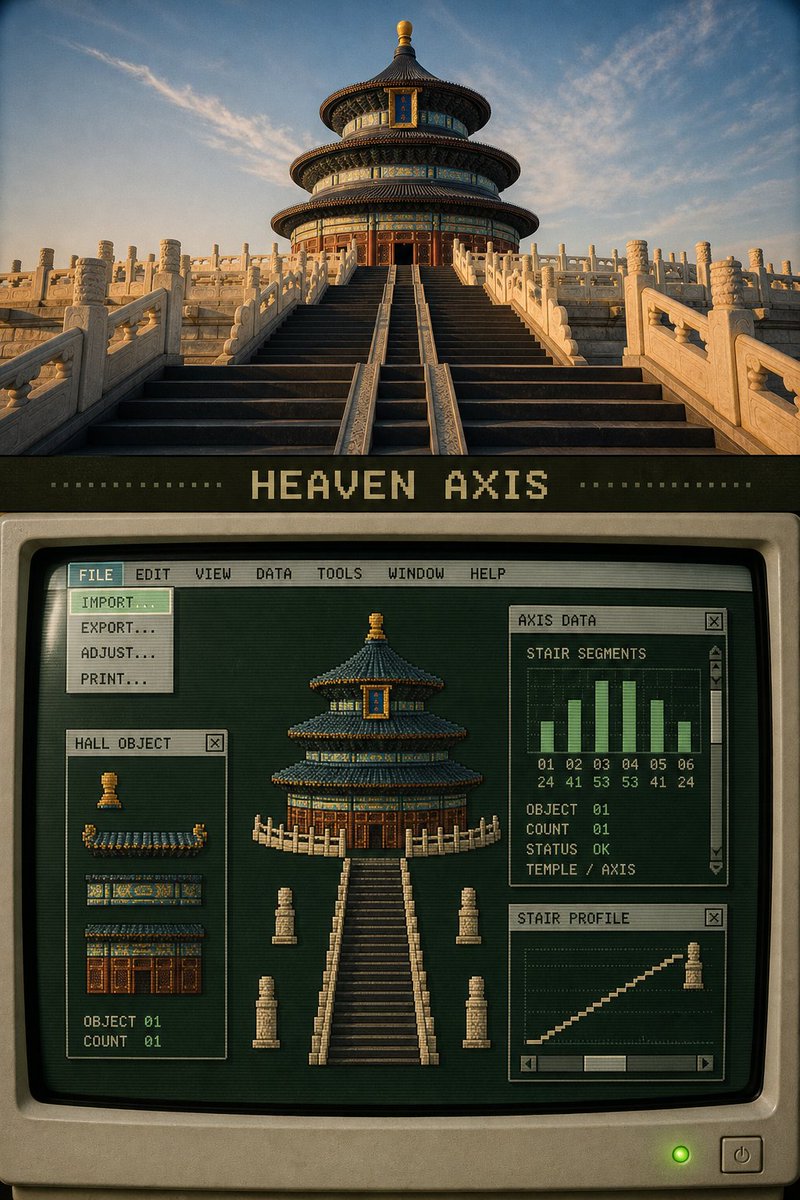
Retro Pixel Industrial Travel Archive
A creative prompt that deconstructs travel photos into pixel art sprites and data indices, presented within a 1980s-style computer software interface.
이것은 그래픽 및 포스터 에 대한 GPT Image 2 프롬프트 사례입니다. 아래의 복사 가능한 프롬프트를 사용하여 유사한 시각 자료를 생성하고, 재사용하기 전에 Awesome GPT Image 2 Prompts 의 저작자 표시 및 상업적 사용 권한을 검토하십시오.
전체 프롬프트 세트가 필요하신가요? 다음을 사용하세요. 그래픽 및 포스터 더 많은 관련 예시를 보려면 주제 허브를 열거나 다음을 열어보세요. GPT Image 2 프롬프트 카탈로그 전체 예제 색인, 재사용 가능한 구조 및 출처 표기는 다음을 참조하십시오.
Free 1K preview
Generate one preview image instantly, no sign-up required.
Free text preview doesn’t preserve reference-image consistency.
3296/4000
프롬프트
복사 준비 프롬프트
Please turn each uploaded travel photo into a separate 3:4 vertical "Retro Pixel Industrial Travel Archive" editorial poster. Each photo is output individually, without multi-photo collages.

This style is not about directly pixelating the entire photo, nor is it about putting a generic computer frame on the photo. You must first extract 3 to 7 real objects that define the scene's identity from the original photo, then transform them into pixel sprites, local previews, data indices, and structural slices, and reassemble them into a fully functioning old computer software interface.

The top portion, about 30% to 38% of the screen, retains the clearly recognizable original photo. Accurately maintain the identity of the subject, architectural structure, quantity, observation angle, spatial relationship, real texture, natural light and shadow, and local colors. Only apply slight artistic publication color grading and thin film grain treatment; do not illustrate, reconstruct, or change the original photo.

Below the photo, maintain a 7% to 10% charcoal black or dark olive "breathing zone", in which a readable pixel title of 1 to 4 English words is added. The title should come from the actual structure or theme of the photo, for example:

HEAVEN AXIS
ROOF SYSTEM
LAKE PAVILION
CANAL OBJECTS

The lower part, about 50% to 60% of the screen, constructs a complete late 1980s to early 1990s graphic workstation software interface. The primary background color must be a visible deep forest green, dark cyan-green, or faded olive green, not pure black.

The computer area must simultaneously feature:

1. A complete main application window occupying the primary area below;
2. A narrow frame in old ivory or tobacco gold;
3. A system menu bar spanning the top of the entire application;
4. Menu text used verbatim:
 FILE EDIT VIEW DATA TOOLS WINDOW HELP
5. At least one selected menu;
6. An expanded drop-down menu directly connected to the selected menu;
7. Drop-down menu options can include:
 IMPORT…
 EXPORT…
 LAYERS…
 FILTER…
 COLOR MAP
 STATISTICS…
 PRINT…
8. At least three overlapping functional sub-windows;
9. Each sub-window has a title bar, close button, and specific function;
10. At least one window has clear scroll bars, arrow buttons, and sliders;
11. At least one object index, color palette, histogram, or status window.

Analyze the photo first and list objects that can be separated. For example:

Traditional architecture photos:
Main roof, secondary roof, dougong color bands, gable walls, steps, railings, red walls.

Garden photos:
Pavilions, rocks, lake shores, cruise boats, branches, roof fragments.

Water town photos:
Stone bridges, wooden houses by the water, balconies, tiled roofs, water surface, reflections, shorelines.

People or transportation photos:
People, vehicles, roads, building facades, landmarks, and direction of action.

Convert these real elements into low-resolution pixel sprites or structural modules. Retain the silhouette, direction, quantity, and signature colors of the objects, but remove tiny textures. Re-adjust the size and position of the objects in the central workspace: the main object can be enlarged to become a visual anchor, and other objects are arranged around it like movable layers.

Do not follow the original...
Best for
- - 그래픽 및 포스터 visual exploration
- - Image generation and reference-image edits
- - Reusable briefs that keep source attribution visible
Change these parts
- - Subject, product, character, or scene
- - Aspect ratio, camera, lighting, and background
- - Brand, text, color, and output constraints
Recommended model and settings
- - Model: gpt-image-2
- - Input mode: 이미지 to 이미지
- - Aspect ratio: source
- - Commercial status: review original source
How to use this prompt
- 1. Copy the prompt and preserve its structure for the first test.
- 2. Replace the subject, context, and publishing channel.
- 3. Change one camera, lighting, or style variable per iteration.
- 4. Inspect the output, source, text, and rights before reuse.
Limitations, source, and reuse cautions
- - Generated output is an editable draft, not factual, legal, or rights evidence.
- - Review the linked source, people, brands, logos, text, and third-party media before commercial use.
Awesome GPT Image 2 Prompts 에서 가져왔습니다. 출처 표기가 필요합니다. 상업적 이용 가능 여부는 allowed 입니다. 유료 사용 전에 원저작권 정보를 확인하세요.
이 범주에 속하는 더 많은 사례
범주, 입력 방식 호환성, 품질 및 위험도에 따라 우선순위가 정해집니다.
재사용 및 출처 참고 사항
사례를 미리 확인한 후 이 안내 메시지를 안전하게 사용하십시오.
- 1.프롬프트를 복사하거나 Dovoo의 생성 버튼을 사용하여 직접 엽니다.
- 2.사용 사례에 맞게 변수, 화면 비율 및 참조 이미지를 조정하십시오.
- 3.출판 또는 유료 사용 전에 저작권, 출처 표기 요건 및 브랜드 또는 초상권 관련 위험을 확인하십시오.