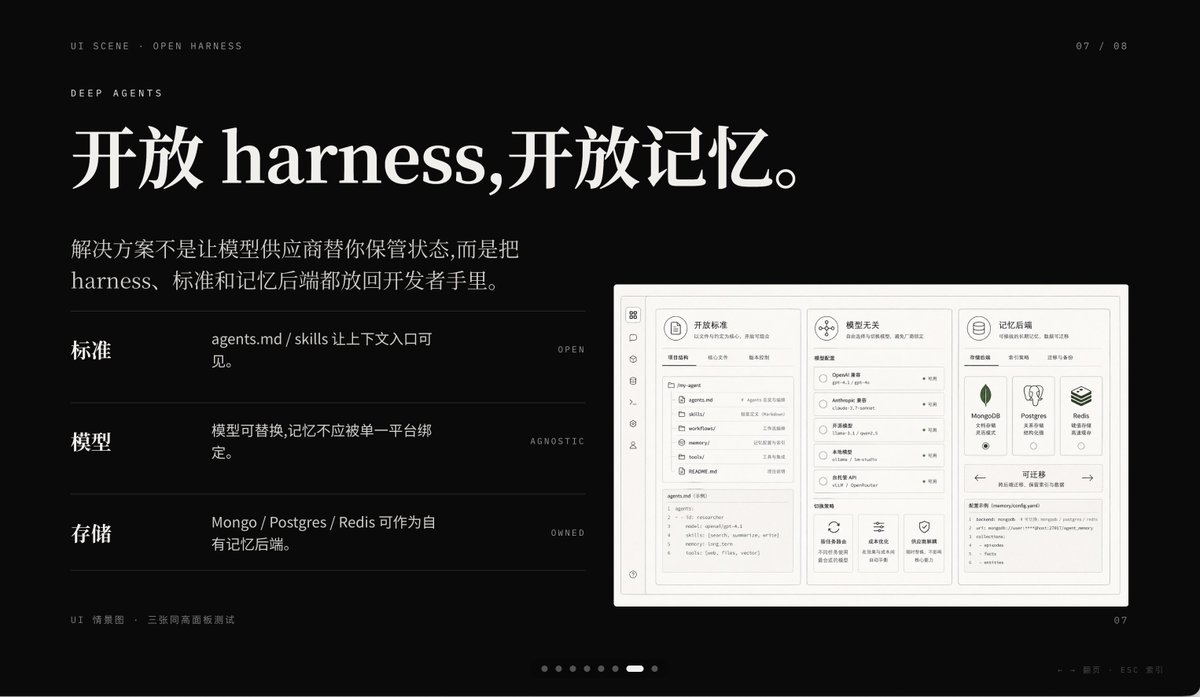
Slide della presentazione principale sul prodotto Dark AI
Questo prompt genera un'elegante diapositiva nera per una presentazione di un prodotto basato sull'intelligenza artificiale, ideale per presentazioni Keynote, storytelling di startup e copertine PPT di alta qualità.
Questo è un esempio di prompt GPT Image 2 per Grafica e poster . Utilizza il prompt pronto per la copia qui sotto per generare immagini simili e verifica l'attribuzione Awesome GPT Image 2 Prompts e i diritti di utilizzo commerciale prima del riutilizzo.
Free 1K preview
Generate one preview image instantly, no sign-up required.
Richiesta
prompt pronto per la copia
A sophisticated dark-mode presentation slide employing a minimalist tech aesthetic, 16:9 widescreen layout, matte black background, complemented by refined gray-white typography and subtle gray dividers. The overall atmosphere is fashionable, cinematic, and high-end, reminiscent of a product launch or a design-forward AI startup pitch deck. Position two lines of small navigation text in the upper left corner: “UI SCENE · OPEN HARNESS”, followed by “DEEP AGENTS”, using a slender, uppercase sans-serif font with generous letter-spacing. Add a small page indicator in the upper right corner displaying “07 / 08”. The main title occupies the upper left, employing an elegant, large serif font with a Chinese-English mix: {argument name="headline text" default="Open harness, open memory."}. Below it, add a 2-line Chinese body text, using a smaller serif font: {argument name="body text" default="The solution isn't to have model vendors manage your state for you, but to put the harness, standards, and memory backends in the hands of developers."}. In the left-center area, create 3 horizontal feature rows separated by thin gray lines, each with a bold Chinese label on the left, a brief Chinese description in the middle, and a tiny uppercase English keyword aligned to the right. Row 1 label: “Standards”, description: “agents.md / skills make context entry visible.”, keyword: “OPEN”. Row 2 label: “Models”, description: “Models are replaceable, memory should not be tied to a single platform.”, keyword: “AGNOSTIC”. Row 3 label: “Storage”, description: “Mongo / Postgres / Redis can serve as proprietary memory backends.”, keyword: “OWNED”. On the right side, place a large embedded UI model within a light gray rounded rectangle with a subtle shadow, resembling a screenshot of a product project dashboard. The model should be monochromatic in pale beige and gray, structurally rigorous, divided into 3 main columns. Left column: a narrow vertical icon sidebar, plus a panel listing “agents.md”, “skills”, “workflows”, “memories”, “tools”, etc. items/files, with a code editor block at the bottom. Middle column: a section titled “Model Agnostic”, containing 4 selectable models and small controls, with 3 feature cards at the bottom. Right column: a section titled “Memory Backends”, containing 3 database cards for MongoDB, Postgres, and Redis, plus a panel at the bottom titled “Migratable”, displaying a code snippet. Include another top card within the model, titled “Open Standards”, with tab-like controls. Add a line of tiny Chinese-English explanatory text in the lower left outside the model: “UI Scenario · Three equal-height panel test”. Include a carousel indicator at the bottom center consisting of 8 small dots, with the 7th dot highlighted as a short white capsule, and the rest as dark gray circles. Place a small page number “07” in the lower right corner. Additionally, add a faint line of tiny footnote text (Chinese-English) near the right bottom edge, very discreetly, such as presentation metadata. Use precise grid alignment, ample whitespace, understated luxury, Swiss-style composition, and refined YouMind AI product theme presentation aesthetics.Variabili di richiesta
Segnaposto per gli argomenti modificabili presenti nel prompt, con i relativi valori predefiniti.
Best for
- - Grafica e poster visual exploration
- - Image generation and reference-image edits
- - Reusable briefs that keep source attribution visible
Change these parts
- - Subject, product, character, or scene
- - Aspect ratio, camera, lighting, and background
- - Brand, text, color, and output constraints
Recommended model and settings
- - Model: gpt-image-2
- - Input mode: Testo in immagine
- - Aspect ratio: source
- - Commercial status: review original source
How to use this prompt
- 1. Copy the prompt and preserve its structure for the first test.
- 2. Replace the subject, context, and publishing channel.
- 3. Change one camera, lighting, or style variable per iteration.
- 4. Inspect the output, source, text, and rights before reuse.
Limitations, source, and reuse cautions
- - Generated output is an editable draft, not factual, legal, or rights evidence.
- - Review the linked source, people, brands, logos, text, and third-party media before commercial use.
Altri casi in questa categoria
Prioritizzazione in base a categoria, compatibilità della modalità di input, qualità e minor rischio.

Note sul riutilizzo e sulla fonte
Utilizza questo prompt in tutta sicurezza dopo aver visualizzato in anteprima il caso.
- 1.Copia il prompt oppure aprilo direttamente in Dovoo tramite il pulsante di generazione.
- 2.Regola le variabili, le proporzioni e le immagini di riferimento in base alle tue esigenze.
- 3.Prima della pubblicazione o dell'utilizzo a pagamento, verificare i diritti di fonte, i requisiti di attribuzione e i rischi relativi al marchio o all'immagine.