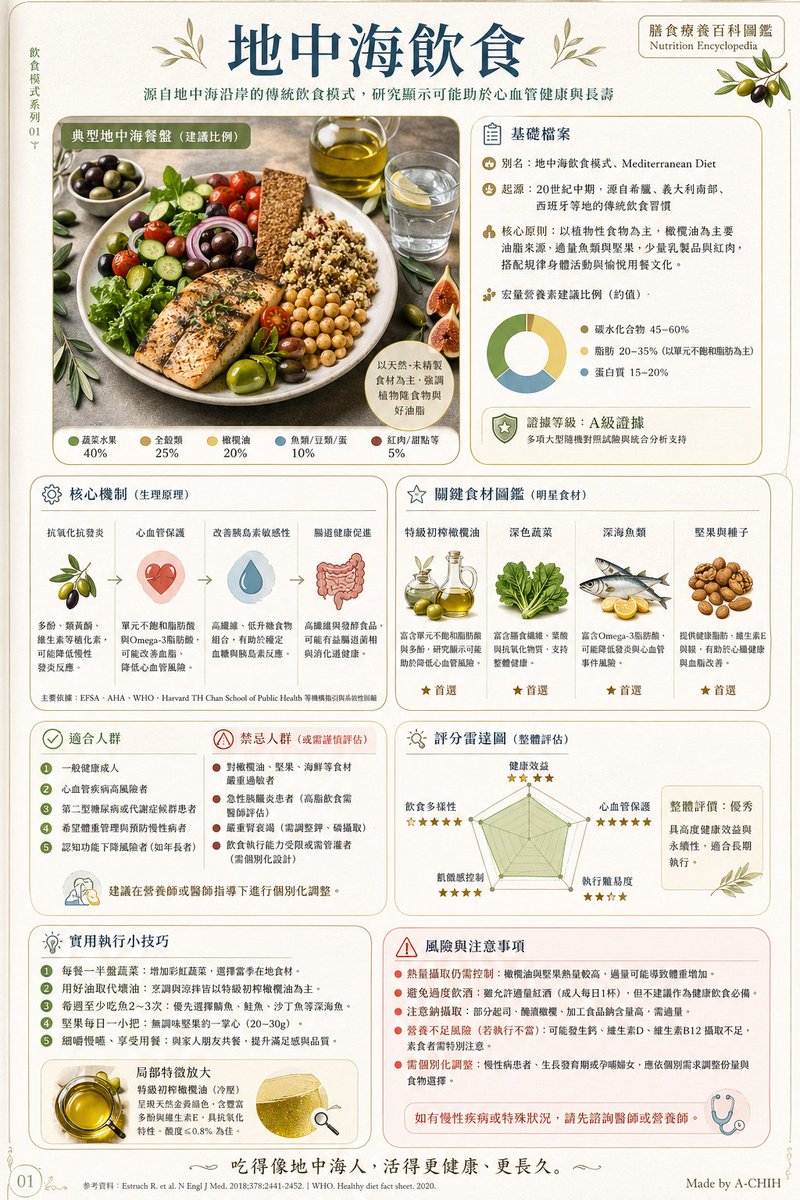
Poster Infografis Diet Mediterania
Perintah ini menghasilkan poster infografis kesehatan Tradisional Tiongkok yang detail tentang diet Mediterania, cocok untuk konten edukasi nutrisi, unggahan media sosial, atau lembar referensi yang dapat dicetak.
Ini adalah contoh kasus GPT Image 2 untuk Grafis & Poster . Gunakan contoh siap salin di bawah ini untuk menghasilkan visual serupa, dan tinjau atribusi Awesome GPT Image 2 Prompts serta hak penggunaan komersial sebelum digunakan kembali.
Free 1K preview
Generate one preview image instantly, no sign-up required.
Mengingatkan
Prompt siap salin
{
  "type": "traditional Chinese medical-style nutrition infographic poster",
  "topic": "Mediterranean diet overview",
  "language": "Traditional Chinese",
  "design": {
    "canvas": "vertical A4 poster",
    "background": "warm ivory paper texture with thin olive-green border lines and rounded section boxes",
    "palette": [
      "deep navy",
      "olive green",
      "sage green",
      "warm beige",
      "gold",
      "soft brown"
    ],
    "style": "editorial health infographic, clean grid layout, realistic food photography mixed with flat icons, elegant academic poster design with subtle botanical olive branch decorations"
  },
  "header": {
    "title": "{argument name=\"headline text\" default=\"Mediterranean diet\"}",
    "subtitle": "A traditional dietary pattern originating from the coastal regions of the Mediterranean Sea, research shows it contributes to cardiovascular health and longevity",
    "badge": "Dietary Nutrition Encyclopedia",
    "side_label": "Dietary Patterns Series 01",
    "decorations_count": 2,
    "decorations": [
      "olive branch cluster at top left of title",
      "olive branch cluster with olives at top right"
    ]
  },
  "layout": {
    "sections": [
      {
        "title": "Typical Mediterranean plate (recommended proportions)",
        "position": "upper left",
        "count": 1,
        "content": "large hero food plate photo with labeled food ratio legend"
      },
      {
        "title": "Basic Profile",
        "position": "upper right",
        "count": 1,
        "content": "definition, origin era and region, core principles, nutrient pie chart, evidence grade box"
      },
      {
        "title": "Core Mechanisms (Physiological Principles)",
        "position": "middle left",
        "count": 4,
        "content": "four benefit cards with icons and short explanations connected in sequence"
      },
      {
        "title": "Key Ingredient Atlas (Star Ingredients)",
        "position": "middle right",
        "count": 4,
        "content": "four featured ingredient cards with illustrations/photos and star ratings"
      },
      {
        "title": "Suitable Population",
        "position": "lower left upper",
        "count": 5,
        "content": "numbered list with green check icons"
      },
      {
        "title": "Contraindicated Population (or Requires Careful Evaluation)",
        "position": "lower left middle",
        "count": 4,
        "content": "warning list with red caution icons"
      },
      {
        "title": "Rating Radar Chart (Overall Assessment)",
        "position": "lower right upper",
        "count": 1,
        "content": "five-axis radar chart and summary rating note"
      },
      {
        "title": "Practical Implementation Tips",
        "position": "lower left bottom",
        "count": 5,
        "content": "numbered practical tips plus two zoom-in detail images"
      },
      {
        "title": "Risks and Precautions",
        "position": "lower right bottom",
        "count": 5,
        "content": "red bullet caution list and doctor consultation note"
      }
    ],
    "footer": {
      "left": "01",
      "center": "Eat like people from the Mediterranean, live healthier and longer.",
      "right": "Made by A-CHIH",
      "references_line": "References: Estruch R. et al. N Engl J Med. 2018 | Mayo Clinic Mediterranean diet fact sheet. 2021"
    }
  },
  "main_image": {
    "plate_scene": "overhead three-quarter view of a large white ceramic plate filled with grilled salmon fillet, mixed grain salad, chickpeas, cucumber slices, cherry tomatoes, red onion rings, lettuce, olives, and herbs; surrounding props include a bowl of mixed olives, a glass bottle of olive oil, a glass of water with lemon slice, halved figs, scattered olives, and olive leaves on a stone tabletop",
    "callout": "Focus on natural, unrefined ingredients; emphasize plant-based foods and high-quality fats",
    "legend_count": 5,
    "legend_items": [
      {
        "label": "Vegetables and fruits",
        "value": "40%",
        "color": "green"
      },
      {
        "label": "Whole grains",
        "value": "25%",
        "color": "beige"
      },
      {
        "label": "Olive oil",
        "value": "20%",
        "color": "yellow-green"
      },
      {
        "label": "Fish/beans/eggs/dairy",
        "value": "10%",
        "color": "blue"
      },
      {
        "label": "Red meat/desserts, etc.",
        "value": "5%",
        "color": "pink-red"
      }
    ]
  },
  "profile_section": {
    "fields": [
      {
        "label": "Alias",
        "value": "Mediterranean diet"
      },
      {
        "label": "Origin",
        "value": "Mid-20th century, originating from traditional eating habits in Greece, Southern Italy, Spain, etc."
      },
      {
        "label": "Core Principles",
        "value": "Primarily plant-based foods, olive oil as the main source of fat, moderate amounts of fish and nuts, limited dairy and red meat, combined with regular physical activity and a joyful dining culture."
      }
    ],
    "pie_chart": {
      "title": "Macronutrient Recommendation Ratios (approximate values)",
      "segments_count": 3,
      "segments": [
        "Carbohydrates 45–60%",
        "Fat 20–35% (primarily monounsaturated fats)",
        "Protein 15–20%"
      ]
    },
    "evidence_box": {
      "label": "Evidence Level: Grade A evidence",
      "note": "Supported by multiple large randomized controlled trials and meta-analyses"
    }
  },
  "mechanism_section": {
    "items": [
      {
        "title": "Antioxidant and anti-inflammatory",
        "icon": "olive branch",
        "description": "Phytochemicals such as polyphenols, flavonoids, and vitamins may reduce chronic inflammatory responses"
      },
      {
        "title": "Cardiovascular protection",
        "icon": "heart",
        "description": "Monounsaturated fatty acids and Omega-3 fatty acids can reduce bad cholesterol and lower cardiovascular risk"
      },
      {
        "title": "Improved insulin sensitivity",
        "icon": "water droplet",
        "description": "A combination of high-fiber, low-glycemic index foods helps stabilize blood sugar and insulin response"
      },
      {
        "title": "Promotes gut health",
        "icon": "intestine",
        "description": "High-fiber foods and fermented foods may benefit gut flora and digestive health"
      }
    ]
  },
  "ingredient_section": {
    "items": [
      {
        "name": "Extra virgin olive oil",
        "visual": "glass oil bottles with olives",
        "description": "Rich in monounsaturated fatty acids and polyphenols, studies show it may help reduce cardiovascular risk",
        "rating": "First choice"
      },
      {
        "name": "Dark green vegetables",
        "visual": "leafy greens",
        "description": "Rich in lutein, carotenoids, and antioxidants, supporting overall health",
        "rating": "First choice"
      },
      {
        "name": "Deep-sea fish",
        "visual": "two fish with lemon slices",
        "description": "Rich in Omega-3 fatty acids, which can reduce inflammation and support heart health",
        "rating": "First choice"
      },
      {
        "name": "Nuts and seeds",
        "visual": "walnuts",
        "description": "Provide healthy fats, vitamin E, and magnesium, contributing to heart health and satiety",
        "rating": "First choice"
      }
    ]
  },
  "audience_section": {
    "suitable_count": 5,
    "suitable": [
      "Generally healthy adults",
      "Individuals at high risk of cardiovascular disease",
      "Patients with type 2 diabetes or metabolic syndrome",
      "Individuals seeking weight management and chronic disease prevention",
      "Individuals at risk of cognitive decline (such as the elderly)"
    ],
    "caution_count": 4,
    "caution": [
      "Individuals with severe allergies to olive oil, nuts, seafood, and other ingredients.",
      "Patients with acute cholepancreatic diseases (high-fat diet requires individual assessment).",
      "Severe renal failure (potassium and phosphorus intake needs to be adjusted).",
      "Individuals with limited ability to follow a diet or requiring tube feeding (requires personalized design)."
    ],
    "note": "It is recommended to make personalized adjustments under the guidance of a nutritionist or physician."
  },
  "rating_section": {
    "radar_axes_count": 5,
    "axes": [
      "Health benefits",
      "Cardiovascular protection",
      "Ease of implementation",
      "Satiety control",
      "Dietary diversity"
    ],
    "summary": "Overall rating: Excellent, with high health benefits and sustainability, suitable for long-term implementation."
  },
  "tips_section": {
    "tips_count": 5,
    "tips": [
      "Eat half vegetables and fruits with every meal: Add rainbow-colored vegetables and choose seasonal, local ingredients.",
      "Use good oils instead of bad oils: Use extra virgin olive oil as the main oil for cooking and salad dressing.",
      "Eat fish at least 2-3 times a week: Prioritize deep-sea fish such as mackerel, salmon, and sardines.",
      "A small handful of nuts every day: About one palm-sized portion (20-30g) of unsalted nuts.",
      "Chew slowly and enjoy your meal: Dine with family and friends to enhance satisfaction and quality."
    ],
    "zoom_images_count": 2,
    "zoom_images": [
      "small photo of olive oil in a bowl labeled Local Feature Magnification",
      "small photo of honeycomb-like whole grain bread texture with explanatory note"
    ]
  },
  "risk_section": {
    "warnings_count": 5,
    "warnings": [
      "Calorie intake still needs to be controlled: Olive oil and nuts are high in calories, and excessive consumption may lead to weight gain.",
      "Avoid excessive alcohol consumption: Although moderate red wine is allowed (1 cup per day for adults), it is not recommended as an essential part of a healthy diet.",
      "Pay attention to sodium intake: Some cheeses, pickled olives, and processed foods are high in sodium and should be consumed in moderation.",
      "Risk of nutritional deficiencies (if not implemented properly): Calcium, Vitamin D, and Vitamin B12 deficiencies may occur. Vegetarians should pay particular attention.",
      "Needs to be personalized: Patients with chronic diseases, those in growth and development stages, or pregnant and breastfeeding women should adjust the portion size and food choices according to individual needs."
    ],
    "consultation_note": "If you have any chronic illnesses or special conditions, please consult a doctor or nutritionist first."
  },
  "visual_requirements": {
    "text_density": "high, with realistic Traditional Chinese editorial typography",
    "icons_count": "multiple small line icons for profile, benefits, stars, checks, warnings, and medical consultation",
    "rendering": "sharp printable infographic, balanced spacing, highly legible labels, realistic food textures, professional academic aesthetic"
  }
}
Variabel perintah
Placeholder argumen yang dapat diedit ditemukan dalam prompt, beserta nilai defaultnya.
Best for
- - Grafis & Poster visual exploration
- - Image generation and reference-image edits
- - Reusable briefs that keep source attribution visible
Change these parts
- - Subject, product, character, or scene
- - Aspect ratio, camera, lighting, and background
- - Brand, text, color, and output constraints
Recommended model and settings
- - Model: gpt-image-2
- - Input mode: Teks ke Gambar
- - Aspect ratio: source
- - Commercial status: review original source
How to use this prompt
- 1. Copy the prompt and preserve its structure for the first test.
- 2. Replace the subject, context, and publishing channel.
- 3. Change one camera, lighting, or style variable per iteration.
- 4. Inspect the output, source, text, and rights before reuse.
Limitations, source, and reuse cautions
- - Generated output is an editable draft, not factual, legal, or rights evidence.
- - Review the linked source, people, brands, logos, text, and third-party media before commercial use.
Lebih banyak kasus dalam kategori ini
Diprioritaskan berdasarkan kategori, kompatibilitas mode input, kualitas, dan risiko yang lebih rendah.






Catatan penggunaan kembali dan sumber
Gunakan perintah ini dengan aman setelah melihat pratinjau kasus.
- 1.Salin perintah tersebut atau buka langsung di Dovoo dengan tombol pembuatan.
- 2.Sesuaikan variabel, rasio aspek, dan gambar referensi untuk kebutuhan Anda sendiri.
- 3.Sebelum mempublikasikan atau menggunakan untuk tujuan berbayar, verifikasi hak sumber, persyaratan atribusi, dan risiko merek atau citra.