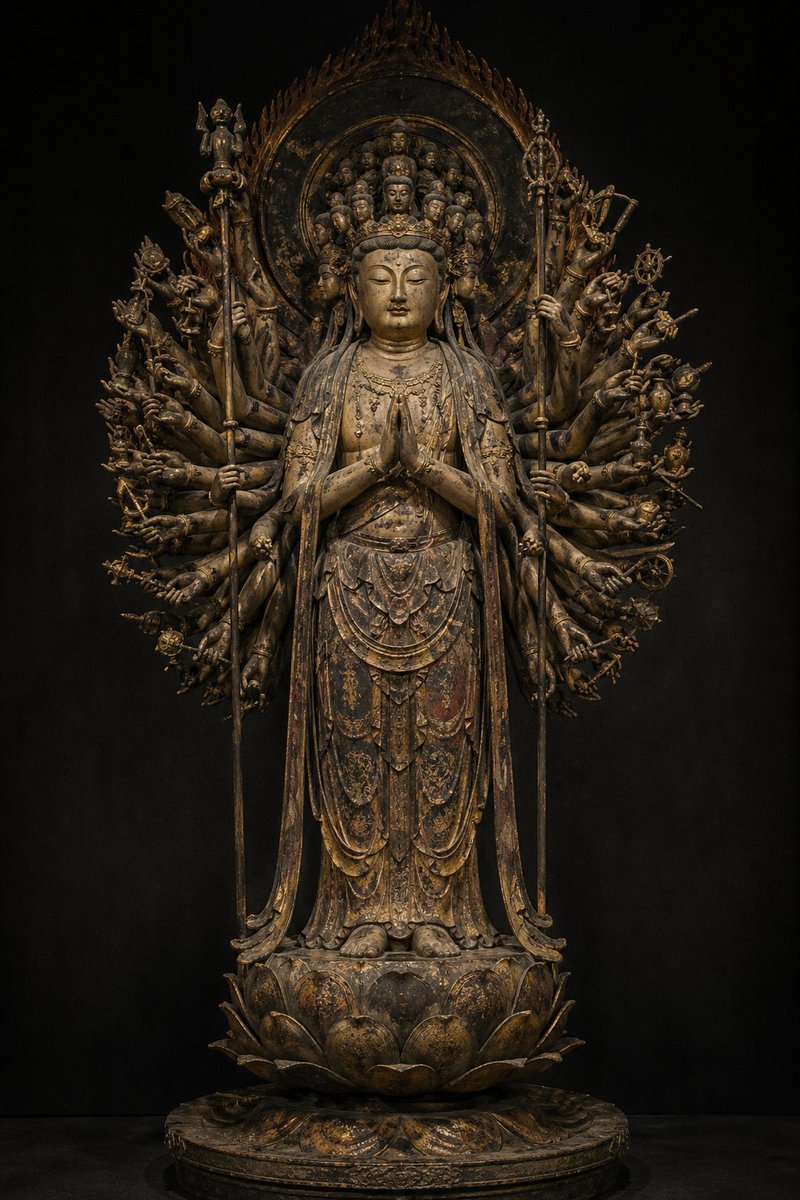
पारंपरिक जापानी बौद्ध प्रतिमा
हीयान या कामाकुरा काल की जापानी बौद्ध मूर्तिकला शैली में एक शांत और राजसी सेंजू कन्नन (हजार भुजाओं वाली कन्नन) प्रतिमा बनाने के लिए एक अत्यंत विस्तृत निर्देश, जिसमें संग्रहालय-स्तरीय प्रकाश व्यवस्था और बनावट शामिल हैं।
यह चित्र और चरित्र के लिए एक GPT Image 2 प्रॉम्प्ट केस है। इसी तरह के विज़ुअल बनाने के लिए नीचे दिए गए कॉपी-रेडी प्रॉम्प्ट का उपयोग करें, और पुनः उपयोग करने से पहले Awesome GPT Image 2 Prompts एट्रिब्यूशन और व्यावसायिक उपयोग अधिकारों की समीक्षा करें।
क्या आपको प्रॉम्प्ट्स का पूरा सेट चाहिए? इसका उपयोग करें चित्र और चरित्र अधिक संबंधित उदाहरणों के लिए विषय हब देखें, या खोलें GPT Image 2 त्वरित सूची संपूर्ण उदाहरण अनुक्रमणिका, पुन: प्रयोज्य संरचनाओं और स्रोत श्रेय के लिए।
Free 1K preview
Generate one preview image instantly, no sign-up required.
1403/4000
प्रॉम्प्ट
प्रतिलिपि के लिए तैयार संकेत
A {argument name="type of Buddhist statue" default="standing statue of Senju Kannon Bodhisattva"} reminiscent of ancient Japanese Buddhist sculpture. It features a serene and majestic atmosphere similar to the masterpieces housed in the {argument name="collection" default="Tokyo National Museum"}. A full-body frontal view with a slender and elegant physique, a soft and compassionate expression, half-closed eyes, and a gentle smile. It includes an exquisite crown, flowing celestial robes, and delicate jewelry. A large number of arms are arranged in an orderly radial pattern behind the back to strongly emphasize the symbolism of the Thousand-Armed Kannon. The hands may be based on 42 arms in accordance with actual sculptural traditions. It stands on a lotus pedestal with a halo behind. The material is primarily {argument name="material" default="wood carving"}, depicting historical textures such as lacquer, peeling gold leaf, weathered colors from aging, traces of original color, cracks, wear, and a sense of temple heritage. The overall design evokes Japanese Buddhist sculptures of the Heian to Kamakura periods, characterized by dignity, nobility, and religious solemnity. Like a professional photograph of a museum collection, the background is dark and subdued, highlighting the three-dimensionality and texture of the statue. Museum-grade, cultural asset-grade, ultra-high definition.प्रॉम्प्ट वैरिएबल
प्रॉम्प्ट में पाए जाने वाले संपादन योग्य तर्क प्लेसहोल्डर, उनके डिफ़ॉल्ट मानों के साथ।
चर
type of Buddhist statue
गलती करना
standing statue of Senju Kannon Bodhisattva
चर
collection
गलती करना
Tokyo National Museum
चर
material
गलती करना
wood carving
Best for
- - चित्र और चरित्र visual exploration
- - Image generation and reference-image edits
- - Reusable briefs that keep source attribution visible
Change these parts
- - Subject, product, character, or scene
- - Aspect ratio, camera, lighting, and background
- - Brand, text, color, and output constraints
Recommended model and settings
- - Model: gpt-image-2
- - Input mode: टेक्स्ट से छवि
- - Aspect ratio: source
- - Commercial status: review original source
How to use this prompt
- 1. Copy the prompt and preserve its structure for the first test.
- 2. Replace the subject, context, and publishing channel.
- 3. Change one camera, lighting, or style variable per iteration.
- 4. Inspect the output, source, text, and rights before reuse.
Limitations, source, and reuse cautions
- - Generated output is an editable draft, not factual, legal, or rights evidence.
- - Review the linked source, people, brands, logos, text, and third-party media before commercial use.
Awesome GPT Image 2 Prompts से आयातित। श्रेय देना आवश्यक है। वाणिज्यिक उपयोग की allowed ; सशुल्क उपयोग से पहले स्रोत अधिकारों की समीक्षा करें।
इस श्रेणी में और भी मामले
श्रेणी, इनपुट मोड अनुकूलता, गुणवत्ता और कम जोखिम को प्राथमिकता दी गई है।


पुनः उपयोग और स्रोत नोट्स
केस का पूर्वावलोकन करने के बाद इस प्रॉम्प्ट का सुरक्षित रूप से उपयोग करें।
- 1.प्रॉम्प्ट को कॉपी करें या जनरेशन बटन का उपयोग करके इसे सीधे डोवू में खोलें।
- 2.अपने उपयोग के अनुसार वैरिएबल, आस्पेक्ट रेशियो और संदर्भ छवियों को समायोजित करें।
- 3.प्रकाशन या सशुल्क उपयोग से पहले, स्रोत अधिकारों, श्रेय देने की आवश्यकताओं और ब्रांड या छवि से जुड़े जोखिमों की पुष्टि करें।