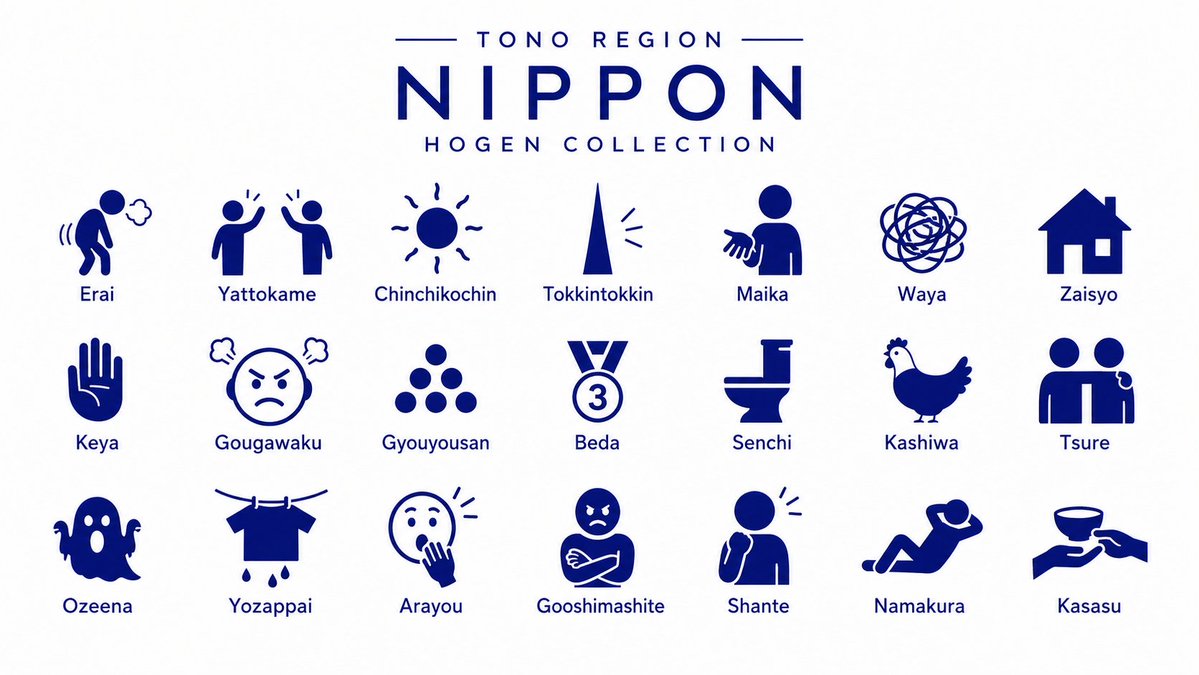
Affiche pictogramme du dialecte de la région de Tono
Une affiche infographique épurée, bleue et blanche, présentant 21 mots du dialecte de la région de Tono sous forme de pictogrammes simples, idéale pour l'éducation culturelle, les publications sur les réseaux sociaux ou la promotion de la langue régionale.
Il s'agit d'un exemple de visuel pour la catégorie { GPT Image 2 Graphique et affiche . Utilisez le visuel ci-dessous pour générer des éléments visuels similaires et vérifiez les conditions d'utilisation (attribution Awesome GPT Image 2 Prompts et droits d'utilisation commerciale) avant toute réutilisation.
Free 1K preview
Generate one preview image instantly, no sign-up required.
Prompt
invite prête à être copiée
{
  "type": "dialect pictogram poster",
  "style": "minimal Japanese infographic poster, clean white background, bold monochrome cobalt-blue vector icons, flat design, geometric sans-serif typography, balanced spacing, centered composition, modern museum-poster aesthetic",
  "topic": "regional Japanese dialect words rendered as pictograms",
  "region": {
    "english": "{argument name=\"region name\" default=\"TONO REGION\"}",
    "series": "{argument name=\"series title\" default=\"NIPPON HOGEN COLLECTION\"}"
  },
  "canvas": {
    "orientation": "landscape",
    "aspect_ratio": "16:9"
  },
  "header": {
    "count": 3,
    "lines": [
      {
        "text": "TONO REGION",
        "position": "top center",
        "style": "small uppercase with thin horizontal divider lines on both sides"
      },
      {
        "text": "NIPPON",
        "position": "upper center",
        "style": "very large uppercase, wide tracking"
      },
      {
        "text": "HOGEN COLLECTION",
        "position": "below NIPPON",
        "style": "medium uppercase, wide tracking"
      }
    ]
  },
  "layout": {
    "grid": {
      "rows": 3,
      "columns": 7,
      "total_items": 21,
      "position": "center to lower center",
      "alignment": "evenly spaced"
    },
    "sections": [
      {
        "title": "row 1",
        "position": "upper grid",
        "count": 7,
        "labels": [
          "Erai",
          "Yattokame",
          "Chinchikochin",
          "Tokkintokkin",
          "Maika",
          "Waya",
          "Zaisyo"
        ]
      },
      {
        "title": "row 2",
        "position": "middle grid",
        "count": 7,
        "labels": [
          "Keya",
          "Gougawaku",
          "Gyouyousan",
          "Beda",
          "Senchi",
          "Kashiwa",
          "Tsure"
        ]
      },
      {
        "title": "row 3",
        "position": "lower grid",
        "count": 7,
        "labels": [
          "Ozeena",
          "Yozappai",
          "Arayou",
          "Gooshimashite",
          "Shante",
          "Namakura",
          "Kasasu"
        ]
      }
    ]
  },
  "items": [
    {
      "label": "Erai",
      "icon": "a hunched person walking with bent knees and a small puff symbol behind them suggesting exhaustion or strain"
    },
    {
      "label": "Yattokame",
      "icon": "2 simplified people facing each other, each with one raised hand, with small motion marks above"
    },
    {
      "label": "Chinchikochin",
      "icon": "a round sun-like circle with short radiating lines around it"
    },
    {
      "label": "Tokkintokkin",
      "icon": "a very sharp tall triangular spike with 3 short accent lines on the right"
    },
    {
      "label": "Maika",
      "icon": "a person shown from the waist up with one open hand extended outward as if inviting or offering"
    },
    {
      "label": "Waya",
      "icon": "a tangled scribble knot, circular and chaotic"
    },
    {
      "label": "Zaisyo",
      "icon": "a simple house silhouette with chimney and centered doorway"
    },
    {
      "label": "Keya",
      "icon": "an upright open palm hand symbol"
    },
    {
      "label": "Gougawaku",
      "icon": "an angry face with furrowed brows and steam-puff marks on both sides of the head"
    },
    {
      "label": "Gyouyousan",
      "icon": "6 solid circles arranged in a compact triangular cluster, 1 at top, 2 in middle, 3 at bottom"
    },
    {
      "label": "Beda",
      "icon": "a medal or ribbon badge with the number 3 centered inside a circle"
    },
    {
      "label": "Senchi",
      "icon": "a western-style toilet silhouette in side view"
    },
    {
      "label": "Kashiwa",
      "icon": "a chicken in side profile standing upright"
    },
    {
      "label": "Tsure",
      "icon": "2 shoulder-to-shoulder people icons with a small looped mark near the right figure indicating connection or companionship"
    },
    {
      "label": "Ozeena",
      "icon": "a cartoon ghost with oval mouth, 2 eyes, and raised arms"
    },
    {
      "label": "Yozappai",
      "icon": "a short-sleeved T-shirt hanging on a clothesline with 4 droplets falling below"
    },
    {
      "label": "Arayou",
      "icon": "a round face with a hand covering the mouth, with 2 short accent lines near the top right"
    },
    {
      "label": "Gooshimashite",
      "icon": "an upset person with crossed arms and frowning face"
    },
    {
      "label": "Shante",
      "icon": "a standing person touching the side of the neck or shoulder, with 2 short accent lines near the head"
    },
    {
      "label": "Namakura",
      "icon": "a reclining lounging figure with hands behind head"
    },
    {
      "label": "Kasasu",
      "icon": "a hand offering or holding a bowl while another hand reaches toward it from the right"
    }
  ],
  "text_style": {
    "item_labels": "title case Roman letters centered under each icon",
    "color": "{argument name=\"ink color\" default=\"deep cobalt blue\"}"
  },
  "background": {
    "color": "{argument name=\"background color\" default=\"white\"}"
  },
  "quality": "crisp print-ready vector poster, highly legible, no gradients, no shadows, no texture"
}
Variables d'invite
Espaces réservés aux arguments modifiables présents dans l'invite, avec leurs valeurs par défaut.
Best for
- - Graphique et affiche visual exploration
- - Image generation and reference-image edits
- - Reusable briefs that keep source attribution visible
Change these parts
- - Subject, product, character, or scene
- - Aspect ratio, camera, lighting, and background
- - Brand, text, color, and output constraints
Recommended model and settings
- - Model: gpt-image-2
- - Input mode: Texte vers image
- - Aspect ratio: source
- - Commercial status: review original source
How to use this prompt
- 1. Copy the prompt and preserve its structure for the first test.
- 2. Replace the subject, context, and publishing channel.
- 3. Change one camera, lighting, or style variable per iteration.
- 4. Inspect the output, source, text, and rights before reuse.
Limitations, source, and reuse cautions
- - Generated output is an editable draft, not factual, legal, or rights evidence.
- - Review the linked source, people, brands, logos, text, and third-party media before commercial use.
Plus de cas dans cette catégorie
Priorisé par catégorie, compatibilité du mode d'entrée, qualité et risque moindre.

Réutilisation et notes de source
Utilisez cette invite en toute sécurité après avoir prévisualisé le dossier.
- 1.Copiez l'invite ou ouvrez-la directement dans Dovoo avec le bouton de génération.
- 2.Ajustez les variables, le format d'image et les images de référence en fonction de votre cas d'utilisation.
- 3.Avant toute publication ou utilisation payante, vérifiez les droits d'auteur, les exigences d'attribution et les risques liés à la marque ou à l'image.