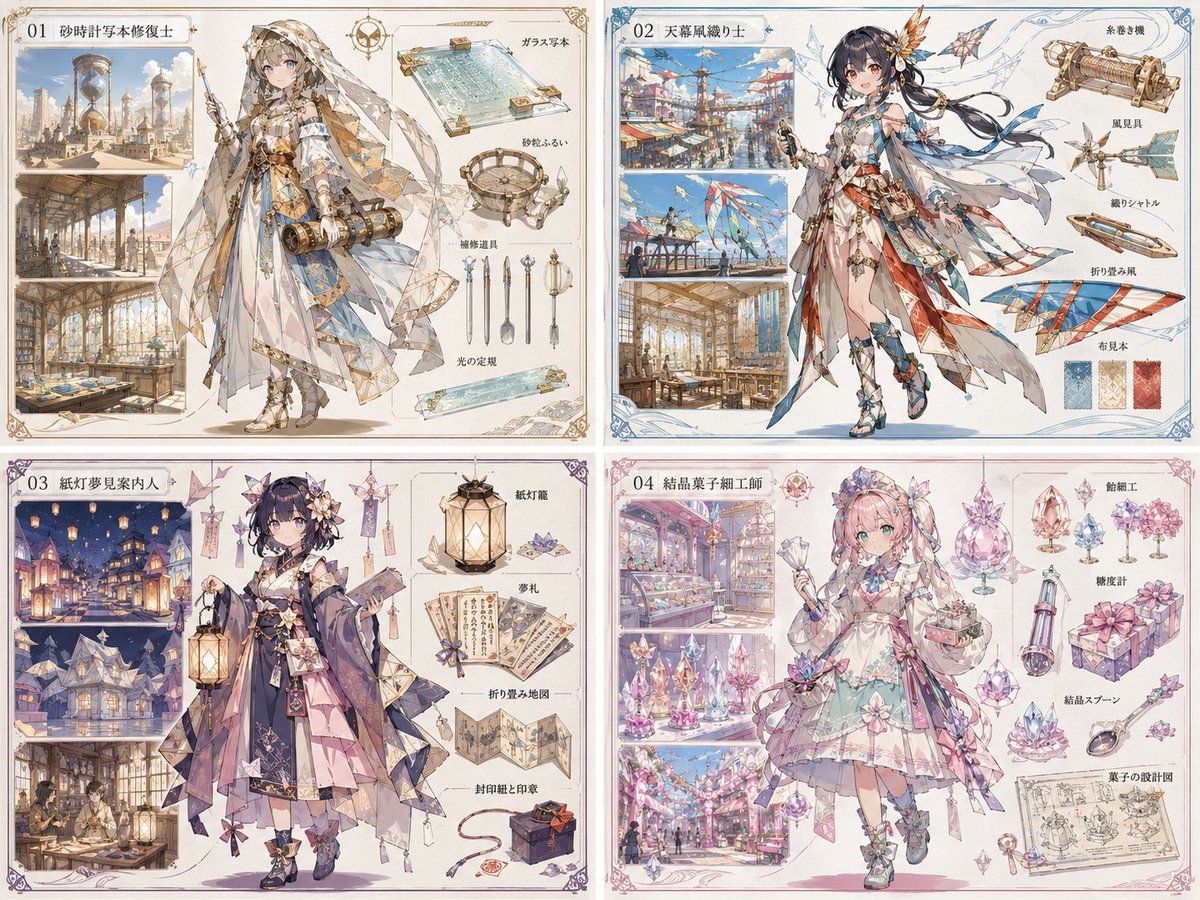
Création d'univers d'anime et fiche de personnage
Un modèle très détaillé pour la création de documents de contexte complets pour des univers d'anime originaux, comprenant des conceptions de personnages, des contextes culturels et des règles visuelles environnementales.
Il s'agit d'un exemple de visuel pour la catégorie { GPT Image 2 Anime et jeux . Utilisez le visuel ci-dessous pour générer des éléments visuels similaires et vérifiez les conditions d'utilisation (attribution Awesome GPT Image 2 Prompts et droits d'utilisation commerciale) avant toute réutilisation.
Besoin de l'ensemble complet des invites ? Utilisez le Anime et jeux Consultez le centre thématique pour plus d'exemples connexes, ou ouvrez le GPT Image 2 catalogue rapide pour l'index complet des exemples, les structures réutilisables et l'attribution des sources.
Free 1K preview
Generate one preview image instantly, no sign-up required.
4000/4000
Prompt
invite prête à être copiée
[Desired Output]
World-building Setting Materials + Original Anime Character Setting Materials
*Please visualize not only the character but also the environment, culture, systems, technology, and sense of daily life of the world in which the character lives.

[Worldview Seed]
Enter here

[Number of Proposals]
Enter here
*E.g., only 1 proposal / wish to compare multiple proposals, etc.

[Number of Characters]
Enter here

[Roles/Occupations]
Enter here

[Setting/Environment]
Enter here
*If details are sparse, design new parameters for climate, terrain, resources, dangers, transportation, and housing styles based on the input keywords.

[Society/Systems]
Enter here
*Design community rules, division of labor, status markers, affiliation marks, exchange methods, and rituals that fit the input.

[Technology/Faith/Taboos]
Enter here
*Derive material processing, recording methods, communication, prayers, taboos, festivals, and body decorations naturally from the input content.

[Lifestyle/Culture]
Enter here
*Housing, diet, transportation, work tools, clothing styles, meaning of ornaments, seasonal events, currency, script, emblems, etc.

[Overall Atmosphere]
Enter here

[Characteristics of the World]
Enter here

[Key Priorities]
Enter here

[Finish Direction]
Enter here
*E.g., emphasize realism/life-like feel, emphasize mysticism, emphasize practical utility of costumes, focus more on architecture, target bright children's content, etc.

[Differentiation Instructions]
Enter here

[Drawing Tone]
Smooth line art, flat anime coloring, minimal cel shading, single-level shadows, no gradients, no thick painting, no realistic texture expressions, no strong light/shadow effects, flat look optimized for animation.

[Anime Conversion Instructions]
While maintaining the structure, motifs, color scheme, roles, and cultural meanings of the original design, simplify the drawing for production animation. Use flat anime coloring and keep shadows to one level. Treat translucent materials or thin fabrics as simplified surfaces in a cel-shaded style rather than realistic textures.

Based on the input above, create an image in the style of "World-building Setting Materials + Character Setting Materials" for an original anime.

Purpose:
To visually communicate the world itself in which the character lives, rather than just the character alone. Create setting materials where the world's environment, culture, lifestyle tools, architecture, transportation, and the origins of clothing appear as a unified whole.

Most Important:
First, extract a "visual rule" unique to that world from the input content. Reflect that visual rule in everything: backgrounds, architecture, tools, costumes, color schemes, materials, emblems, and the overall page layout.

Desired Finish:
- Clothing, tools, and housing should look like things actually used by people living in this world.
- Characters, backgrounds, tools, text, and material samples should appear to belong to the same cultural sphere.
- Convey unique environments, resources, and lifestyle habits born from the worldview seed.
- Shapes should arise from necessity in daily life rather than existing genre tropes.
- Feature a unique shape language, color palette, and material feel recognizable at a glance.

Thought Process:
1. Determine the world's "Environment" from input (climate, terrain, light, seasons, dangers, resource distribution).
2. Determine "Lifestyle" from environment (housing, food, work, transport, storage, exchange, recording, celebrations).
3. Determine "Clothing and Tools" from lifestyle (fastening, layering, carrying, protection, showing status/role).
4. Determine "Character Appearance" from clothing/tools (focus on outfits, equipment, materials, colors, and silhouettes rather than just face/hair).
5. Determine "Page Design" from visual rules (reflect recording media, patterns, white space, and diagram styles of that world).

Diversity Enhancement:
Invent a new cultural sphere for each input. If multiple proposals are requested, ensure each has a distinct principle of living, material logic, and aesthetic.

For each proposal, significantly vary:
- Terrain and climate appearance
- Architecture and cityscape shapes
- Primary materials
- Meaning of colors
- Costume silhouettes
- How tools are held, stored, and carried
- Creation of symbols, scripts, patterns, and emblems
- Format of the page layout

Ideation Candidates (not fixed themes, but materials for inspiration):
Environment: Arid lands, cold regions, highlands, wetlands, volcanic ash zones, mirror lakes, misty valleys, high-wind zones, polar night, low gravity, floating strata, glowing mineral caves, etc.
Materials: Paper, bone, ceramics, leather, resin, glass, shell, bamboo, straw, crystals, recycled fabrics, lacquer, ash, feathers, amber, etc.
Culture: Oral traditions, mask culture, scent-based ID, knot-script, shadow puppet records, seasonal migration, silence rituals, dance contracts, etc.
Structure: Folding, wrapping, weaving, hanging, inserting, tying, layering, sealing, engraving, bundling, inflating, etc.

Mandatory Elements:
1. Worldview Board (symbolic landscape, cityscape, lifestyle tools, emblems, color rules, shape language).
2. Character Setting Materials (full-body standing pose, role-conveying outfits, detail diagrams for equipment/back view/belongings).
3. World-Character Connection (ensure clothes/gear logic stems from the world's tech/faith/environment).
4. Page Design (layout varies with worldview, using appropriate diagram methods and minimal labels/symbols).

Quality Standards:
- Not generic fantasy; the world's origins must be visible.
- Cohesive culture across characters and backgrounds.
- Decorations must have lifestyle, faith, or functional meanings.
- Visual differentiation between multiple world proposals.

Visual Presentation:
- High resolution, anime style, delicate line art, clean cel painting.
- Mixed layout of world boards + full-body character + tool details.
- Minimal text, prioritizing visual concept art sheets.

Final Goal:
Ensure a design where the world's establishment, resident life, material constraints, cultural meanings, and community rules are palpable. Create a unified sense where backgrounds and characters are instantly recognizable as belonging to the same unique world.
Best for
- - Anime et jeux visual exploration
- - Image generation and reference-image edits
- - Reusable briefs that keep source attribution visible
Change these parts
- - Subject, product, character, or scene
- - Aspect ratio, camera, lighting, and background
- - Brand, text, color, and output constraints
Recommended model and settings
- - Model: gpt-image-2
- - Input mode: Texte vers image
- - Aspect ratio: source
- - Commercial status: review original source
How to use this prompt
- 1. Copy the prompt and preserve its structure for the first test.
- 2. Replace the subject, context, and publishing channel.
- 3. Change one camera, lighting, or style variable per iteration.
- 4. Inspect the output, source, text, and rights before reuse.
Limitations, source, and reuse cautions
- - Generated output is an editable draft, not factual, legal, or rights evidence.
- - Review the linked source, people, brands, logos, text, and third-party media before commercial use.
Importé de Awesome GPT Image 2 Prompts . L'attribution est requise. Le statut d'utilisation commerciale est allowed ; veuillez vérifier les droits d'auteur avant toute utilisation payante.
Plus de cas dans cette catégorie
Priorisé par catégorie, compatibilité du mode d'entrée, qualité et risque moindre.
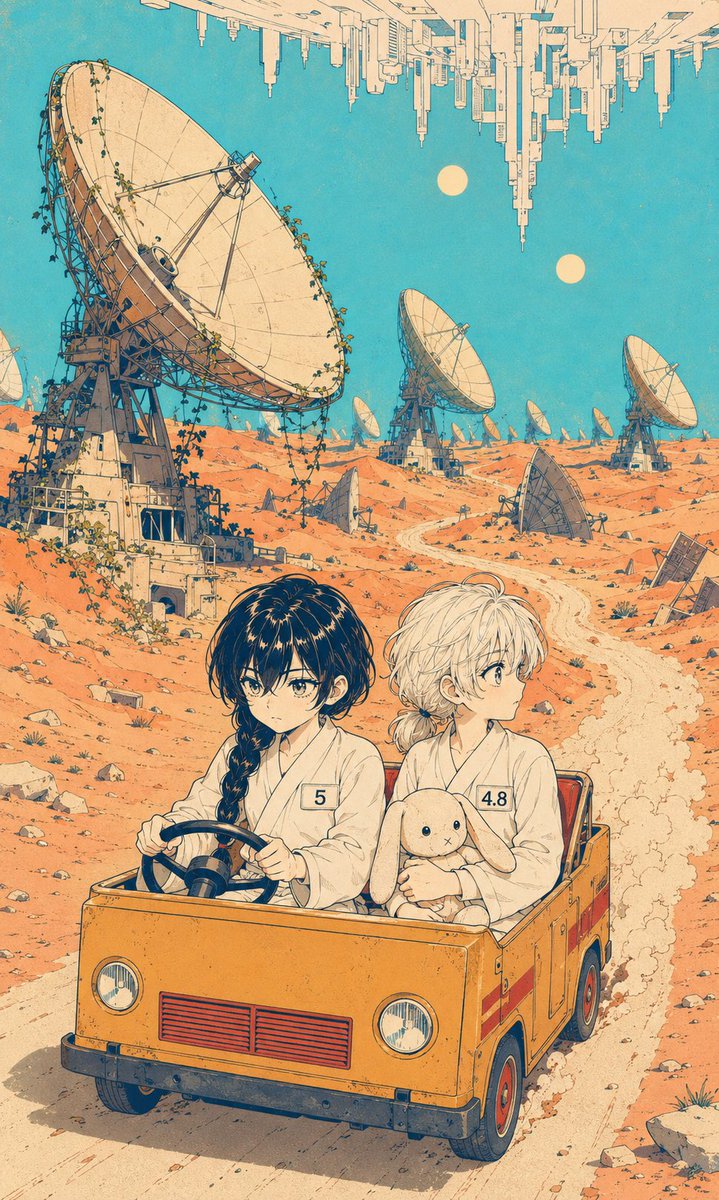
Manga Desert Radio Telescope Road Trip
Texte vers image
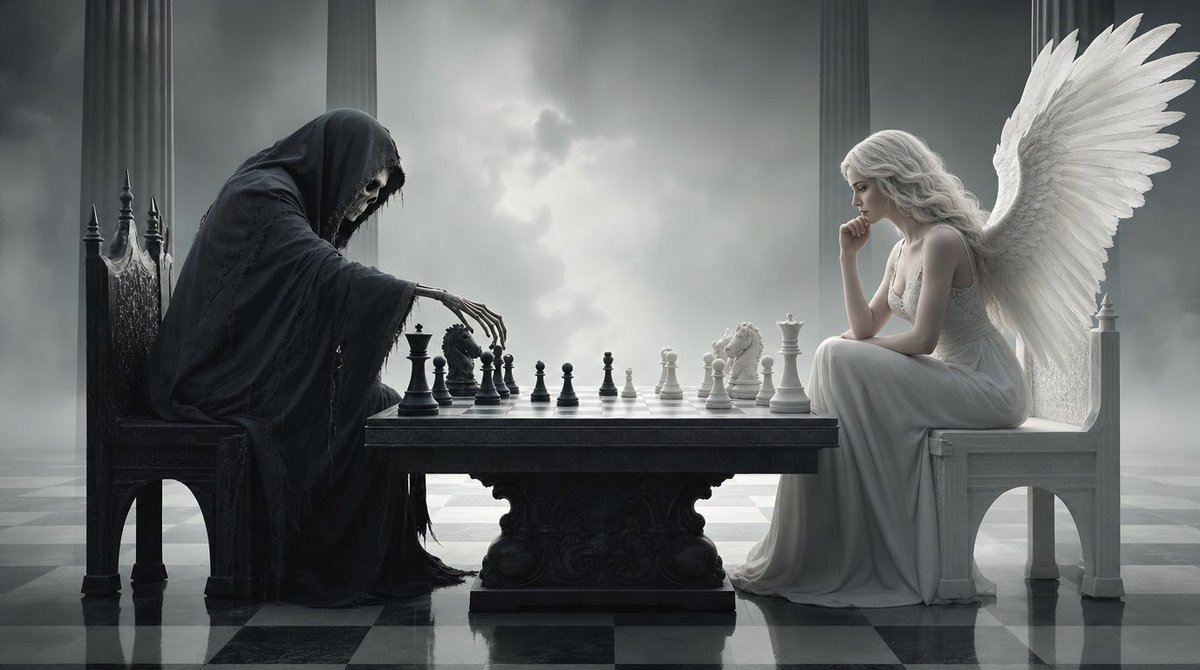
Surreal 3D Chess Match Artwork
Texte vers image
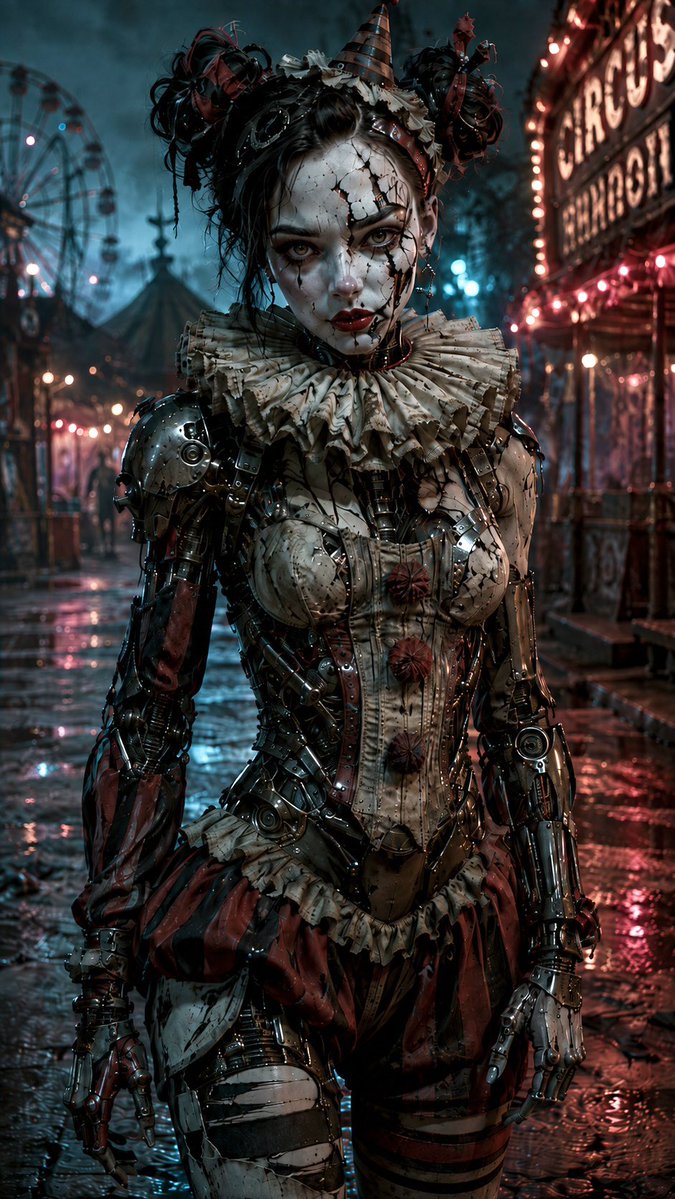
Female Clown Cyborg Portrait
Texte vers image
Imperial Research Bunker on Volcanic Planet
Texte vers image
Greyscale Puzzle Portrait with Color Accent
Texte vers image
Glitch Aesthetic Surreal Portrait
Texte vers image
Réutilisation et notes de source
Utilisez cette invite en toute sécurité après avoir prévisualisé le dossier.
- 1.Copiez l'invite ou ouvrez-la directement dans Dovoo avec le bouton de génération.
- 2.Ajustez les variables, le format d'image et les images de référence en fonction de votre cas d'utilisation.
- 3.Avant toute publication ou utilisation payante, vérifiez les droits d'auteur, les exigences d'attribution et les risques liés à la marque ou à l'image.