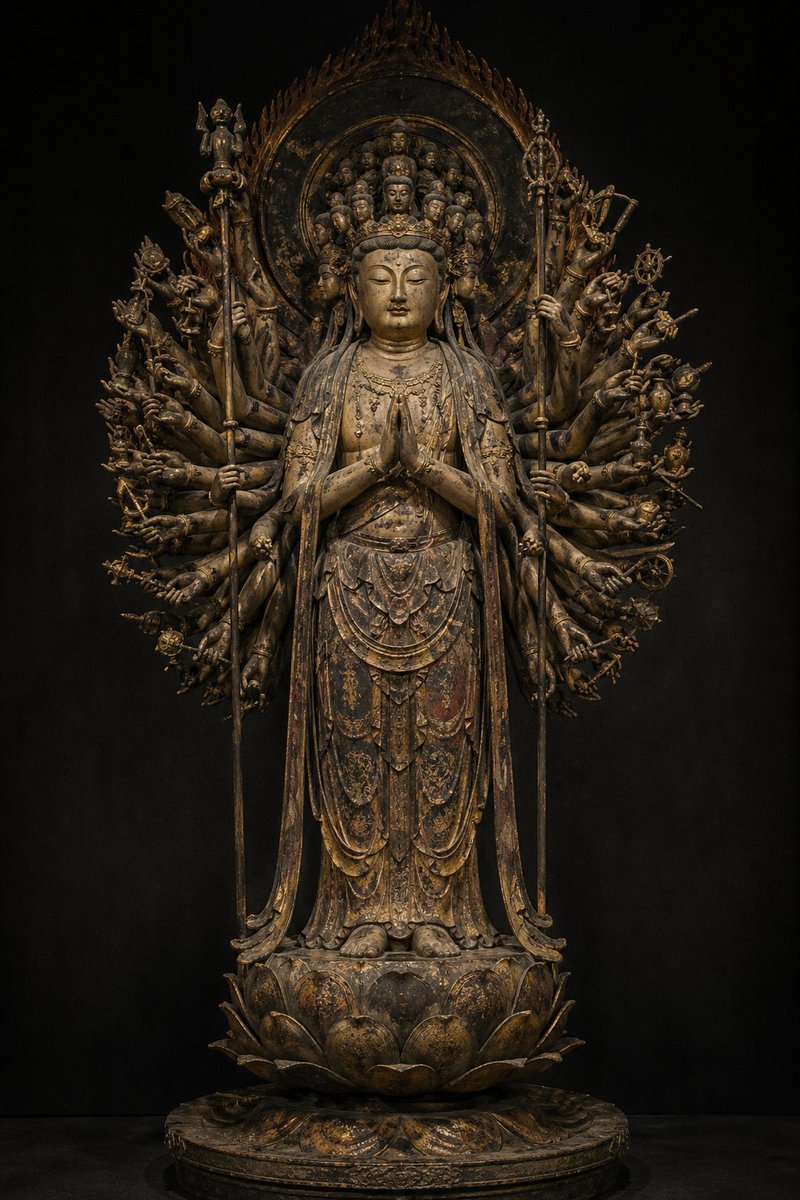
Traditionelle japanische Buddha-Statue
Eine äußerst detaillierte Anleitung zur Erstellung einer ruhigen und majestätischen Senju Kannon (Tausendarmige Kannon) Statue im Stil japanischer buddhistischer Skulpturen der Heian- oder Kamakura-Zeit, komplett mit Beleuchtung und Texturen in Museumsqualität.
Dies ist ein GPT Image 2 -Prompt für Porträt & Charakter . Verwenden Sie den unten stehenden, kopierfertigen Prompt, um ähnliche Grafiken zu erstellen, und überprüfen Sie vor der Wiederverwendung Awesome GPT Image 2 Prompts -Quellenangaben sowie die kommerziellen Nutzungsrechte.
Free 1K preview
Generate one preview image instantly, no sign-up required.
Eingabeaufforderung
Kopierfertige Eingabeaufforderung
A {argument name="type of Buddhist statue" default="standing statue of Senju Kannon Bodhisattva"} reminiscent of ancient Japanese Buddhist sculpture. It features a serene and majestic atmosphere similar to the masterpieces housed in the {argument name="collection" default="Tokyo National Museum"}. A full-body frontal view with a slender and elegant physique, a soft and compassionate expression, half-closed eyes, and a gentle smile. It includes an exquisite crown, flowing celestial robes, and delicate jewelry. A large number of arms are arranged in an orderly radial pattern behind the back to strongly emphasize the symbolism of the Thousand-Armed Kannon. The hands may be based on 42 arms in accordance with actual sculptural traditions. It stands on a lotus pedestal with a halo behind. The material is primarily {argument name="material" default="wood carving"}, depicting historical textures such as lacquer, peeling gold leaf, weathered colors from aging, traces of original color, cracks, wear, and a sense of temple heritage. The overall design evokes Japanese Buddhist sculptures of the Heian to Kamakura periods, characterized by dignity, nobility, and religious solemnity. Like a professional photograph of a museum collection, the background is dark and subdued, highlighting the three-dimensionality and texture of the statue. Museum-grade, cultural asset-grade, ultra-high definition.Eingabeaufforderungsvariablen
In der Eingabeaufforderung befinden sich bearbeitbare Argumentplatzhalter mit ihren Standardwerten.
Best for
- - Porträt & Charakter visual exploration
- - Image generation and reference-image edits
- - Reusable briefs that keep source attribution visible
Change these parts
- - Subject, product, character, or scene
- - Aspect ratio, camera, lighting, and background
- - Brand, text, color, and output constraints
Recommended model and settings
- - Model: gpt-image-2
- - Input mode: Text zu Bild
- - Aspect ratio: source
- - Commercial status: review original source
How to use this prompt
- 1. Copy the prompt and preserve its structure for the first test.
- 2. Replace the subject, context, and publishing channel.
- 3. Change one camera, lighting, or style variable per iteration.
- 4. Inspect the output, source, text, and rights before reuse.
Limitations, source, and reuse cautions
- - Generated output is an editable draft, not factual, legal, or rights evidence.
- - Review the linked source, people, brands, logos, text, and third-party media before commercial use.
Weitere Fälle in dieser Kategorie
Priorisiert nach Kategorie, Kompatibilität der Eingabemodi, Qualität und geringerem Risiko.

Hinweise zur Wiederverwendung und Quellenangabe
Verwenden Sie diese Eingabeaufforderung sicher, nachdem Sie den Fall in der Vorschau angezeigt haben.
- 1.Kopieren Sie die Eingabeaufforderung oder öffnen Sie sie direkt in Dovoo mit der Schaltfläche „Generieren“.
- 2.Passen Sie Variablen, Seitenverhältnis und Referenzbilder an Ihren Anwendungsfall an.
- 3.Vor der Veröffentlichung oder kostenpflichtigen Nutzung sollten Sie die Rechte an der Quelle, die Anforderungen an die Namensnennung sowie die Risiken für die Marke oder das Abbild prüfen.