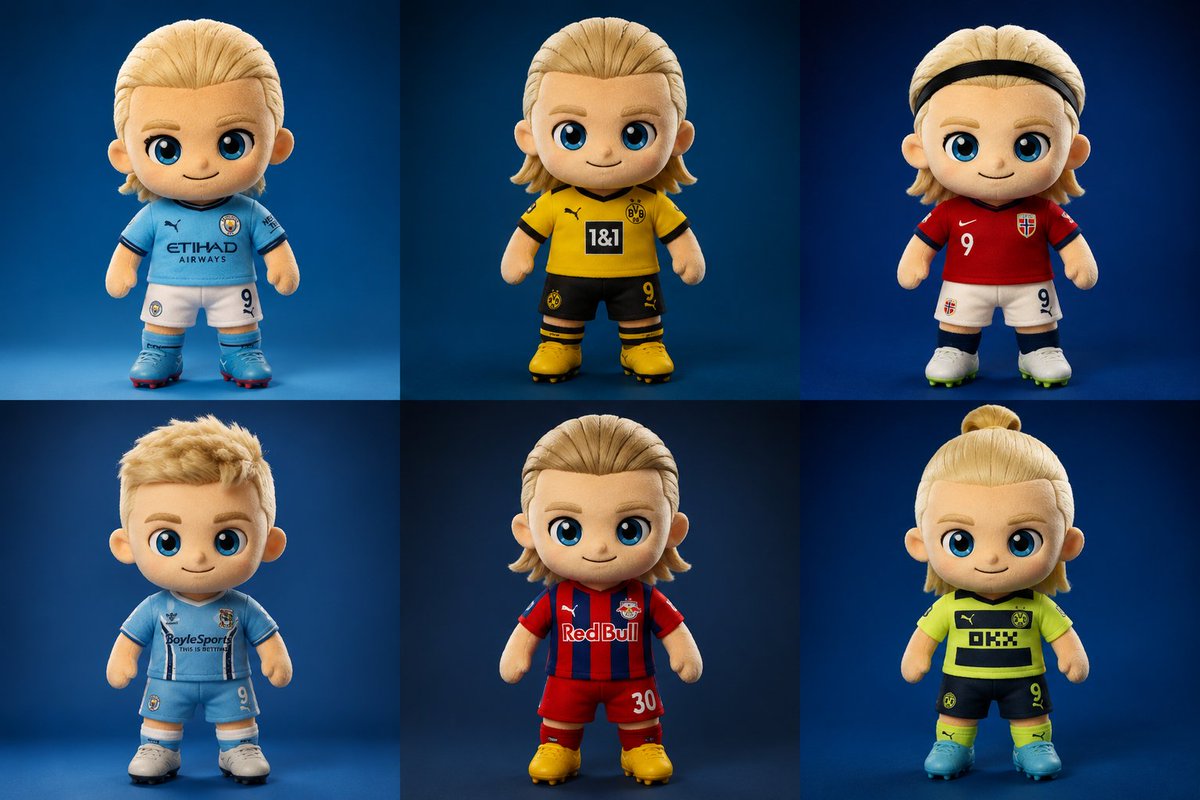
Plush Chibi Soccer Mascot
Generates a hyper-realistic collectible plush toy mascot inspired by a soccer player, featuring luxury fabric textures and studio lighting.
Dies ist ein GPT Image 2 -Prompt für Produkt & Vertrieb . Verwenden Sie den unten stehenden, kopierfertigen Prompt, um ähnliche Grafiken zu erstellen, und überprüfen Sie vor der Wiederverwendung Awesome GPT Image 2 Prompts -Quellenangaben sowie die kommerziellen Nutzungsrechte.
Benötigen Sie den vollständigen Prompt-Satz? Verwenden Sie den Produkt & Vertrieb Weitere verwandte Beispiele finden Sie im Themen-Hub oder öffnen Sie die GPT Image 2 Prompt-Katalog für das vollständige Beispielverzeichnis, wiederverwendbare Strukturen und Quellenangaben.
Free 1K preview
Generate one preview image instantly, no sign-up required.
1464/4000
Eingabeaufforderung
Kopierfertige Eingabeaufforderung
Create a hyper-realistic collectible plush chibi soccer mascot inspired by a {argument name="subject" default="blond football striker"}, standing front-facing in a premium studio setup with a {argument name="background" default="smooth gradient blue background"}. The character has oversized glossy blue eyes, soft embroidered facial features, a tiny cute smile, rosy cheeks, and highly detailed fluffy fabric texture with visible stitching and luxury plush materials. Stylized proportions with an oversized head and small body, Pixar-style realism, ultra-cute aesthetic.

The mascot wears a modern football jersey with premium embroidered details, alternate jersey designs, unique sponsor patches, jersey number {argument name="number" default="9"}, fitted shorts, long socks, and detailed football boots. Generate multiple outfit variations including sky-blue, black-and-gold, red-and-white, neon yellow, and striped kits. Include different hairstyles such as slicked-back blond hair, messy textured cut, braided top knot, headband style, mullet-inspired cut, and short fluffy hair.

Render as a luxury designer plush toy with cinematic studio lighting, soft shadows, realistic fabric fuzz, ultra-detailed seams, vibrant colors, centered composition, shallow depth of field, photorealistic toy photography, highly detailed embroidery, premium stitching, 8k resolution, Unreal Engine quality, sharp focus, collectible mascot aesthetic, high-end merchandise style.
Eingabeaufforderungsvariablen
In der Eingabeaufforderung befinden sich bearbeitbare Argumentplatzhalter mit ihren Standardwerten.
Variable
subject
Standard
blond football striker
Variable
background
Standard
smooth gradient blue background
Variable
number
Standard
9
Best for
- - Produkt & Vertrieb visual exploration
- - Image generation and reference-image edits
- - Reusable briefs that keep source attribution visible
Change these parts
- - Subject, product, character, or scene
- - Aspect ratio, camera, lighting, and background
- - Brand, text, color, and output constraints
Recommended model and settings
- - Model: gpt-image-2
- - Input mode: Text zu Bild
- - Aspect ratio: source
- - Commercial status: review original source
How to use this prompt
- 1. Copy the prompt and preserve its structure for the first test.
- 2. Replace the subject, context, and publishing channel.
- 3. Change one camera, lighting, or style variable per iteration.
- 4. Inspect the output, source, text, and rights before reuse.
Limitations, source, and reuse cautions
- - Generated output is an editable draft, not factual, legal, or rights evidence.
- - Review the linked source, people, brands, logos, text, and third-party media before commercial use.
Importiert von Awesome GPT Image 2 Prompts . Quellenangabe erforderlich. Status der kommerziellen Nutzung: allowed ; Rechte an der Quelle vor kostenpflichtiger Nutzung prüfen.
Weitere Fälle in dieser Kategorie
Priorisiert nach Kategorie, Kompatibilität der Eingabemodi, Qualität und geringerem Risiko.
Hinweise zur Wiederverwendung und Quellenangabe
Verwenden Sie diese Eingabeaufforderung sicher, nachdem Sie den Fall in der Vorschau angezeigt haben.
- 1.Kopieren Sie die Eingabeaufforderung oder öffnen Sie sie direkt in Dovoo mit der Schaltfläche „Generieren“.
- 2.Passen Sie Variablen, Seitenverhältnis und Referenzbilder an Ihren Anwendungsfall an.
- 3.Vor der Veröffentlichung oder kostenpflichtigen Nutzung sollten Sie die Rechte an der Quelle, die Anforderungen an die Namensnennung sowie die Risiken für die Marke oder das Abbild prüfen.