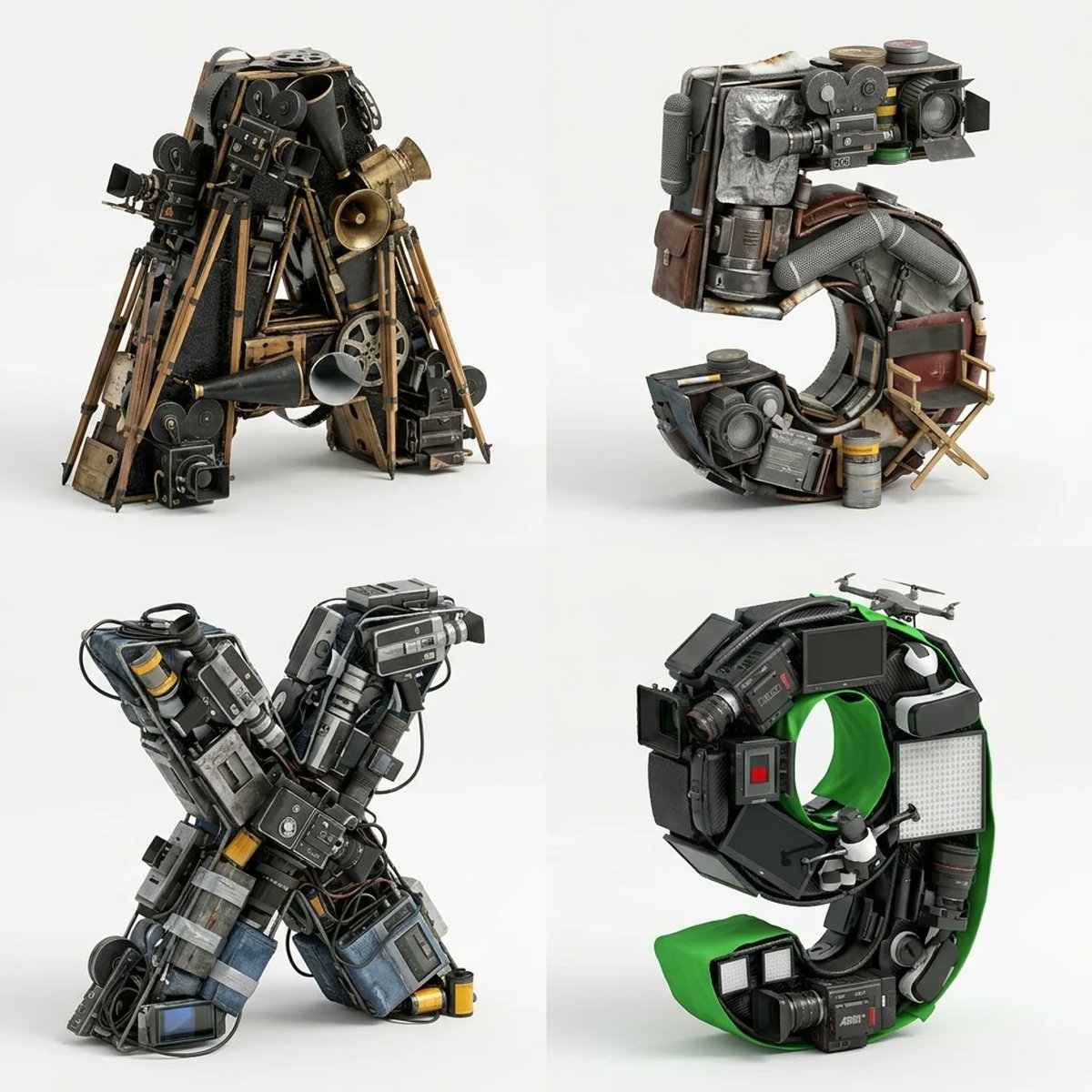
Typografisches Raster der Filmepochen
Ein aufwendig gestaltetes, im Studio erstelltes typografisches Kunstwerk im Format 2x2, das vier Buchstaben und Zahlen zeigt, die aus Filmrequisiten aus verschiedenen Kinoepochen zusammengesetzt sind und sich ideal für redaktionelle Zwecke, Poster oder Konzeptvisualisierungen eignen.
Dies ist ein GPT Image 2 -Prompt für Grafik & Poster . Verwenden Sie den unten stehenden, kopierfertigen Prompt, um ähnliche Grafiken zu erstellen, und überprüfen Sie vor der Wiederverwendung Awesome GPT Image 2 Prompts -Quellenangaben sowie die kommerziellen Nutzungsrechte.
Free 1K preview
Generate one preview image instantly, no sign-up required.
Eingabeaufforderung
Kopierfertige Eingabeaufforderung
Create a clean 2x2 grid on a pure white studio background featuring 4 large 3D typographic sculptures, each a single character built entirely from filmmaking equipment from a different era. The four glyphs are exactly 4 characters: top-left letter A, top-right number 5, bottom-left letter X, bottom-right number 9. Each character should be front-facing, centered in its quadrant, legible but formed from a dense pile of realistic cinema tools and on-set props, with believable occlusion, weight, and construction logic. Use high-end Cinema 4D product visualization, subtle ambient occlusion, soft three-point studio lighting with a softbox overhead, crisp shadows, realistic materials, and isolated composition.

Top-left: the letter A made from early cinema and silent-era equipment, assembled from vintage wooden tripods, hand-cranked film cameras, brass lenses, reels, megaphones, bell-shaped horns, matte black metal parts, leather straps, and aged wood. Surface qualities should include worn varnished wood, black crackle paint, brass tarnish, scuffed metal, and dusty antique patina. The silhouette should feel chaotic but readable, with tripod legs and old camera bodies defining the A shape.

Top-right: the number 5 made from mid-century analog filmmaking gear, assembled from classic film cameras, magazine reels, metal canisters, brown leather cases, audio accessories, silver fabric packs, director chairs, cylindrical lenses, grips, and vintage production bags. Materials should emphasize brushed aluminum, leather, canvas, rubber, and weathered industrial finishes. The 5 should be chunky and balanced, with stacked props tightly packed into the glyph.

Bottom-left: the letter X made from late 20th century video and broadcast equipment, assembled from shoulder-mount camcorders, portable recorders, battery packs, coiled cables, cassette-like modules, control panels, worn blue and gray plastic housings, and rugged field electronics. Include visible wiring and taped components. Materials should feel utilitarian and slightly battered, with dark plastic, anodized metal, stickers, rubber grips, and yellow accent details. The crossing diagonals of the X must be clear and substantial.

Bottom-right: the number 9 made from contemporary digital cinema and virtual production gear, assembled from modern cinema cameras, compact monitors, LED light panels, drones, gimbals, matte boxes, black modular accessories, and a vivid green chroma screen wrap forming part of the numeral. Include sleek vents, carbon fiber textures, matte black metal, polished glass, and bright green screen fabric as the dominant accent color. The 9 should feel the most modern and refined, with modular precision and clean industrial design.

Keep the background plain and uncluttered, no extra text, no floating objects, no flat typography, no 2D rendering. The sculptures should look like physical objects at realistic scale, highly detailed, photorealistic, and suitable as a graphic design asset.
Best for
- - Grafik & Poster visual exploration
- - Image generation and reference-image edits
- - Reusable briefs that keep source attribution visible
Change these parts
- - Subject, product, character, or scene
- - Aspect ratio, camera, lighting, and background
- - Brand, text, color, and output constraints
Recommended model and settings
- - Model: gpt-image-2
- - Input mode: Text zu Bild
- - Aspect ratio: source
- - Commercial status: review original source
How to use this prompt
- 1. Copy the prompt and preserve its structure for the first test.
- 2. Replace the subject, context, and publishing channel.
- 3. Change one camera, lighting, or style variable per iteration.
- 4. Inspect the output, source, text, and rights before reuse.
Limitations, source, and reuse cautions
- - Generated output is an editable draft, not factual, legal, or rights evidence.
- - Review the linked source, people, brands, logos, text, and third-party media before commercial use.
Weitere Fälle in dieser Kategorie
Priorisiert nach Kategorie, Kompatibilität der Eingabemodi, Qualität und geringerem Risiko.
Hinweise zur Wiederverwendung und Quellenangabe
Verwenden Sie diese Eingabeaufforderung sicher, nachdem Sie den Fall in der Vorschau angezeigt haben.
- 1.Kopieren Sie die Eingabeaufforderung oder öffnen Sie sie direkt in Dovoo mit der Schaltfläche „Generieren“.
- 2.Passen Sie Variablen, Seitenverhältnis und Referenzbilder an Ihren Anwendungsfall an.
- 3.Vor der Veröffentlichung oder kostenpflichtigen Nutzung sollten Sie die Rechte an der Quelle, die Anforderungen an die Namensnennung sowie die Risiken für die Marke oder das Abbild prüfen.