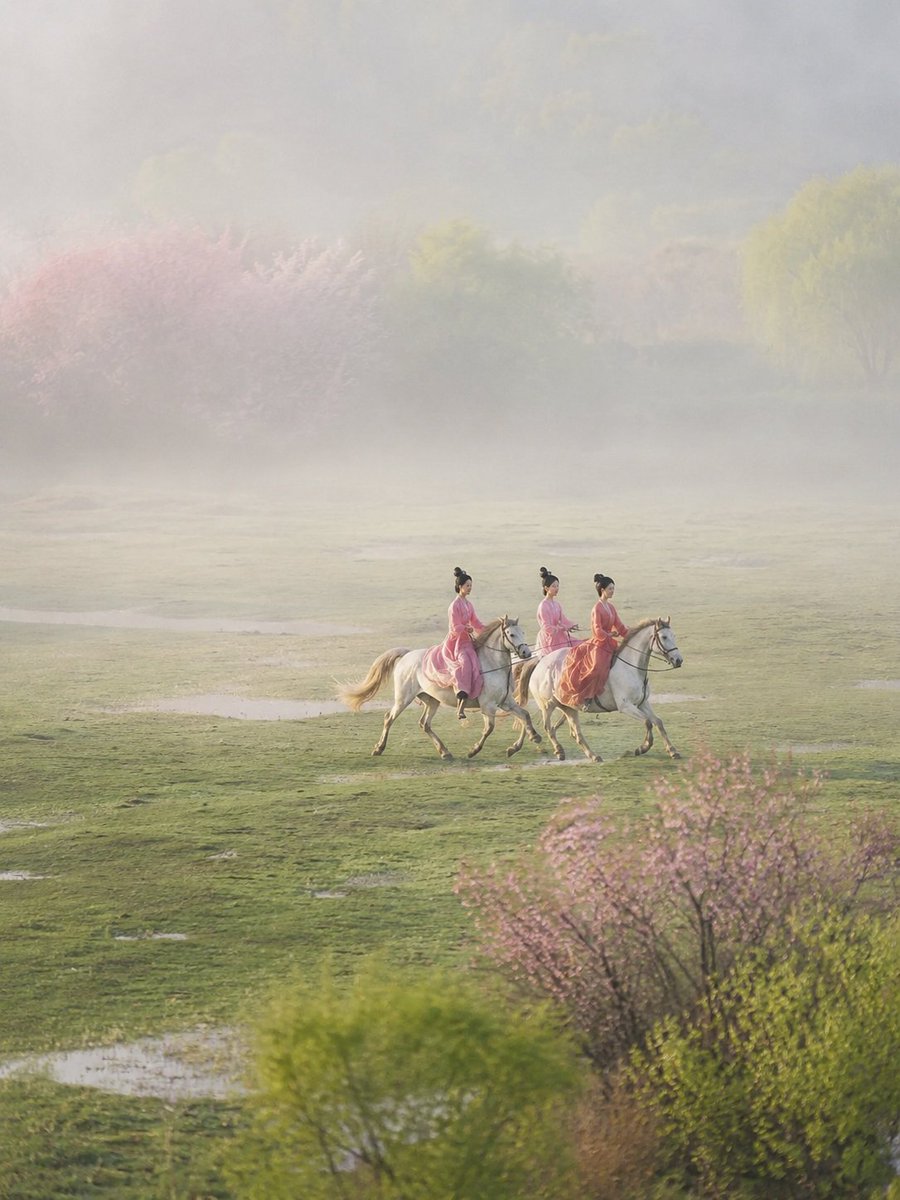
Antikes Gemälde als Foto einer realen Szene
Verwandelt eine Vorlage für ein antikes Gemälde im chinesischen Stil in eine realistische Kunstfotografie, die die angedeutete historische Landschaft und die Reiter rekonstruiert.
Dies ist ein GPT Image 2 -Prompt für Landschaft & Natur . Verwenden Sie den unten stehenden, kopierfertigen Prompt, um ähnliche Grafiken zu erstellen, und überprüfen Sie vor der Wiederverwendung Awesome GPT Image 2 Prompts -Quellenangaben sowie die kommerziellen Nutzungsrechte.
Free 1K preview
Generate one preview image instantly, no sign-up required.
Free text preview doesn’t preserve reference-image consistency.
Eingabeaufforderung
Kopierfertige Eingabeaufforderung
Using REFERENCE_0 as the ancient-art composition source, transform it into a believable, collectible fine-art photograph as if the scene had been captured by a top photographer in the same historical era. Do not simply render the painting style as a photo; instead reverse-engineer the painting as a compressed memory of a real landscape and reconstruct the real scene behind it.

Keep the core subject logic: exactly {argument name="rider count" default="3"} ancient women riding exactly {argument name="horse count" default="3"} pale horses, moving together across the frame, with pink-to-coral garments and traditional updo hairstyles. Preserve the feeling of lightness, spring colors, and spaciousness from the reference, but convert the abstract watercolor blobs into a real environment.

New photographic scene: place the riders in a wide misty spring meadow with soft green grass, shallow reflective puddles, distant fog, blurred flowering trees in pale pink and fresh yellow-green, and foreground shrubs/branches echoing the reference’s pink and green color fields. The landscape should feel humid, early morning, and atmospheric, with large negative space above the riders and a distant tree line fading into haze.

Photographic treatment: long-lens documentary/fine-art photography, natural dawn light, gentle backlit mist, realistic horses and fabric motion, shallow atmospheric depth, muted pastel palette, soft contrast, high dynamic range, no ink outlines, no watercolor texture, no illustration, no mural or religious icon style.

Composition constraints: keep the riders small-to-medium in the lower middle of the frame, traveling horizontally; maintain a vertical 4:3 composition with broad sky/fog above and textured meadow below. Avoid modern objects, roads, buildings, visible text, logos, or fantasy elements.

Optional customization: set the historical period to {argument name="historical period" default="Tang dynasty"}, the season to {argument name="season" default="early spring"}, and the mood to {argument name="mood" default="misty serene"}.
Eingabeaufforderungsvariablen
In der Eingabeaufforderung befinden sich bearbeitbare Argumentplatzhalter mit ihren Standardwerten.
Best for
- - Landschaft & Natur visual exploration
- - Image generation and reference-image edits
- - Reusable briefs that keep source attribution visible
Change these parts
- - Subject, product, character, or scene
- - Aspect ratio, camera, lighting, and background
- - Brand, text, color, and output constraints
Recommended model and settings
- - Model: gpt-image-2
- - Input mode: Bild zu Bild
- - Aspect ratio: source
- - Commercial status: review original source
How to use this prompt
- 1. Copy the prompt and preserve its structure for the first test.
- 2. Replace the subject, context, and publishing channel.
- 3. Change one camera, lighting, or style variable per iteration.
- 4. Inspect the output, source, text, and rights before reuse.
Limitations, source, and reuse cautions
- - Generated output is an editable draft, not factual, legal, or rights evidence.
- - Review the linked source, people, brands, logos, text, and third-party media before commercial use.
Weitere Fälle in dieser Kategorie
Priorisiert nach Kategorie, Kompatibilität der Eingabemodi, Qualität und geringerem Risiko.
Hinweise zur Wiederverwendung und Quellenangabe
Verwenden Sie diese Eingabeaufforderung sicher, nachdem Sie den Fall in der Vorschau angezeigt haben.
- 1.Kopieren Sie die Eingabeaufforderung oder öffnen Sie sie direkt in Dovoo mit der Schaltfläche „Generieren“.
- 2.Passen Sie Variablen, Seitenverhältnis und Referenzbilder an Ihren Anwendungsfall an.
- 3.Vor der Veröffentlichung oder kostenpflichtigen Nutzung sollten Sie die Rechte an der Quelle, die Anforderungen an die Namensnennung sowie die Risiken für die Marke oder das Abbild prüfen.