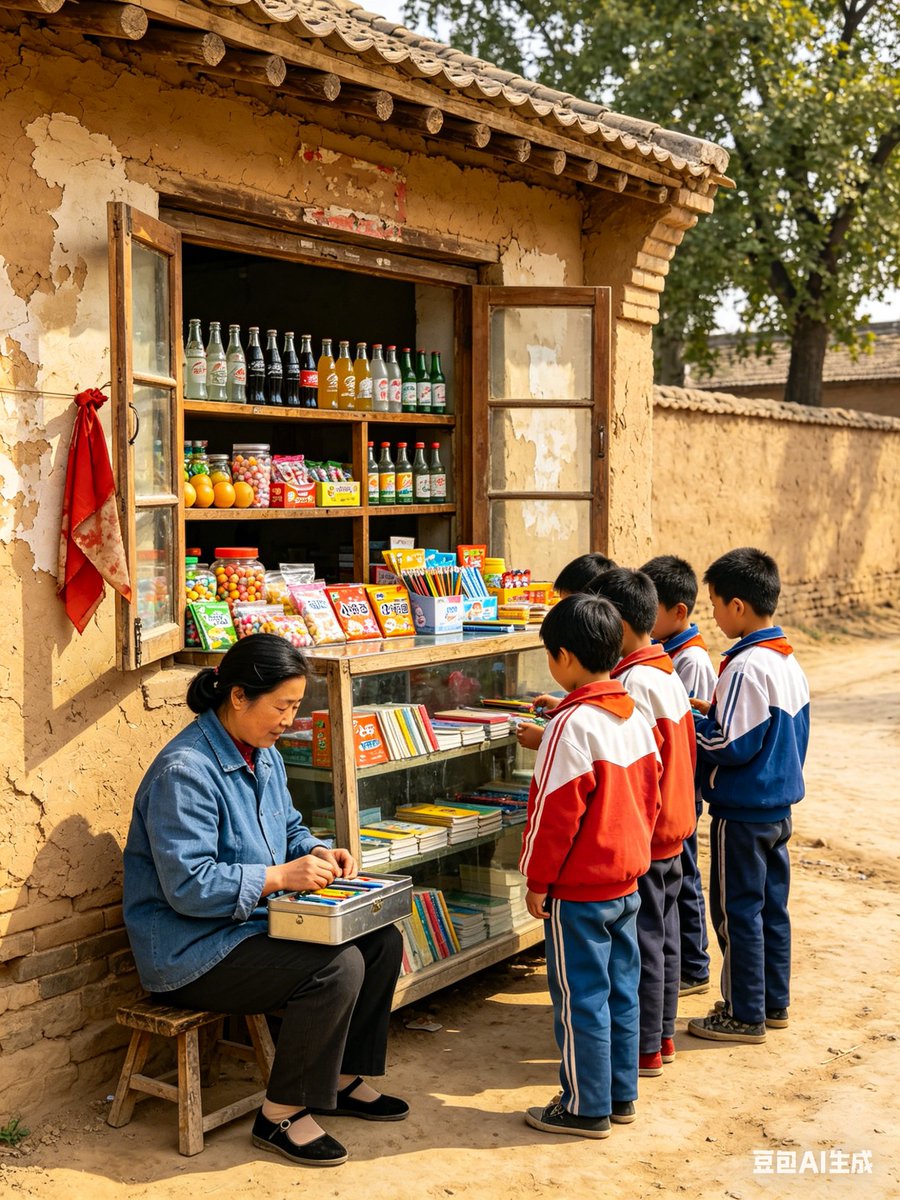
1998 Ländlicher Schulkiosk in China
Diese Vorgabe erzeugt ein realistisches, nostalgisches Foto eines Imbissstandes einer ländlichen chinesischen Grundschule aus den späten 1990er Jahren, ideal für historische Atmosphäre, sozialdokumentarische Darstellungen oder Retro-Erinnerungsszenen.
Dies ist ein GPT Image 2 -Prompt für Innenarchitektur . Verwenden Sie den unten stehenden, kopierfertigen Prompt, um ähnliche Grafiken zu erstellen, und überprüfen Sie vor der Wiederverwendung Awesome GPT Image 2 Prompts -Quellenangaben sowie die kommerziellen Nutzungsrechte.
Free 1K preview
Generate one preview image instantly, no sign-up required.
Eingabeaufforderung
Kopierfertige Eingabeaufforderung
A highly realistic documentary-style photo of a rural Chinese primary school gate-side snack shop in {argument name="year" default="1998"}, shot in warm afternoon sunlight. The scene shows an old earthen-walled village storefront with cracked yellow-brown plaster, exposed brick edges, a traditional tiled roof with visible wooden rafters, and two weathered wooden window shutters opened outward to form a sales window. In front of the window is a simple glass display case filled with school supplies and small books. A middle-aged female shopkeeper sits on a low wooden stool beside the case, wearing a faded blue jacket, black pants, and black cloth shoes, handling stationery or a metal cash box. Four primary school boys stand in a short line at the counter with their backs and side profiles to the camera, wearing late-1990s Chinese school tracksuits and bright red Young Pioneer scarves; two wear red-and-white jackets with blue pants, and two wear blue-and-white jackets with blue pants. Inside the window shelves are densely stocked with period-appropriate goods: multiple rows of old-fashioned glass bottled sodas and soft drinks on the top shelf, colorful fruit candies and gumballs in clear plastic jars, small snack packets, instant treats, and boxed sweets on the middle shelves, and at the counter many pencils, rulers, notebooks, exercise books, and children's stationery displayed upright. Add a faded red cloth hanging from the left side of the window frame, dusty ground, a long mud wall receding into the background, and large leafy trees casting soft shadows. The composition should feel candid, historically believable, and slightly nostalgic, like an authentic photograph taken outside a countryside elementary school in northern China in the late 1990s. Vertical framing, eye-level perspective, natural colors, detailed textures, no stylization, no cinematic exaggeration, strong realism.Eingabeaufforderungsvariablen
In der Eingabeaufforderung befinden sich bearbeitbare Argumentplatzhalter mit ihren Standardwerten.
Best for
- - Innenarchitektur visual exploration
- - Image generation and reference-image edits
- - Reusable briefs that keep source attribution visible
Change these parts
- - Subject, product, character, or scene
- - Aspect ratio, camera, lighting, and background
- - Brand, text, color, and output constraints
Recommended model and settings
- - Model: gpt-image-2
- - Input mode: Text zu Bild
- - Aspect ratio: source
- - Commercial status: review original source
How to use this prompt
- 1. Copy the prompt and preserve its structure for the first test.
- 2. Replace the subject, context, and publishing channel.
- 3. Change one camera, lighting, or style variable per iteration.
- 4. Inspect the output, source, text, and rights before reuse.
Limitations, source, and reuse cautions
- - Generated output is an editable draft, not factual, legal, or rights evidence.
- - Review the linked source, people, brands, logos, text, and third-party media before commercial use.
Weitere Fälle in dieser Kategorie
Priorisiert nach Kategorie, Kompatibilität der Eingabemodi, Qualität und geringerem Risiko.

Hinweise zur Wiederverwendung und Quellenangabe
Verwenden Sie diese Eingabeaufforderung sicher, nachdem Sie den Fall in der Vorschau angezeigt haben.
- 1.Kopieren Sie die Eingabeaufforderung oder öffnen Sie sie direkt in Dovoo mit der Schaltfläche „Generieren“.
- 2.Passen Sie Variablen, Seitenverhältnis und Referenzbilder an Ihren Anwendungsfall an.
- 3.Vor der Veröffentlichung oder kostenpflichtigen Nutzung sollten Sie die Rechte an der Quelle, die Anforderungen an die Namensnennung sowie die Risiken für die Marke oder das Abbild prüfen.