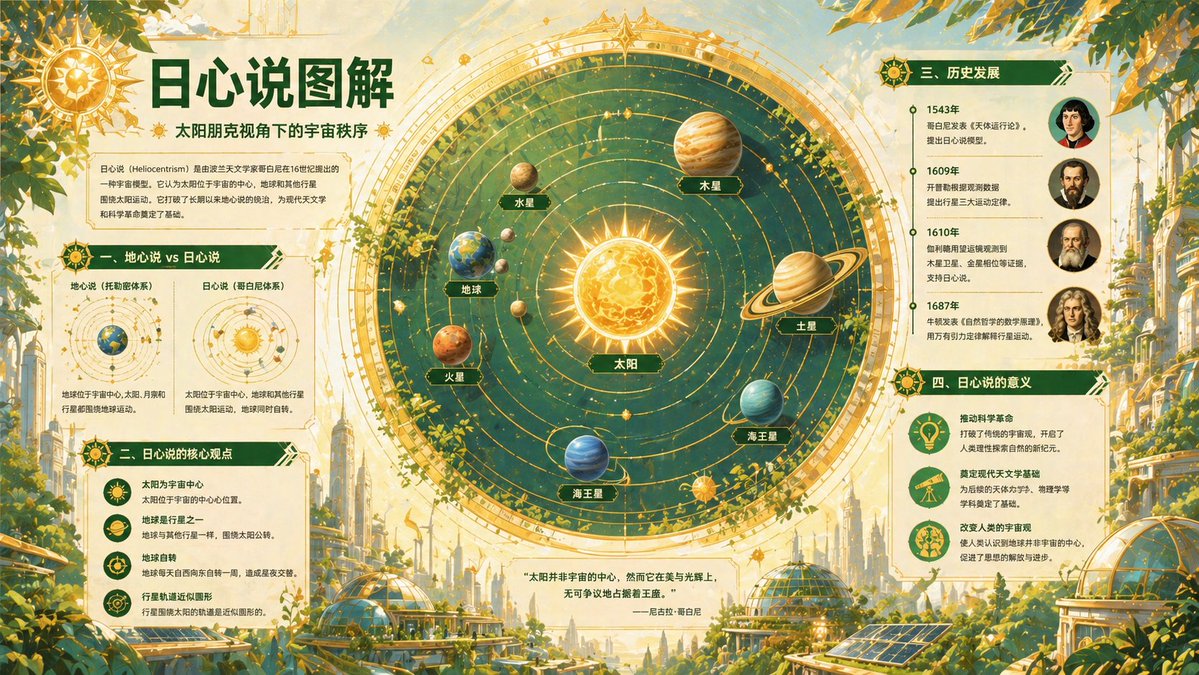
Infografisk plakat med heliocentrisk teori
En rigt detaljeret kinesisk pædagogisk infografikplakat, der forklarer heliocentrisme, ideel til naturvidenskabelig undervisning, visuelle elementer om astronomiens historie eller præsentationsslides.
Dette er et GPT Image 2 -eksempel på en prompt for Grafik og plakat . Brug den kopieringsklare prompt nedenfor til at generere lignende visuelle elementer, og gennemgå Awesome GPT Image 2 Prompts -kreditering samt kommercielle brugsrettigheder før genbrug.
Har du brug for det fulde promptsæt? Brug Grafik og plakat emnehub for flere relaterede eksempler, eller åbn GPT Image 2 hurtig katalog for det fulde eksempelindeks, genanvendelige strukturer og kildeattribution.
Free 1K preview
Generate one preview image instantly, no sign-up required.
3995/4000
Hurtig
Klar til kopiering
{
  "type": "educational infographic poster",
  "topic": "{argument name=\"topic title\" default=\"Illustration of Heliocentrism\"}",
  "subtitle": "{argument name=\"subtitle text\" default=\"The Order of the Universe from a Bright Sun's Perspective\"}",
  "language": "Chinese",
  "style": "luxurious fantasy educational poster, ornate scientific diagram, art nouveau inspired, celestial atlas aesthetic, luminous gold and emerald palette, richly detailed, polished digital illustration",
  "composition": {
    "format": "wide landscape poster",
    "background": "utopian futuristic city with elegant towers, domes, terraces, vines, trees, and solar panels, bathed in warm sunlight",
    "border_elements": "leafy branches framing the top corners, decorative golden flourishes, radiant emblem in the upper left",
    "centerpiece": "a large circular heliocentric solar system diagram with concentric orbital rings, glowing sun at the center, planets arranged around it, intricate gold geometric markings and filigree"
  },
  "layout": {
    "sections": [
      {
        "title": "I. Geocentrism vs. Heliocentrism",
        "position": "left middle",
        "count": 2,
        "labels": [
          "Geocentrism (Ptolemaic system)",
          "Heliocentrism (Copernican system)"
        ]
      },
      {
        "title": "II. Core viewpoints of Heliocentrism",
        "position": "left lower",
        "count": 4,
        "labels": [
          "The Sun is the center of the universe",
          "The Earth is one of the planets",
          "Earth's rotation",
          "Planetary orbits are approximately circular"
        ]
      },
      {
        "title": "III. Historical Development",
        "position": "right upper",
        "count": 4,
        "labels": [
          "1543",
          "1609",
          "1610",
          "1687"
        ]
      },
      {
        "title": "Four, the significance of the heliocentric theory",
        "position": "right lower",
        "count": 3,
        "labels": [
          "Promoting the Scientific Revolution",
          "Laying the foundation for modern astronomy",
          "Changed humanity's view of the universe"
        ]
      }
    ],
    "count_total_sections": 4
  },
  "text_blocks": {
    "intro_paragraph": "{argument name=\"intro text\" default=\"Heliocentrism, proposed by Polish astronomer Nicolaus Copernicus in the 16th century, is a cosmological model that places the Sun at the center of the universe, with the Earth and other planets revolving around it. It broke the long-standing dominance of geocentrism and laid the foundation for modern astronomy and the scientific revolution.\"}",
    "quote": "{argument name=\"quote\" default=\"The sun is not the center of the universe, yet it undeniably holds the throne in our brilliance and light. — Nicolaus Copernicus\"}"
  },
  "central_diagram": {
    "title": "heliocentric system",
    "center_label": "Sun",
    "planet_count": 8,
    "planet_labels": [
      "Mercury",
      "Venus",
      "Earth",
      "Mars",
      "Jupiter",
      "Saturn",
      "Uranus",
      "Neptune"
    ],
    "details": "Earth shown with a small moon nearby, Saturn with prominent rings, each planet rendered as a dimensional painted sphere with a dark green and gold nameplate"
  },
  "visual_motifs": {
    "icon_count": 8,
    "icons": "small circular green-and-gold icons beside bullet lists and section headers, including sun, orbit, rotation, telescope, lightbulb, and worldview symbols",
    "ornamentation": "glowing particles, thin gold lines, elegant frames, botanical accents woven into the infographic",
    "mood": "inspiring, scholarly, radiant, mythic yet informative"
  },
  "rendering": {
    "quality": "highly detailed, crisp typography, premium poster design, harmonious hierarchy, readable infographic blocks",
    "lighting": "soft golden daylight with luminous highlights around the sun and metallic accents",
    "camera": "straight-on full poster view"
  }
}
Promptvariabler
Redigerbare argumentpladsholdere fundet i prompten med deres standardværdier.
Variabel
topic title
Misligholdelse
Illustration of Heliocentrism
Variabel
subtitle text
Misligholdelse
The Order of the Universe from a Bright Sun's Perspective
Variabel
intro text
Misligholdelse
Heliocentrism, proposed by Polish astronomer Nicolaus Copernicus in the 16th century, is a cosmological model that places the Sun at the center of the universe, with the Earth and other planets revolving around it. It broke the long-standing dominance of geocentrism and laid the foundation for modern astronomy and the scientific revolution.
Variabel
quote
Misligholdelse
The sun is not the center of the universe, yet it undeniably holds the throne in our brilliance and light. — Nicolaus Copernicus
Best for
- - Grafik og plakat visual exploration
- - Image generation and reference-image edits
- - Reusable briefs that keep source attribution visible
Change these parts
- - Subject, product, character, or scene
- - Aspect ratio, camera, lighting, and background
- - Brand, text, color, and output constraints
Recommended model and settings
- - Model: gpt-image-2
- - Input mode: Tekst til billede
- - Aspect ratio: source
- - Commercial status: review original source
How to use this prompt
- 1. Copy the prompt and preserve its structure for the first test.
- 2. Replace the subject, context, and publishing channel.
- 3. Change one camera, lighting, or style variable per iteration.
- 4. Inspect the output, source, text, and rights before reuse.
Limitations, source, and reuse cautions
- - Generated output is an editable draft, not factual, legal, or rights evidence.
- - Review the linked source, people, brands, logos, text, and third-party media before commercial use.
Importeret fra Awesome GPT Image 2 Prompts . Kreditering er påkrævet. Status for kommerciel brug er allowed ; gennemgå kilderettighederne før betalt brug.
Flere sager i denne kategori
Prioriteret efter kategori, kompatibilitet med inputtilstande, kvalitet og lavere risiko.
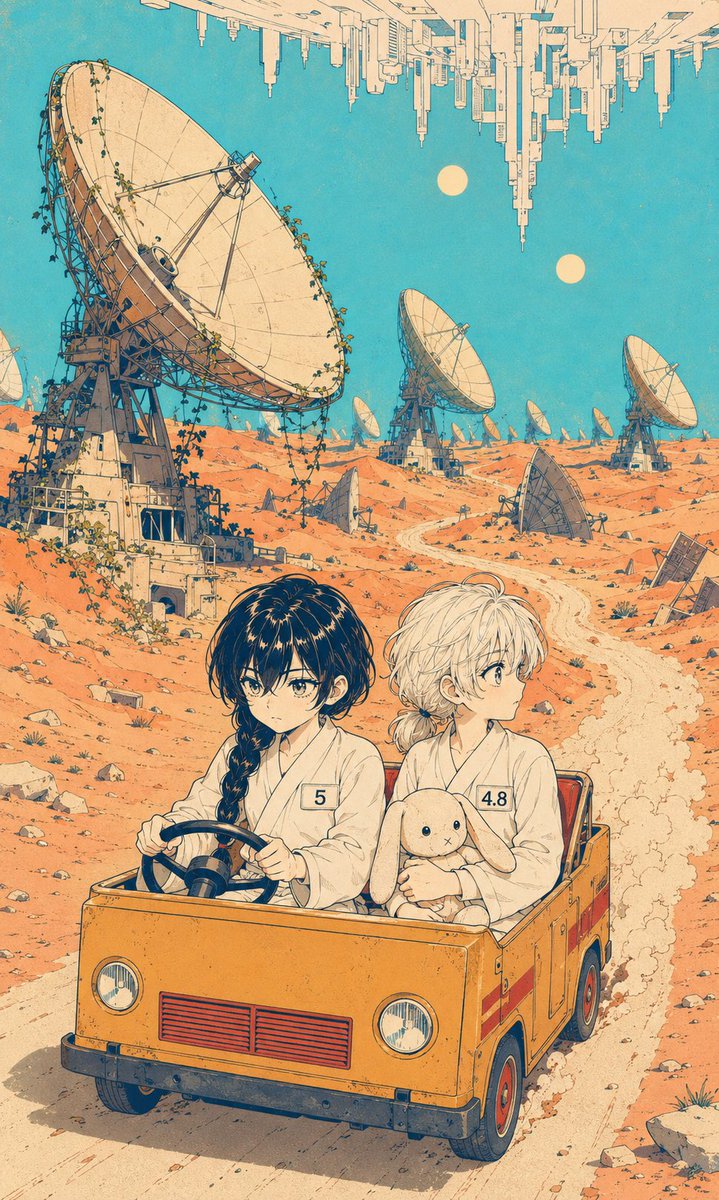
Manga Desert Radio Telescope Road Trip
Tekst til billede
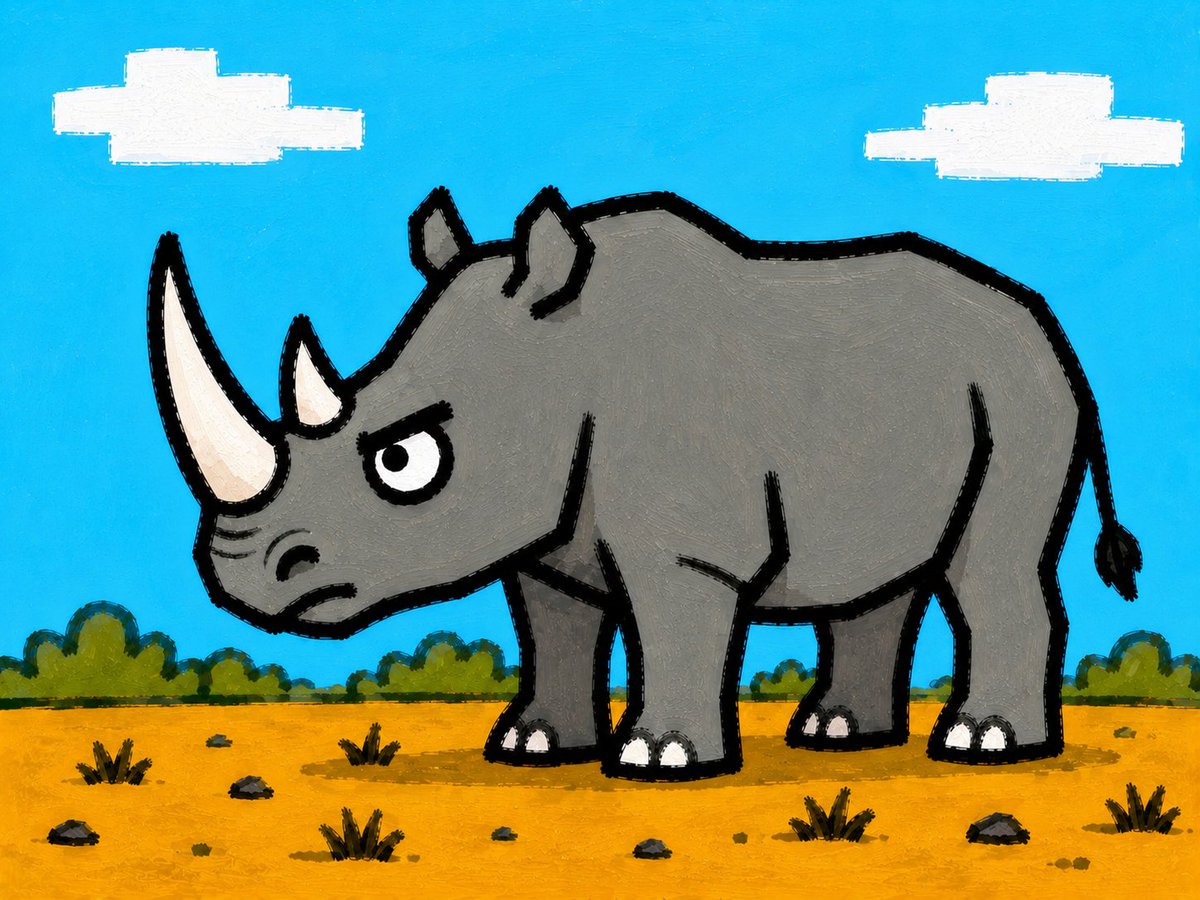
Grumpy Rhino Storybook Illustration
Tekst til billede

Martial Arts Legend Character Bible Sheet
Tekst til billede
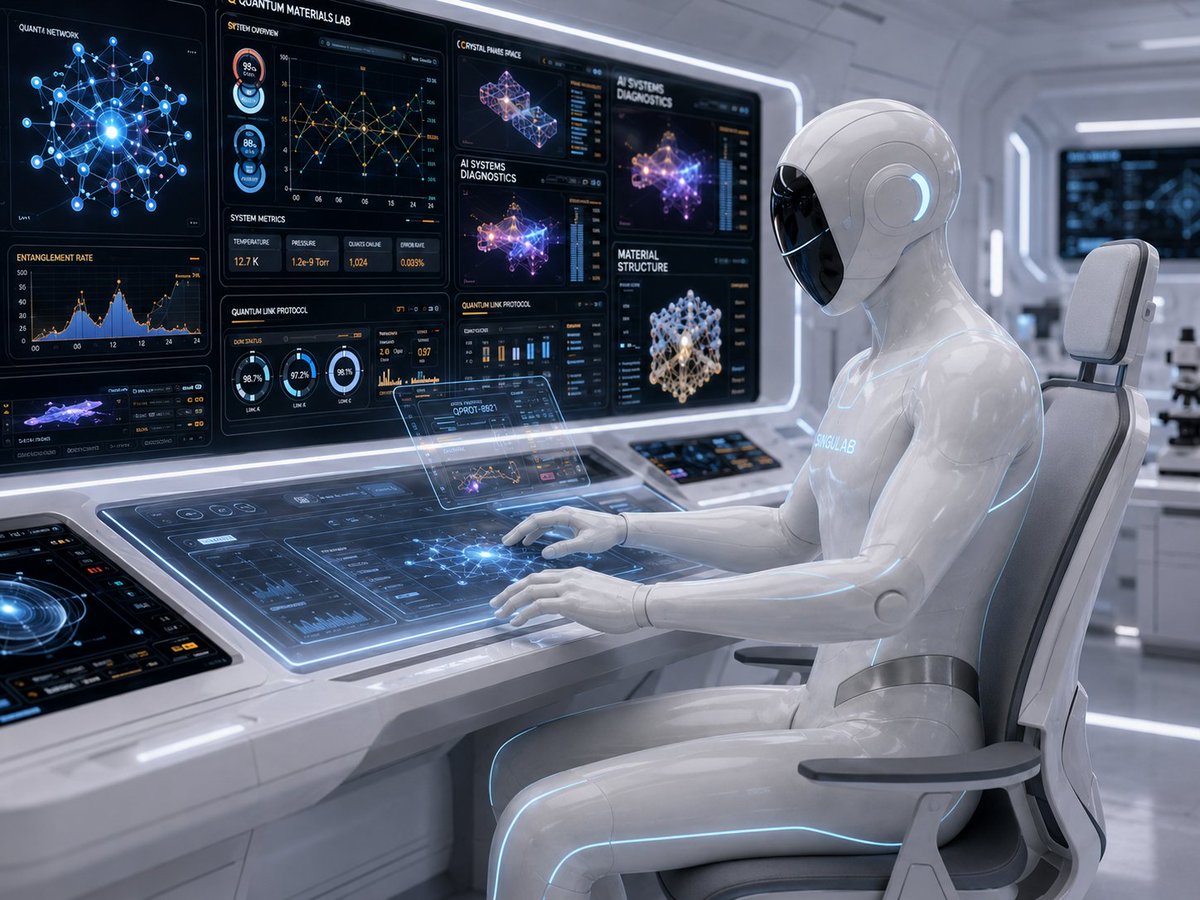
Android Quantum Lab Workstation
Tekst til billede

Pink Hijab Mirror Selfie Portrait
Tekst til billede

Female Clown Cyborg Portrait
Tekst til billede
Genbrug og kildenoter
Brug denne prompt sikkert efter at have gennemgået sagen.
- 1.Kopier prompten, eller åbn den direkte i Dovoo med genereringsknappen.
- 2.Juster variabler, billedformat og referencebilleder til din egen brug.
- 3.Før udgivelse eller betalt brug skal du verificere kilderettigheder, krav til kreditering og risici forbundet med branding eller lighed.